


Every hotel booking creates a supplier payment. As an online travel agency (OTA) grows, manually issuing cards, tracking transactions, and reconciling invoices can become a costly bottleneck. Virtual cards for OTAs can help connect these steps, giving payment and finance teams more control over how supplier payments are issued, tracked, and reconciled.
Here's how the workflow works, where automation helps, and what OTAs should evaluate before choosing a payment solution.
Why OTA Supplier Payments Are Difficult to Manage
OTAs may need to pay hotels, airlines, car rental companies, and other travel suppliers, each with different payment schedules, currencies, and settlement requirements.
Three challenges make these payments harder to manage at scale:
- High transaction volumes: More bookings mean more payments to authorize, track, and review.
- Cross-border complexity: Different currencies, conversion costs, and supplier requirements add work to payment operations.
- Fragmented records: Booking confirmations, supplier invoices, and transaction records may sit in separate systems, requiring manual matching.
The main challenge isn't simply paying suppliers faster. It's connecting each payment to the correct booking, supplier, and invoice.
How Virtual Cards for OTAs Can Automate Supplier Payments
Issue Virtual Cards for Eligible Bookings
Instead of relying on one shared card for multiple suppliers, an OTA can issue a virtual card for an eligible booking or supplier payment.
For example, when a reservation reaches its payment stage, the OTA's system can request a card for the required amount and currency. A single-use card may suit an individual booking, while other supplier arrangements may call for a reusable card.
The right setup depends on the supplier's requirements and the card program. Not every booking needs a separate card, and virtual cards aren't suitable for every type of supplier settlement.
Set Spending Limits and Transaction Controls
Depending on the issuing platform, virtual cards can support controls such as transaction limits, currencies, merchant restrictions, and card validity periods.
These controls help keep payments within approved parameters. For example, an OTA may request a card with a limit matching the expected hotel payment and a merchant-category restriction where supported.
Connect Card Issuance to Booking Systems
Automation requires more than generating a card number. The OTA needs a system that determines when a card should be issued, sends the required payment details to the issuing platform, and passes the resulting card information into the supplier payment workflow.
With a suitable API integration, the booking or payment system can initiate card issuance based on defined business rules. Card details can then be passed into the relevant supplier process or connected Global Distribution System (GDS), depending on the OTA's setup.
The level of automation depends on the provider's API, supplier connectivity, and the OTA's existing systems. A virtual card service should not be assumed to include a ready-made booking-system integration.
Match Transactions with Booking and Invoice Data
After a supplier processes a card, the transaction needs to be matched with the relevant booking and invoice.
Consistent identifiers—such as booking references, supplier IDs, and transaction references—help finance systems compare expected payments with actual charges. This makes discrepancies easier to detect and reduces repetitive manual matching.
Virtual cards provide the payment instrument and transaction data; integration and matching rules make automated reconciliation possible. Refunds, cancellations, duplicate charges, and other exceptions may still require human review.
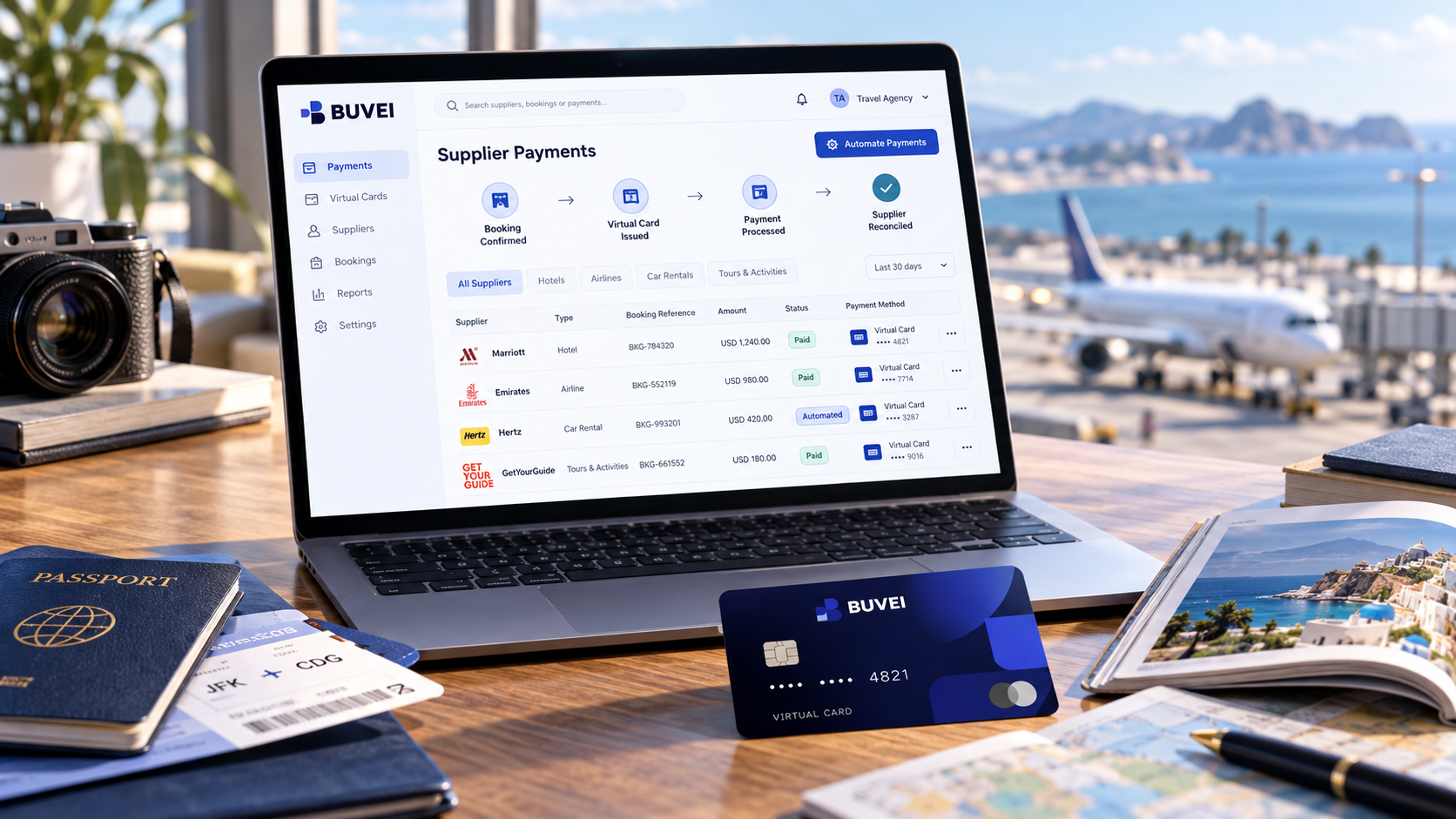
What an Automated OTA Payment Workflow Looks Like
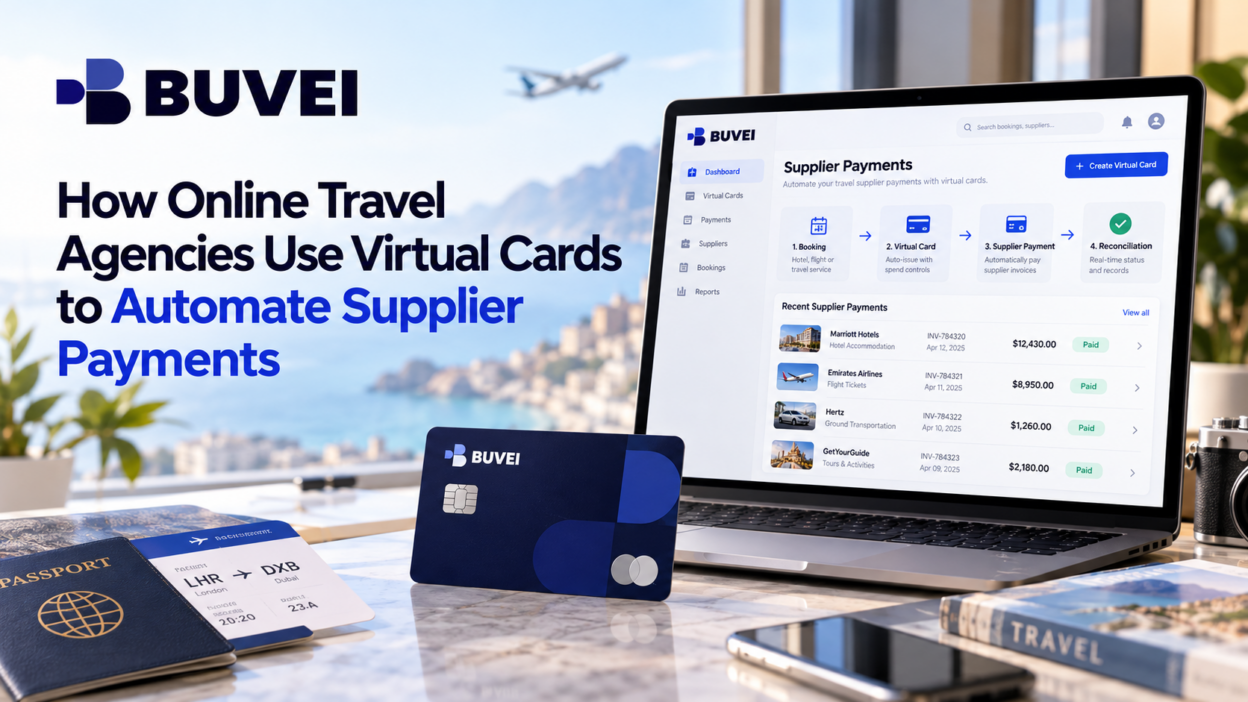
A typical supplier-payment workflow has five stages:
- Booking: The OTA records the reservation, supplier, amount, currency, and payment conditions.
- Payment decision: The system determines whether payment is due and whether a virtual card is suitable.
- Card issuance: The issuing platform creates a card with the required controls and returns its details.
- Supplier payment: The card is passed into the relevant supplier or GDS workflow, where the supplier processes the transaction.
- Reconciliation: Payment records are matched against booking and invoice data, while discrepancies and failed transactions are flagged for review.
One distinction matters: issuing a card doesn't necessarily charge the supplier immediately. The actual charge depends on when the supplier processes the card and the agreed settlement terms.
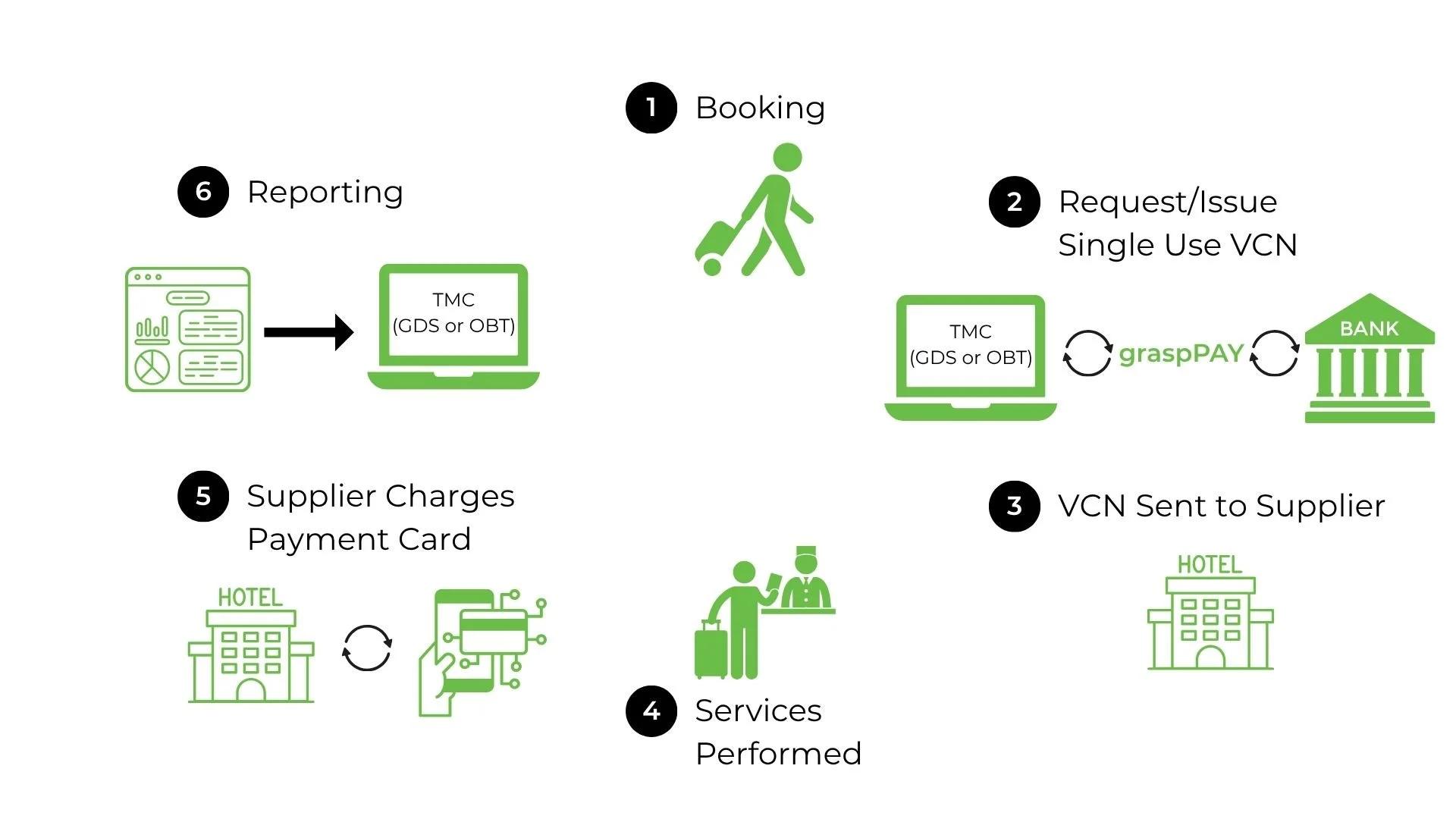
Real-World Example: lastminute.com and Adyen
Virtual card automation is already being used in travel supplier payments. In its 2026 announcement, Adyen described its expanded partnership with lastminute.com, explaining how the travel company integrated virtual card issuing into its existing technology stack to improve payments to airlines, hotels, and other suppliers.
According to Adyen, the implementation accelerated supplier payouts by up to three days and reduced reconciliation time by 5%. The project also used virtual cards in multiple currencies, with controls configured at account and individual-card levels.
These figures describe one specific implementation, not a guaranteed result for every OTA. The practical lesson is that linking card issuing with existing payment systems can reduce manual handling and improve visibility into supplier payments.
Other OTAs can apply three principles: integrate card issuance into the payment workflow, define clear transaction controls, and connect payment records to booking and accounting data from the start.
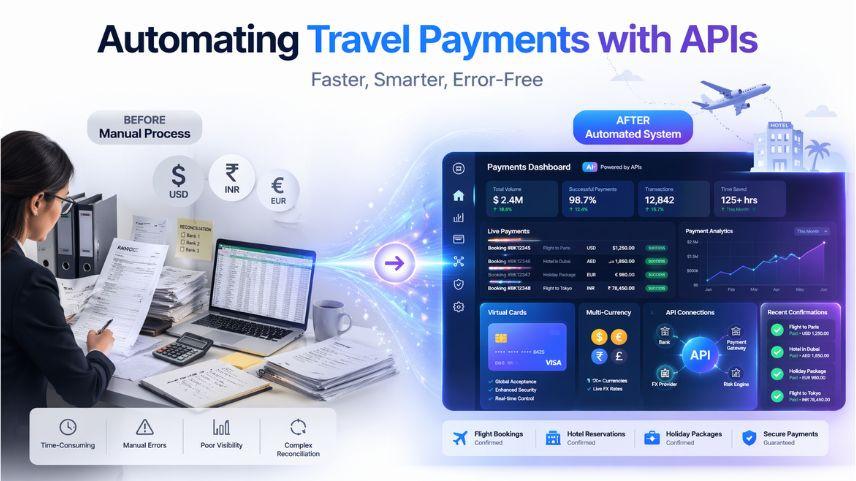
What to Evaluate Before Choosing an OTA Virtual Card Solution
API and system integration: Confirm that the platform supports programmatic card issuance and transaction retrieval, then assess the work needed to connect it to your booking engine, GDS, supplier workflow, and finance system.
Spending controls and card management: Check which controls are available for amounts, currencies, merchant categories, card validity, and card status.
Currency costs and supplier acceptance: Compare supported currencies, foreign exchange costs, card fees, and supplier acceptance. A virtual card isn't a universal replacement for bank transfers or other settlement methods.
Transaction data and exception handling: Ensure the available records contain enough detail to reconcile payments with bookings and invoices. Also establish how the workflow handles refunds, failed transactions, and mismatched amounts.
The objective isn't simply to issue cards automatically. It's to make supplier payments easier to control, track, and reconcile.
Where BUVEI Fits into an OTA Payment Workflow
BUVEI offers virtual card issuing and management capabilities that may be relevant to businesses evaluating payment automation. Its OpenAPI documentation describes programmatic virtual card issuance, funding, and transaction monitoring through a REST interface.
These capabilities may provide building blocks for a broader payment workflow. For an OTA, the important question is whether the available card program, API functions, supported currencies, and supplier acceptance requirements fit its settlement model.
An API for virtual card issuing does not automatically mean a provider offers a complete OTA payment integration. Before selecting BUVEI for this use case, confirm whether its current offering supports your requirements for booking-triggered card issuance, supplier payments, transaction references, and reconciliation data.
The best solution is one that fits your existing systems and supplier relationships—not simply one that can issue cards.
Conclusion
Virtual cards can help online travel agencies streamline supplier payments by connecting card issuance, transaction controls, and payment records with booking and invoice data. When these processes are integrated effectively, finance teams can spend less time on manual reconciliation and gain clearer visibility into supplier payments.
For OTAs looking to automate this workflow, the first step is to identify where manual payment handling creates the most friction. From there, they can assess whether a virtual card solution fits their supplier requirements and existing systems.