Introduction
PayPal has become an important payment platform for businesses managing online transactions, international payments, and digital services. From SaaS subscriptions to global vendor payments, many companies rely on PayPal as part of their broader payment operations.
However, as businesses scale, managing online payments becomes increasingly complex. Companies need better ways to protect payment information, control spending, and manage recurring expenses across multiple platforms.
Virtual cards provide an additional layer of flexibility and security by allowing businesses to create dedicated payment credentials with greater control over how funds are used.
This guide explains how businesses use virtual cards with PayPal, the security and operational benefits they provide, and how scalable virtual card solutions can improve modern payment workflows.
Does PayPal Offer Virtual Cards in 2026?
PayPal is primarily a digital payment platform that enables businesses and individuals to send, receive, and manage online payments. While PayPal supports various payment methods, it is not designed as a dedicated virtual card issuing platform for businesses that need to create and manage multiple virtual cards.
This distinction matters for companies with growing payment requirements.
A business may use PayPal for customer transactions or online payments while still needing additional payment infrastructure to manage internal expenses, subscriptions, advertising costs, and international purchases.
Virtual cards address these challenges by providing businesses with separate payment credentials that can be managed independently from their main payment accounts.
Rather than relying on one shared payment method, companies can create more structured payment workflows where each card has a specific purpose, budget, or user.
The Role of Virtual Cards in PayPal Business Payments
As digital payment operations expand, businesses need more than the ability to complete transactions. They also need better visibility, security, and control over payment activities.
Virtual cards can work alongside payment platforms like PayPal by helping businesses manage how payments are created, monitored, and approved.
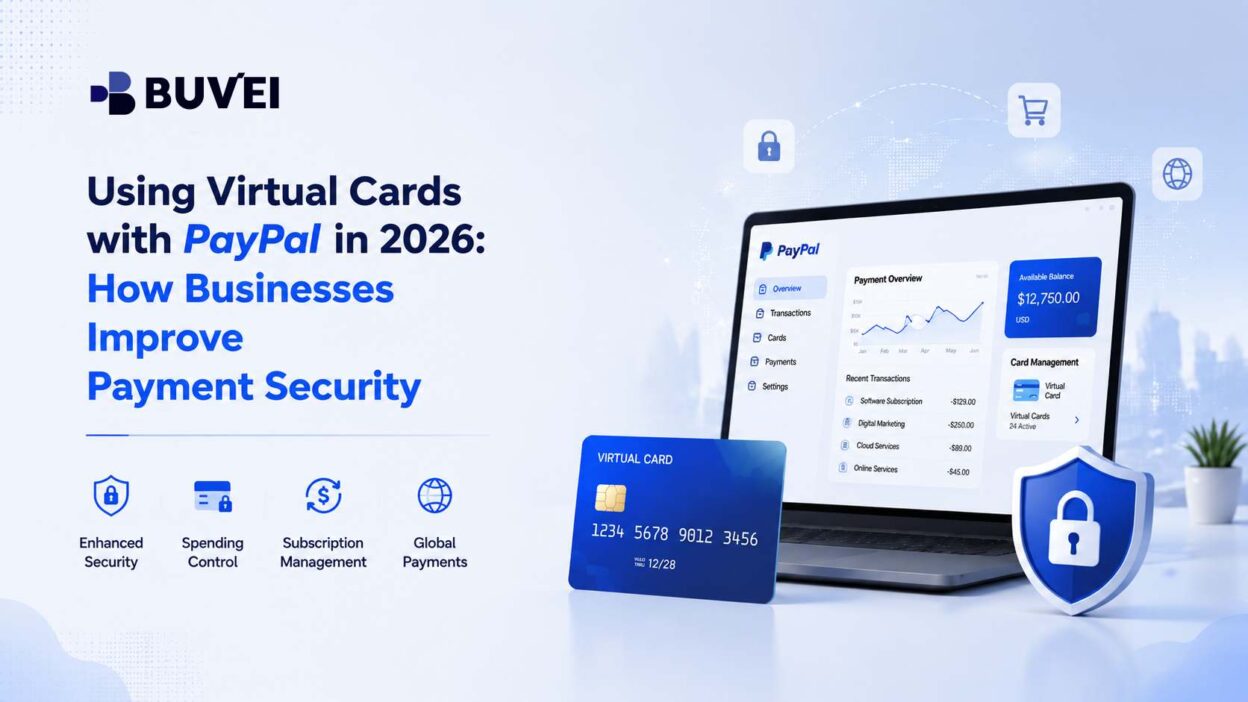
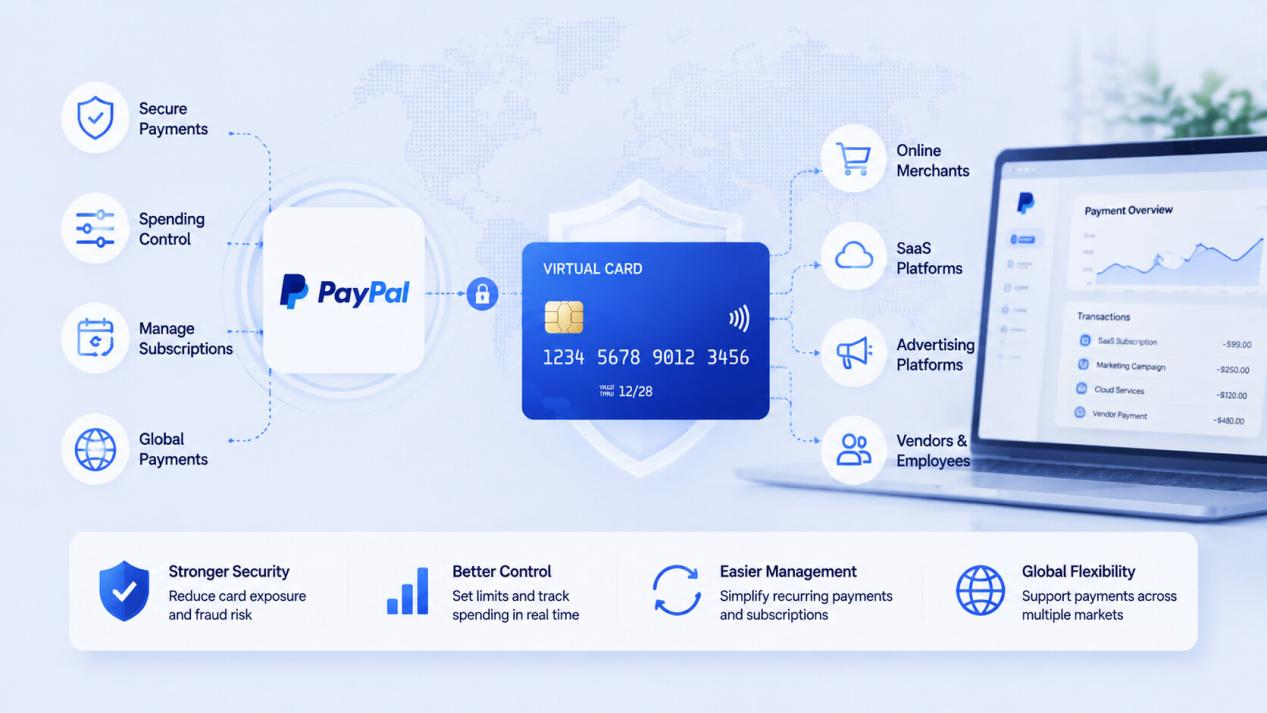
Improve Payment Security
Payment security is one of the biggest concerns for businesses operating online.
Traditional payment methods often rely on the same card credentials being used across multiple platforms. If these credentials are exposed, businesses may face unauthorized transactions or time-consuming replacement processes.
Virtual cards reduce this risk by separating payment credentials from primary accounts. Businesses can create dedicated cards for specific merchants, departments, or payment purposes, limiting exposure and making transaction management easier.
For companies using PayPal alongside other digital platforms, virtual cards provide an additional security layer without requiring major changes to existing payment processes.
Gain Better Spending Control
As companies grow, controlling business spending across different teams and platforms becomes increasingly important.
A single corporate payment method may not provide enough visibility into who is spending, where payments are made, or how budgets are being used.
Virtual cards allow businesses to create more organized spending structures. For example, a marketing team can use dedicated cards for advertising campaigns, while finance teams can separately manage software subscriptions or operational expenses.
This approach improves expense visibility and gives businesses more control over digital payments.
Simplify Recurring Payments
Recurring payments are essential for many modern businesses. Companies often rely on:
- software subscriptions
- cloud platforms
- online services
- digital tools
Managing these recurring expenses through traditional payment methods can create challenges when cards expire, payment details change, or subscription ownership becomes unclear.
Virtual cards help businesses manage recurring payments by assigning dedicated payment credentials to specific services. This makes it easier to monitor expenses, update payment information, and maintain continuity across important business tools.
Support Global Online Transactions
Many businesses today operate across multiple countries and work with international vendors.
Cross-border payments can introduce additional challenges, including currency differences, regional payment restrictions, and limited visibility into expenses.
Virtual cards provide businesses with more flexible payment options for global digital transactions. When combined with platforms such as PayPal, they can help companies build a more adaptable and secure payment environment.
Common Business Use Cases for Virtual Cards with PayPal
Virtual cards are becoming increasingly valuable across different business scenarios where online payment control and security are important.
SaaS Subscription Management
SaaS companies often manage dozens of software subscriptions across different teams. Virtual cards help businesses organize these payments by assigning separate payment methods to different services. This makes subscription tracking easier and reduces the impact of payment issues affecting critical tools.
Digital Advertising Payments
Advertising platforms require reliable payment methods, especially for businesses running campaigns across multiple channels.
Companies using platforms such as Google Ads, Meta Ads, or other digital marketing services can use virtual cards to separate campaign spending and maintain better control over advertising budgets.
Global Vendor and Service Payments
Businesses working with international vendors, freelancers, or service providers often need flexible online payment solutions.
Virtual cards help companies manage these transactions with clearer payment records and improved control over spending activities.
Employee and Team Expenses
Remote teams and distributed organizations need flexible ways to manage business purchases. Instead of sharing corporate payment details, companies can provide employees with dedicated virtual cards while maintaining control over spending limits and payment visibility.
Choosing the Right Virtual Card Solution for PayPal Payments
Businesses considering virtual card solutions should evaluate several important factors.
Card Issuing Capability
A scalable virtual card provider should allow businesses to create and manage cards based on different operational requirements.
Companies may need different cards for subscriptions, advertising, employee expenses, or regional payments. Flexible card issuing capabilities make it easier to support changing business needs.
Spending Management and Controls
Payment control is essential when multiple teams or departments are involved. Businesses should look for solutions that provide visibility into transactions, customizable spending rules, and easier expense management.
API Integration
For fintech companies, platforms, and businesses with automated workflows, API capabilities are becoming increasingly important.
API-based virtual card infrastructure allows businesses to connect card management with existing systems, automate payment processes, and create more efficient operational workflows.
Global Payment Support
Businesses operating internationally need payment solutions that work across different markets and online platforms.
A suitable virtual card solution should support global payment requirements and provide the flexibility needed for international business operations.
Why Businesses Choose BUVEI for Virtual Card Solutions
For businesses that require scalable virtual card programs, BUVEI provides infrastructure designed to support modern digital payment operations.
Unlike traditional payment methods that focus mainly on individual transactions, BUVEI enables companies to build flexible virtual card programs with greater control, automation, and scalability.
BUVEI helps businesses manage virtual card workflows through capabilities such as card issuing, payment controls, and API-based integration.
This enables companies to create payment solutions for different use cases, including SaaS payments, digital advertising expenses, global vendor transactions, and employee spending management.
As businesses continue to rely on platforms like PayPal and other digital payment services, scalable virtual card infrastructure provides an effective way to improve security, simplify expense management, and support global growth.
Conclusion
PayPal remains a widely used payment platform for businesses around the world. However, as companies expand their digital operations, they often require additional tools to improve payment security, spending control, and operational efficiency.
Virtual cards provide businesses with a flexible way to manage online payments, recurring expenses, and global transactions while reducing exposure to payment risks.
By combining digital payment platforms with scalable virtual card solutions, businesses can create more secure and efficient payment workflows for the future.