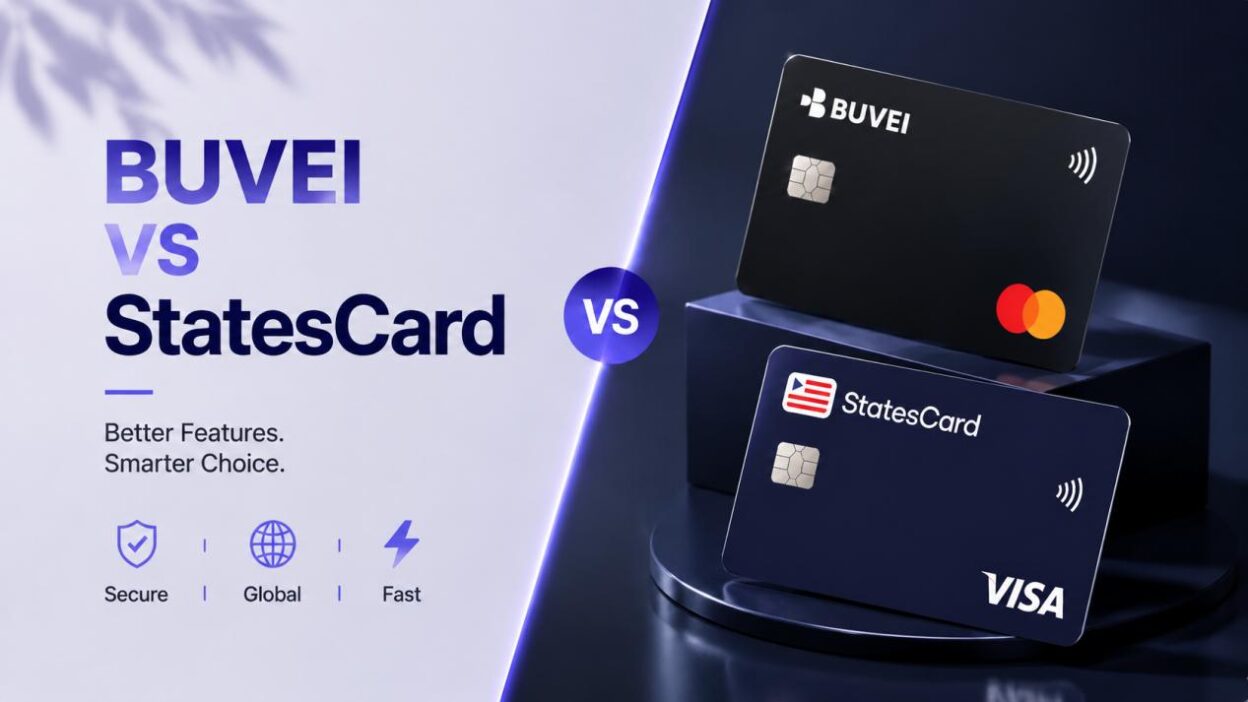
If you are looking for a virtual card that can be used for overseas services, AI tools, SaaS subscriptions, digital advertising, or international shopping, BUVEI and StatesCard are two options worth considering. Both products can help users complete online payments without an overseas credit card. However, they are designed to address different payment needs.
StatesCard focuses more on U.S. payment scenarios. It provides a U.S. virtual prepaid card solution that mainly helps users access services requiring U.S. payment methods or U.S. billing addresses.
BUVEI focuses more on global virtual payment solutions. It provides Visa and Mastercard virtual cards, supports users across 220+ countries, offers 15+ BIN options, and supports cryptocurrency funding methods including USDT, USDC, DAI, and ETH.
Simply put, StatesCard is more like a “U.S. payment pass,” while BUVEI is more like a global virtual payment tool designed for international users.
If your main requirement is paying on U.S. websites or accessing certain U.S.-based services, StatesCard can meet basic payment needs.
However, if you need to use overseas services on a long-term basis, such as ChatGPT, Claude, AWS, Google Ads, Meta Ads, or Shopify, while also looking for more card options and flexible management features, BUVEI may be a better fit.
Buvei vs StatesCard: Quick Overview
| Comparison Item | Buvei | StatesCard |
| Card Type | Visa / Mastercard Virtual Cards | Visa Virtual Prepaid Card |
| Card Network | Visa + Mastercard | Visa |
| BIN Source | 15+ Multi-Region BINs | US Payment Environment |
| Supported Countries | 220+ Countries/Regions | Mainly Focused on US Services |
| Top-up Methods | USDT, USDC, DAI, ETH, and more | Bank Cards, PayPal, Bank Transfer |
| Card Issuing Fee | $4–10 per card | Monthly Fee + Top-up Fees |
| Usage Method | App + Browser | Browser |
| Multi-card Management | Supported | Basic Support |
| Apple Pay / Google Pay | Supported | Not Confirmed |
| API Capability | Supported | Not Publicly Available |
| White Label Virtual Cards | Supported | Not Publicly Available |
Key Differences Between Buvei and StatesCard
StatesCard mainly provides a US virtual prepaid card. Its primary purpose is to solve one specific problem: how users can access a payment card that works with US-based services. Therefore, StatesCard can be suitable for scenarios such as:
- US streaming services
- US digital services
- US online shopping platforms
- Platforms that require a US billing address
However, because StatesCard uses a prepaid card model, some merchants may evaluate prepaid cards differently during their risk control process. Certain subscription services, advertising platforms, or recurring payment scenarios may have different acceptance levels depending on the card type.
Buvei provides both Visa and Mastercard virtual cards, offering a more flexible payment environment compared with a single prepaid card model. Users can choose different card options based on their specific needs, including:
- Visa virtual cards
- Mastercard virtual cards
- Cards with different regional BINs
For users who frequently access overseas services, having multiple card options can provide greater payment flexibility. For example, Buvei can be used for services such as:
- AI platforms like ChatGPT and Claude
- Cloud services such as AWS and Google Cloud
- Advertising platforms including Google Ads and Meta Ads
Since different platforms may have different payment risk control rules, multi-BIN support gives users more options when choosing the most suitable payment method.
BIN Sources
StatesCard is mainly designed around the US payment environment. Its advantage is that it provides better compatibility with US billing addresses and US-based payment scenarios.
BUVEI supports 15+ BIN sources, allowing users to choose different virtual cards based on their specific payment needs.
For global payment scenarios, the advantage of multi-BIN support is that users are not limited to a single regional payment environment. If a platform has restrictions on certain card types or regions, users can try alternative virtual cards with different BIN options.
This flexibility makes BUVEI more suitable for users who need to manage payments across multiple platforms and regions.
Global Coverage Capability
The core advantage of StatesCard is access to US-based services. It is more suitable for users who mainly need to purchase or access US digital services.
BUVEI, on the other hand, focuses more on global payment coverage. It currently supports users across 220+ countries and regions. It is suitable for:
- Users in Asia
- Users in Europe
- Cross-border sellers
- Overseas entrepreneurs
- International teams
Beyond accessing overseas services, BUVEI also supports:
- Multi-currency payments
- Global online spending
- Digital service purchases
If your needs go beyond US-based platforms and you require long-term global payment capabilities, BUVEI provides a broader range of payment options and greater flexibility.
Top-up Methods
StatesCard supports several traditional payment methods, including credit cards, PayPal, and bank transfers. These options are easier to understand and use for regular users.
BUVEI, on the other hand, supports a wider range of digital asset top-up options, including USDT TRC20, USDT ERC20, USDC, DAI, and ETH.
For users who already hold cryptocurrency assets, BUVEI allows them to fund their virtual cards without relying on traditional banking systems.
This makes BUVEI a more convenient option for international users, crypto users, and people who do not have access to overseas bank cards.
Cost Comparison
The two products use different pricing models.
| Item | Buvei | StatesCard |
| Pricing Model | Pay-per-card | Monthly subscription + top-up fees |
| Card Issuing Cost | $4–10 per card | $3.95 monthly fee |
| One-time Fee | None | $16.99 |
| Top-up Fees | Depends on the payment method | Up to approximately 8.5% |
StatesCard’s advantage is its lower monthly fee. However, it charges relatively high top-up fees, which can reach around 8.5%. For long-term usage, this may reduce its overall cost-effectiveness.
BUVEI uses a pay-per-card pricing model, with each virtual card costing around $4–10. For users who only need a few cards or prefer to create virtual cards based on their specific needs, BUVEI offers a more transparent and flexible cost structure.
App and Browser Experience
StatesCard is mainly operated through a browser. Its advantage is that users do not need to download an app, and the interface is simple and easy to use. It is suitable for users who only need to use virtual cards occasionally.
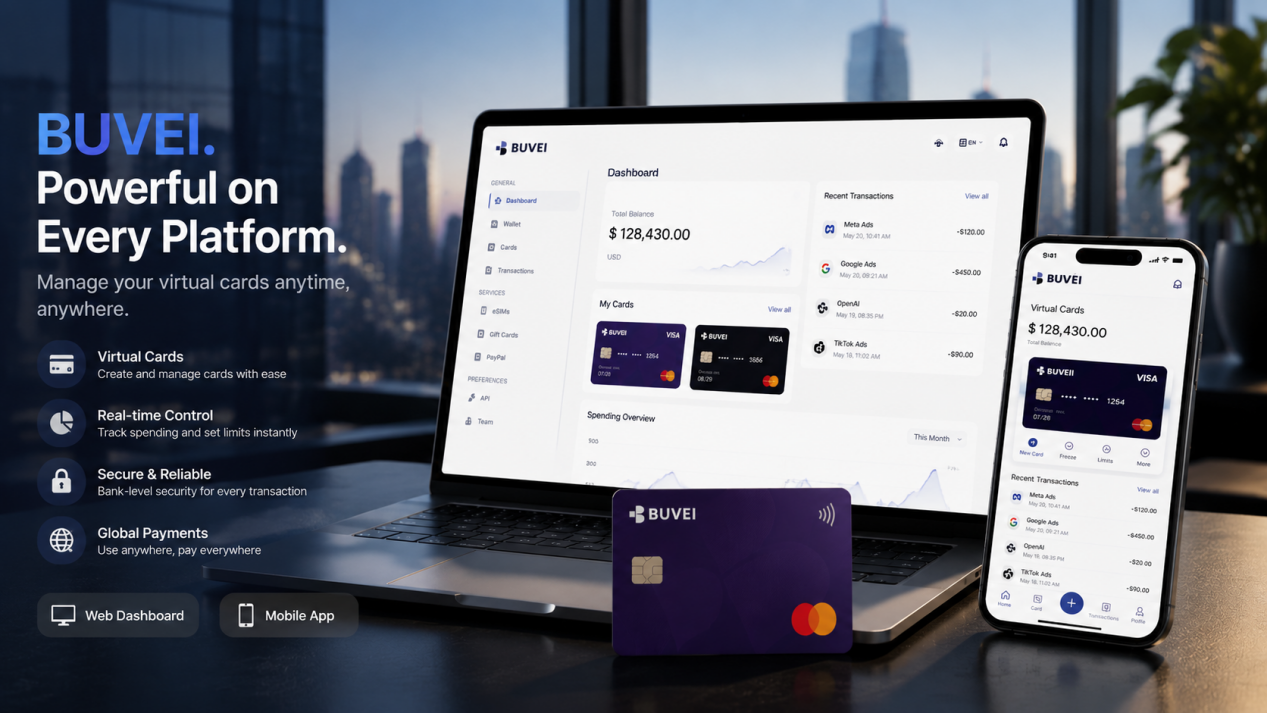
BUVEI supports both mobile apps and browser access. Users can create virtual cards, check balances, manage transactions, freeze cards, and control spending directly through their phones. For users who frequently use virtual cards, mobile management provides a more convenient experience.
Multi-Card Management and Business Capabilities
StatesCard is more focused on personal payment use cases. It mainly meets the needs of users who want a single virtual card solution for overseas payments.
BUVEI provides more advanced card management features, including:
- Multiple virtual card creation
- Spending limit controls
- Card freezing and unfreezing
- Card closure
- Transaction history tracking
These features make it easier to manage different payment scenarios. For example:
- Advertising accounts:One card can be assigned to each account for easier expense management.
- AI tools:One card can be used to manage a specific subscription.
- Business teams:Different employees or projects can use separate payment cards.
In addition, BUVEI supports team API integration and White Label virtual cards. Businesses can integrate virtual card capabilities into their own systems or create their own branded virtual card solutions.
Additional Features Supported by BUVEI
Beyond virtual cards, BUVEI also provides additional global payment features to support more flexible payment scenarios.
Apple Pay / Google Pay
BUVEI supports linking virtual cards with Apple Pay and Google Pay, allowing users to make convenient mobile payments.
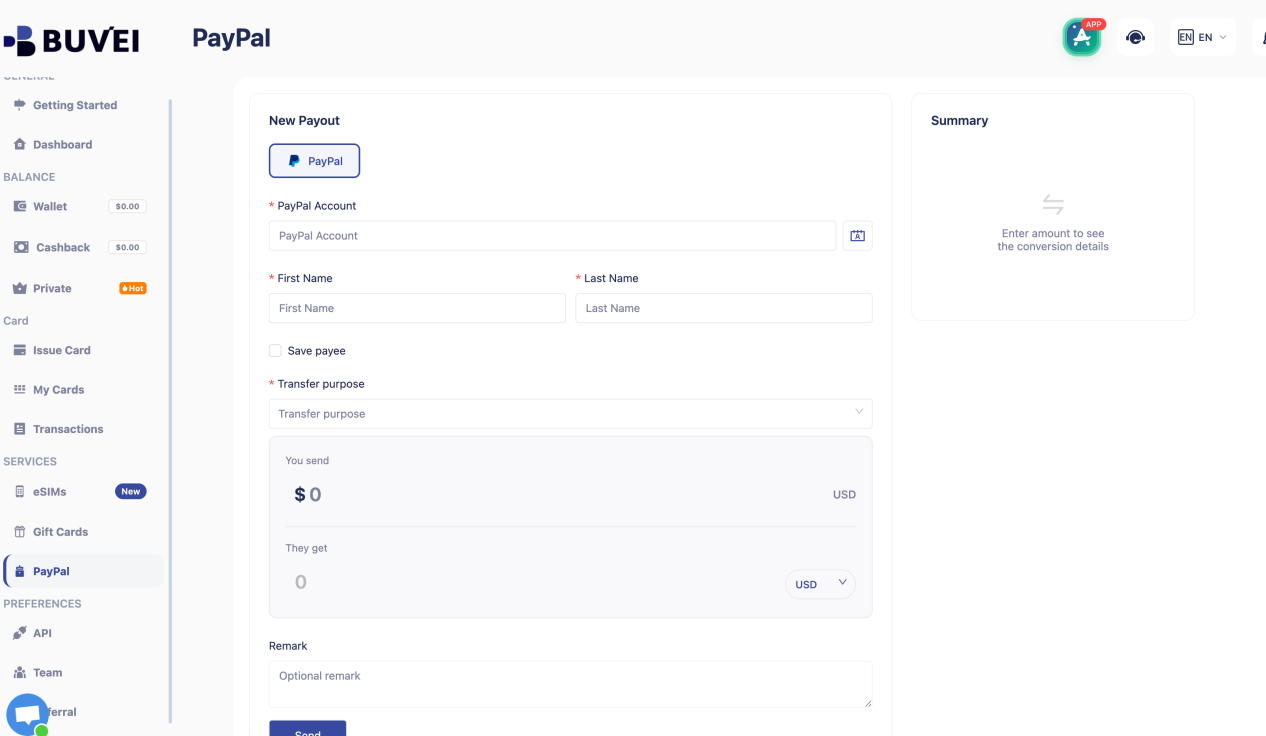
PayPal Transfers
BUVEI supports global PayPal transfer scenarios, providing users with more options for managing international payments.
eSIM
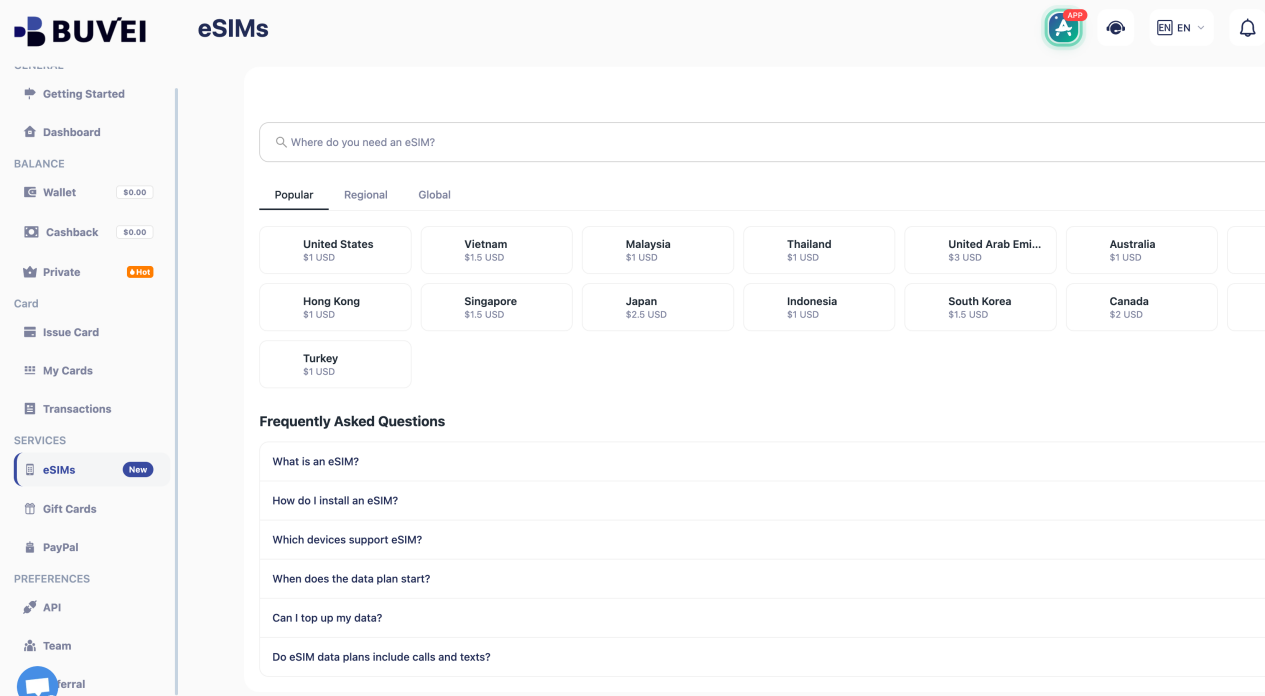
BUVEI provides global eSIM services, making it suitable for:
- International travel
- Business trips
- Remote work and global operations
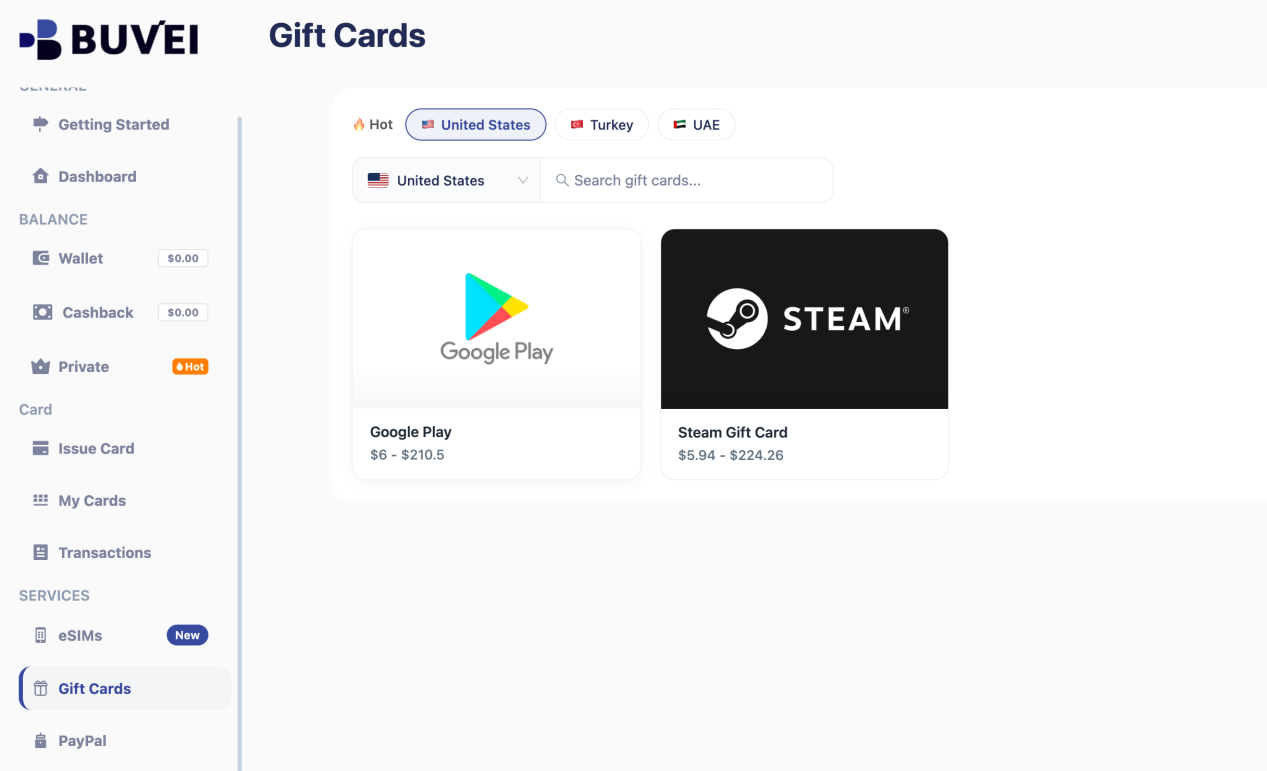
Gift Cards
BUVEI supports the purchase of digital gift cards, which can be used for:
- Software services
- Digital products and subscriptions
- International online purchases
Frequently Asked Questions
Which is better for ChatGPT, BUVEI or StatesCard?
Both platforms can be used for AI tool payments. If you only need to purchase ChatGPT Plus, StatesCard may be able to meet your basic needs. However, if you use multiple services such as ChatGPT, Claude, Midjourney, and AWS, and need to manage multiple virtual cards, BUVEI provides greater flexibility with more advanced card management options.
What top-up methods does BUVEI support?
BUVEI supports multiple digital asset top-up methods, including:
- USDT TRC20
- USDT ERC20
- USDC
- DAI
- ETH
It also supports various global payment scenarios.
Does BUVEI support business use?
Yes. In addition to personal virtual cards, BUVEI also provides:
- Team management
- API integration
- White Label virtual cards
These features allow businesses to integrate virtual card capabilities into their own products and payment workflows.
Can virtual cards always be used for all overseas websites?
Not necessarily. Payment success rates can be affected by factors such as BIN type, merchant risk control policies, regional restrictions, and billing information requirements. Choosing a platform with more BIN options and a wider range of card types can generally provide greater compatibility across different payment scenarios.
How to Compare Virtual Card Providers?
When choosing a virtual card platform, users should not focus only on pricing. It is also important to consider the following factors:
- Card Types
First, understand the available card options, including:
- Visa or Mastercard support;
- Credit cards or prepaid cards;
- Supported payment scenarios.
- BIN Sources
BINs can have a significant impact on payment compatibility. Platforms that provide multiple regional BIN options usually offer greater flexibility compared with those limited to a single BIN source.
- Supported Countries
Make sure the platform supports your region. Broader global coverage usually means fewer limitations when using virtual cards internationally.
- Top-up Methods
Choose a platform based on your available funding methods and preferred payment options.
- Management Experience
For long-term use, consider whether the platform supports:
- Mobile apps;
- Multi-card management;
- Spending controls.
- Business Expansion Capabilities
If you may need team or business use in the future, consider whether the platform provides:
- API integration;
- Sub-account management;
- White Label virtual card solutions.
Sources
Buvei.https://buvei.com
StatesCard. https://www.statescard.com/pricing
StatesCard.https://www.statescard.com/
Trustpilot. Statescard Reviews | Read Customer Service Reviews of statescard.com