Introduction
Launching a virtual card program requires reliable infrastructure for card issuing, transaction management, and spending controls.
For FinTech startups, SaaS platforms, and digital businesses, building these capabilities internally can require significant technical resources and ongoing operational effort.
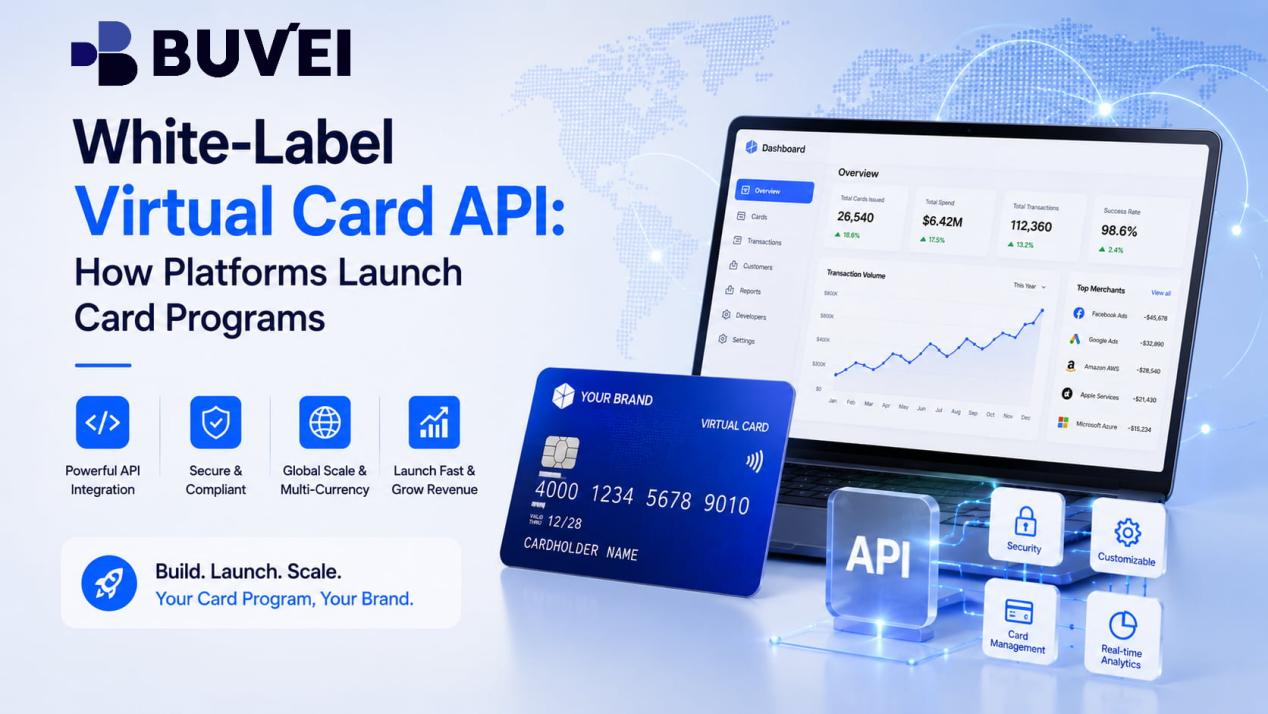
A White-Label Virtual Card API allows companies to launch branded card programs faster by connecting existing card infrastructure with their own platforms, without developing the entire payment stack from scratch.
What Is a White-Label Virtual Card API?
A White-Label Virtual Card API enables companies to create and manage branded virtual card programs through an external card infrastructure provider.
Compared with a standard Virtual Card API, a white-label solution combines API integration with card issuing capabilities, allowing platforms to offer virtual cards under their own brand.
Typical capabilities include:
- Virtual card issuing
- Card lifecycle management
- Spending controls
- Transaction monitoring
- Card activation and suspension
The main advantage is that companies can add payment capabilities without building a complete card issuing system internally.
Why Companies Choose White-Label Virtual Card APIs
For many digital platforms, payments are an important product feature rather than the entire business model.
Building card infrastructure internally requires expertise in issuing systems, payment operations, security, and compliance.
A white-label virtual card API provides a faster and more efficient way to launch payment products while reducing the technical burden of maintaining complex infrastructure.
This allows product teams to focus resources on improving their core products and customer experience.
Key Capabilities of a White-Label Virtual Card API
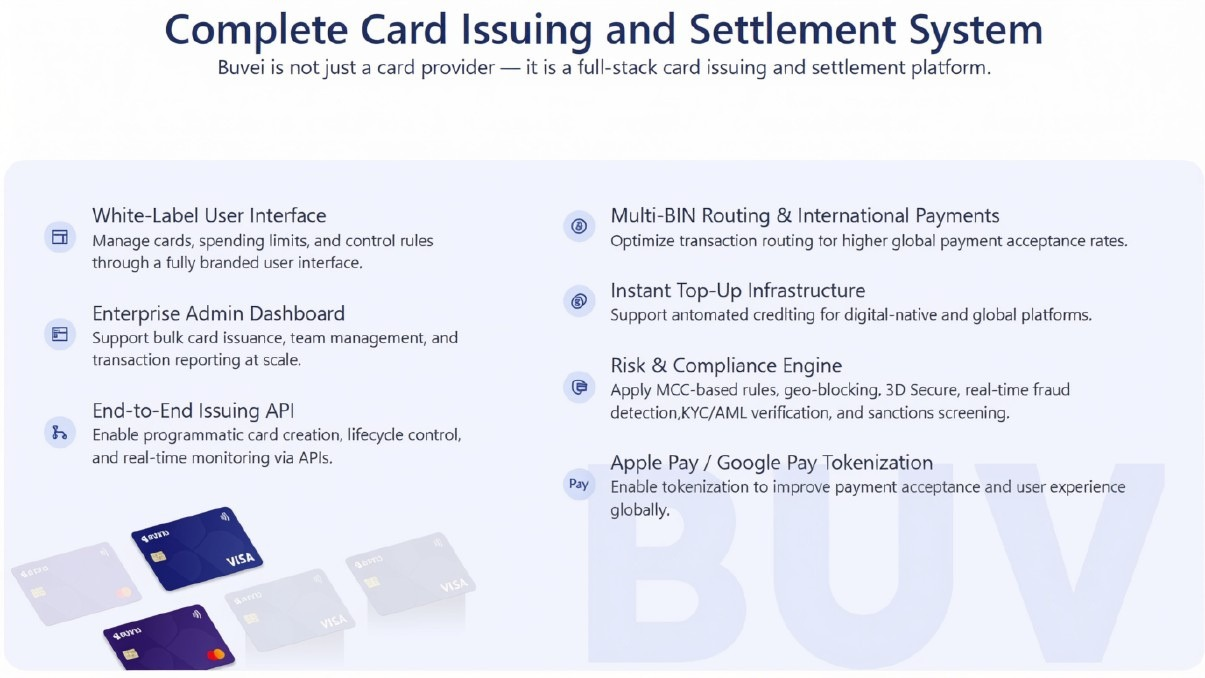
Virtual Card Issuing and BIN Management
Card issuing is the foundation of any virtual card program.
A reliable Virtual Card Issuing API should support flexible card creation, management, and deployment across different business scenarios.
BIN management is especially important for companies operating across multiple regions.
Flexible BIN configurations help platforms manage:
- Different issuing regions
- Payment acceptance requirements
- Multiple card programs
- International expansion
For global products, scalable BIN management provides greater control over how virtual cards are deployed across markets.
Card Controls and Customization
Virtual cards are increasingly used as financial management tools, not only as payment methods.
Companies need control over card activity through features such as:
- Spending limits
- Merchant restrictions
- Transaction visibility
- User permissions
White-label customization allows platforms to integrate virtual card functionality into their own products while maintaining a consistent user experience.
API Integration and Scalability
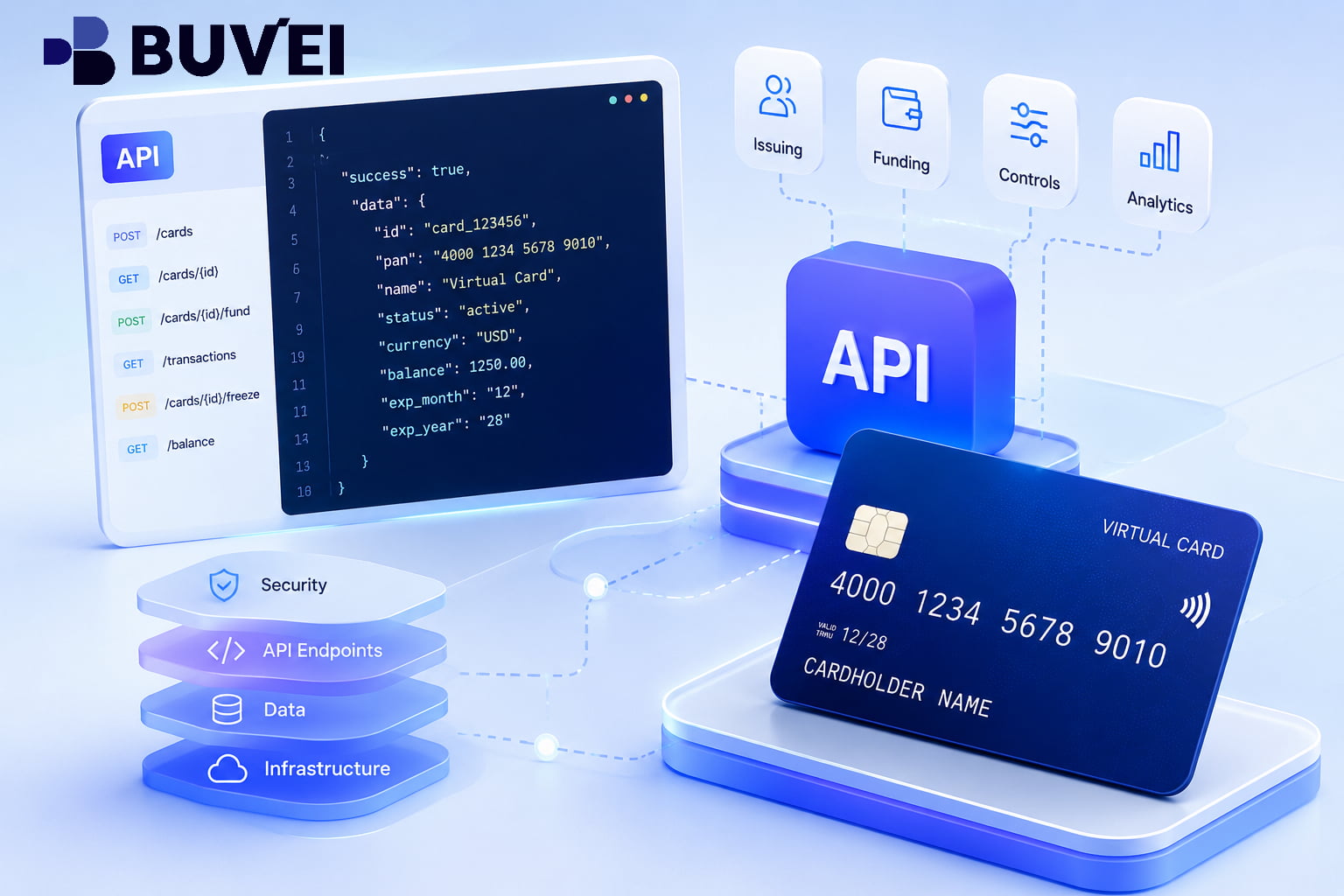
A successful virtual card program depends on how well the API integrates with existing systems.
Common integration requirements include:
- Card creation
- Card management
- Transaction reporting
- Payment workflows
As programs grow, scalable API infrastructure needs to support more users, higher transaction volumes, and additional payment scenarios.
Choosing the right infrastructure early helps avoid costly migrations later.
White-Label Virtual Card API vs Building In-House
When launching a virtual card product, companies typically choose between building their own infrastructure or working with a white-label API provider.
| White-Label Virtual Card API | Build In-House | |
| Launch speed | Faster deployment | Longer development cycle |
| Engineering resources | Lower requirements | Requires specialized teams |
| Infrastructure management | Provider-supported | Fully self-managed |
| Scalability | Easier expansion | Requires continuous investment |
| Customization | Flexible configuration | Maximum control |
For companies whose primary business is payment infrastructure, building internally may be a strategic choice.
For most FinTech startups and digital platforms, API-based infrastructure offers a better balance between speed, flexibility, and operational efficiency.
How BUVEI Supports White-Label Virtual Card Programs
BUVEI provides API-based white-label virtual card infrastructure for companies that need scalable issuing capabilities, flexible BIN management, and controlled payment workflows.
The platform enables businesses to build virtual card programs with:
- API-based card issuing
- Multi-BIN support
- Transaction controls
- Scalable payment workflows
With flexible BIN configurations across different regions, companies can design card programs for various markets and payment requirements.
For businesses managing advertising payments, international transactions, and multiple payment accounts, BUVEI provides infrastructure designed to improve payment organization and operational control.
Instead of developing every layer of the payment stack internally, companies can focus on their products while using dedicated virtual card infrastructure.
Who Uses White-Label Virtual Card APIs?
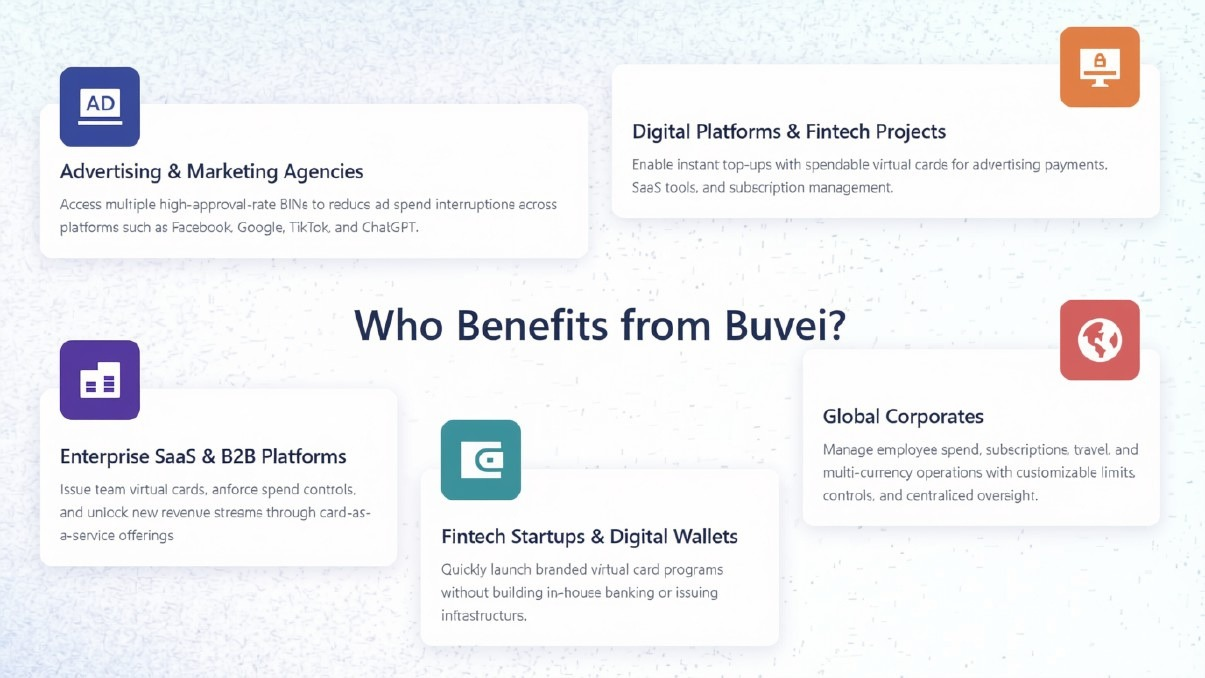
White-label virtual card APIs are commonly used by:
FinTech platforms that want to add payment capabilities without building issuing infrastructure.
SaaS companies that integrate virtual cards into expense management, subscription payments, or business workflows.
Digital businesses that require scalable payment solutions for international operations.
FAQ
What is a White-Label Virtual Card API?
A White-Label Virtual Card API allows companies to launch branded virtual card programs using external card issuing infrastructure.
Can startups launch virtual cards without building their own infrastructure?
Yes. API-based solutions allow startups to access card issuing capabilities without developing a complete payment stack internally.
What is the difference between a Virtual Card API and a Virtual Card Issuing API?
A Virtual Card API focuses on application integration, while a Virtual Card Issuing API provides the infrastructure required to create and manage cards at scale.
How long does Virtual Card API integration take?
The timeline depends on product requirements, technical complexity, and integration scope.
Conclusion
A successful virtual card program requires more than digital card creation. It depends on reliable issuing capabilities, flexible APIs, transaction controls, and scalable infrastructure.
A White-Label Virtual Card API allows FinTech startups, SaaS platforms, and digital businesses to launch branded card programs faster without building complex payment infrastructure internally.
By using API-based card infrastructure, companies can add payment capabilities while focusing on product innovation and long-term growth.