When running Google Ads campaigns, payment issues are one of the most frustrating blockers.
What makes it even more confusing is that payments are often declined even when there are sufficient funds in the card. Campaigns stop, ads go offline, and everything looks normal — except the payment no longer goes through.
This leads many advertisers to ask the same question: why does Google Ads reject a card that appears to be perfectly fine?
In reality, Google Ads payment approval is not just a balance check. It is a multi-layer system involving issuing banks, card networks, billing verification, and Google’s internal risk engine.
What actually happens when a card is declined
When a payment is triggered in Google Ads, an authorization request is sent through the payment network to the issuing bank.
If the transaction is rejected at any layer, the result is shown simply as “card declined”.
But this message hides the complexity behind it. A decline does not necessarily mean the card is broken. It usually means the transaction failed one of several validation checks in the system. 
Why Google Ads payments get declined
There is rarely a single reason behind Google Ads payment failures. In most real-world cases, it is a combination of system-level signals.
Sometimes the issue is related to the card itself. Certain BIN ranges, issuing banks, or prepaid and virtual card types are not fully compatible with Google Ads billing infrastructure. Even if the same card works on other platforms, it may still fail here.
In other cases, billing information plays a role. Even small mismatches between the entered billing address and the bank’s registered data can cause an immediate rejection.
Risk control is another major factor. Google Ads operates on a continuous billing model, which makes it highly sensitive to behavioral signals such as:
- New ad accounts
- Sudden changes in ad spend
- Unusual geographic login patterns
- Inconsistent payment attempts
From the advertiser’s point of view, nothing appears wrong, but the system may already classify the transaction as high risk.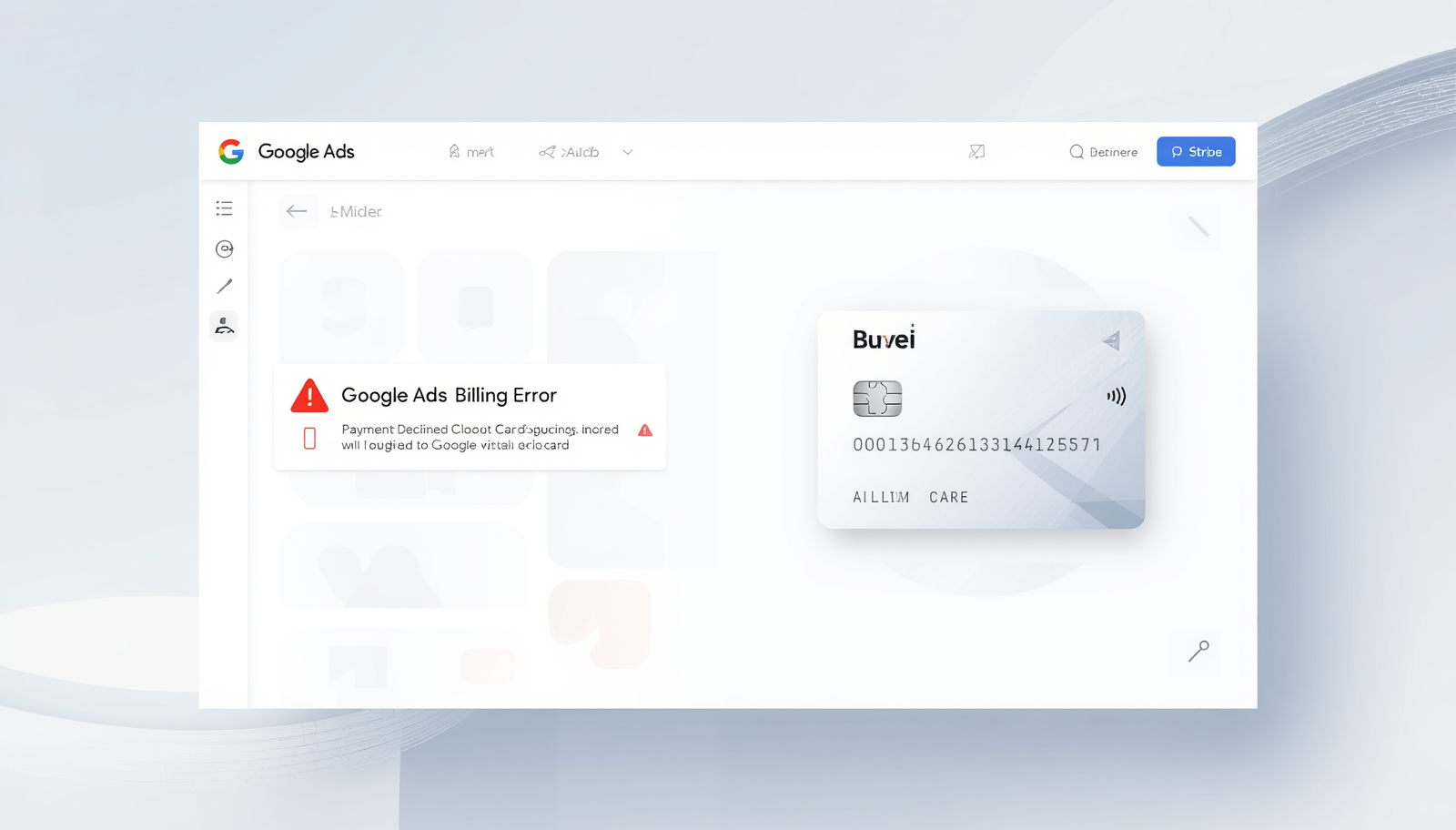
Card or BIN incompatibility issues in Google Ads
One of the most overlooked reasons for payment failure is card-level compatibility.
Google maintains internal acceptance rules for issuing banks and BIN ranges. If a card falls outside supported categories, the payment may never complete authorization.
This is especially common with certain virtual cards or prepaid card setups.
Risk control and Google Ads payment rejection
Google Ads uses layered fraud prevention systems to evaluate transactions in real time.
Signals such as rapid budget increases, inconsistent account behavior, or unstable geographic activity can trigger automatic rejection.
In these cases, the issue is not the card itself, but how the transaction fits into Google’s internal risk model.
Billing mismatch and verification failures
Another common failure point is billing information inconsistency.
If the billing address, postal code, or country format does not match the issuing bank’s records, the authorization request can be blocked immediately.
These failures are often silent and do not provide detailed explanations inside Google Ads.
3D Secure authentication issues
Some cards require additional verification through 3D Secure, such as SMS OTP or bank app approval.
If this authentication step is not completed correctly, the transaction will be rejected automatically.
This is a technical layer between Google Ads and the issuing bank.
Account-level restrictions in Google Ads
In some cases, the issue is not related to the card at all.
New Google Ads accounts may face stricter payment validation rules. Even valid cards can fail until the account builds sufficient trust signals over time.

Cross-border payment limitations
Google Ads billing often involves cross-border processing depending on account region.
If a card issuer restricts international transactions, USD billing, or advertising-related merchant categories, payments may fail even when everything else is correct.
Why these issues are difficult to diagnose
Google Ads only shows one result: “card declined”.
But behind that result, multiple systems are making decisions at the same time:
- issuing bank
- payment network
- Google risk engine
If any one of them rejects the transaction, the final result looks identical.
Why repeated retries often don’t help
In many cases, retrying the same payment does not solve the issue.
If the underlying payment setup is not compatible with Google Ads requirements, repeated attempts may not only fail but also increase risk sensitivity on the account.
The real question is not “why did it fail once”, but whether the payment setup itself is aligned with how advertising platforms evaluate transactions.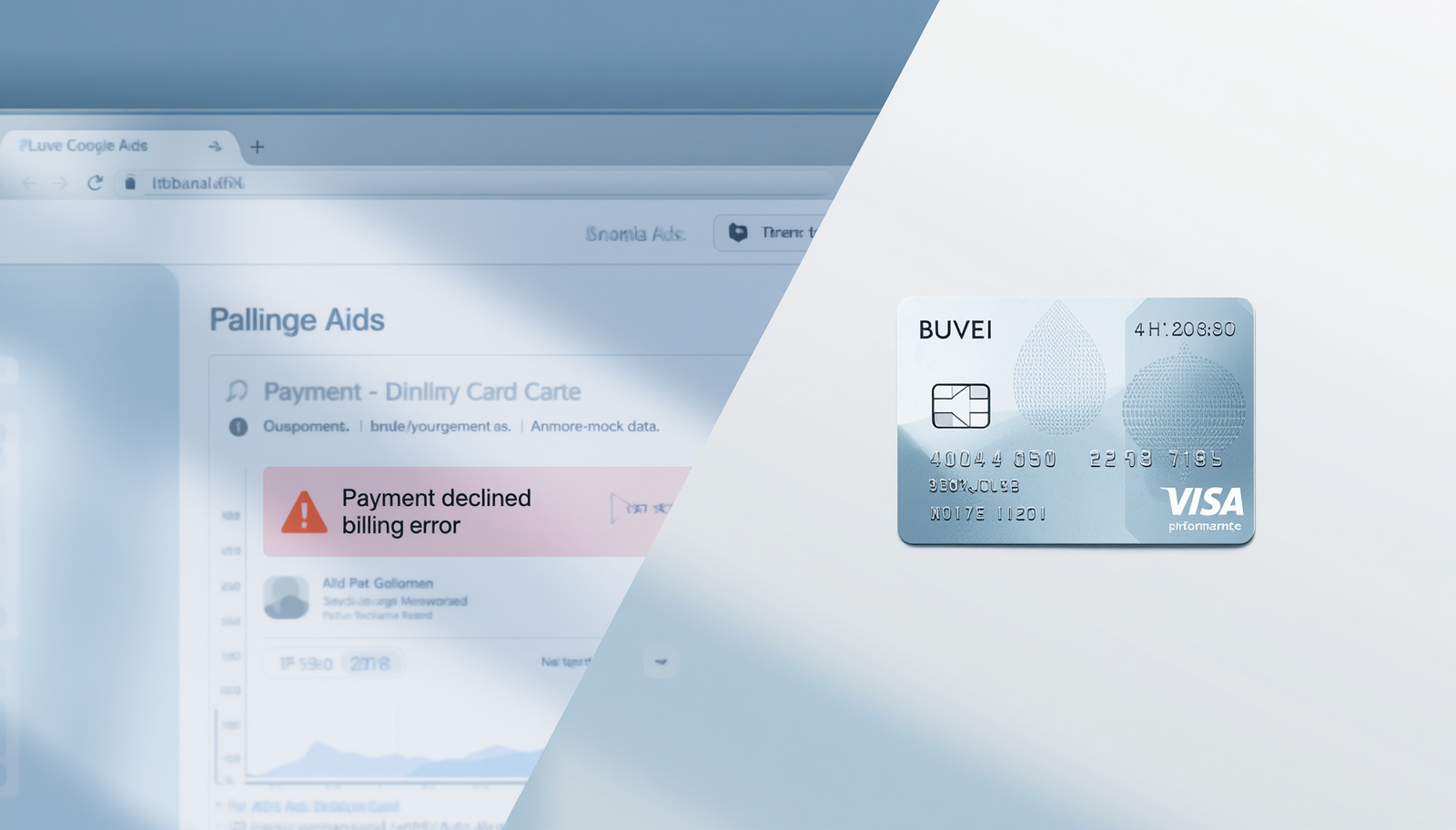
When advertisers move to more stable payment setups
Over time, many advertisers discover that the issue is not the campaign itself, but the payment infrastructure behind it.
To reduce repeated declines and improve stability in ad spend, some teams shift toward payment solutions that are designed specifically for advertising environments.
In these setups, card compatibility, BIN structure, and cross-border transaction behavior are optimized for platforms like Google Ads.
Some virtual card solutions like BUVEI are designed specifically for ad platforms with this type of payment environment in mind, helping reduce unnecessary payment friction and improve transaction stability.
Why Google Ads payment failures affect performance
Payment issues are not just operational friction — they directly impact campaign performance.
When payments fail, ads stop running, learning phases are interrupted, and budget pacing becomes unstable. Even short disruptions can affect optimization efficiency and overall ROI.
This is why many advertisers treat payment infrastructure as part of advertising strategy, not just backend setup.
Final thoughts on Google Ads card declined errors
Google Ads card declines rarely happen randomly.
From the outside, the issue looks simple. But structurally, it is the result of multiple layered systems evaluating risk, compatibility, and trust at the same time.
Understanding this structure helps reduce repeated failures and makes it easier to diagnose why payments are not going through.
And in most cases, the real improvement comes not from retrying payments, but from aligning the payment setup with how advertising platforms actually process transactions.