Online fraud has become one of the biggest problems in digital payments.
A single compromised card can lead to:
- Unauthorized charges
- Subscription abuse
- Ad account payment failures
- Account bans
- Business disruption
And the problem keeps growing as more payments move online.
We tested how modern virtual card platforms handle common fraud scenarios across:
- SaaS subscriptions
- Advertising accounts
- Ecommerce payments
- Online marketplaces
- International transactions
The conclusion was pretty straightforward: virtual cards significantly reduce payment risk when compared to traditional physical bank cards.
That’s exactly why more businesses and individuals now rely on secure virtual card platforms for online payments.
Common Online Payment Fraud Scenarios
Before looking at solutions, it helps to understand where most online payment fraud actually happens.
The reality is that fraud usually doesn’t come from dramatic “hacks.” Most cases happen through everyday online transactions.
1. Subscription billing fraud
Recurring subscriptions are one of the most common fraud risks.
This includes:
- Forgotten subscriptions
- Unauthorized renewals
- Trial-to-paid conversions
- Hidden recurring billing
What happens in practice
A user signs up for:
- A free trial
- A SaaS tool
- A streaming service
Weeks later, unexpected charges begin appearing automatically.
Traditional cards make these charges difficult to isolate quickly.
2. Data breaches and leaked card information
Many online merchants store payment information.
If a platform experiences a breach:
- Card numbers may leak
- Fraudulent purchases may follow
- Multiple merchants can become compromised simultaneously
Why this creates bigger risks
Physical cards are usually connected directly to:
- Primary bank accounts
- Main spending balances
- Everyday financial activity
A compromised card can affect far more than one purchase.
3. Advertising payment fraud
Advertising accounts are frequent fraud targets.
This is especially common on:
- Google Ads
- Meta Ads
- TikTok Ads
Secure virtual cards for ads payments
Fraud issues may include:
- Unauthorized campaign spending
- Card misuse by teams
- Billing abuse
- Account suspension from suspicious activity
Why advertisers face higher risk
Advertising platforms process:
- Large transaction volumes
- Frequent billing cycles
- Cross-border payments
which naturally increases fraud exposure.
4. Marketplace and ecommerce fraud
Online marketplaces create another layer of risk.
Users may unknowingly pay:
- Fake merchants
- Unverified sellers
- Fraudulent websites
Why this matters
Even legitimate marketplaces occasionally contain:
- Scam listings
- Stolen storefronts
- Fraudulent payment pages
Using a primary bank card everywhere increases exposure significantly.
How Virtual Cards Mitigate Fraud Risks
This is where virtual cards start to feel very different from traditional payment methods.
Instead of exposing your primary banking information repeatedly, virtual cards create a layer of separation between merchants and your real financial accounts.
How virtual cards prevent online fraud
At the most basic level, virtual cards work by limiting exposure.
A merchant only sees:
- The virtual card number
- Temporary payment credentials
—not your actual banking account details.
1. Single-use card protection
One of the biggest fraud-prevention tools is the single-use card.
Single-use virtual cards for fraud prevention
These cards:
- Work once
- Automatically expire
- Become useless after payment
Why this helps
Even if the card information leaks later:
- Fraudsters cannot reuse it
This dramatically reduces:
- Subscription abuse
- Unauthorized recurring charges
- Data breach exposure
2. Spending limit controls
Modern virtual card platforms allow users to:
- Set custom limits
- Restrict transaction amounts
- Freeze cards instantly
What this prevents
If fraud occurs:
- Losses remain limited
For example:
- A card capped at $50 cannot suddenly process a $2,000 charge.
3. Merchant-specific cards
Many users now generate separate cards for:
- Ads platforms
- SaaS subscriptions
- Ecommerce stores
- Travel bookings
Why separation improves security
If one merchant becomes compromised:
- Other payments remain unaffected
This compartmentalization is one of the biggest advantages of virtual cards.
4. Temporary cards for risky payments
Some purchases naturally carry higher fraud risk.
This includes:
- Unknown websites
- International sellers
- Trial subscriptions
- Limited-time purchases
Virtual cards for secure online payments
Temporary virtual cards help users:
- Reduce long-term exposure
- Avoid storing reusable card credentials online
Security Features of Virtual Card Platforms
Not every virtual card platform provides the same level of protection.
The best providers focus heavily on payment security infrastructure.
Virtual card security features
Here are the most important features users should look for.
Real-time transaction monitoring
Good platforms allow users to:
- Track payments instantly
- Detect suspicious activity quickly
- Freeze cards immediately
Why this matters
Fraud becomes far easier to stop when:
- Transactions are visible in real time
instead of days later through bank statements.
PCI DSS compliance
Serious providers follow PCI DSS payment security standards.
This helps ensure:
- Secure payment handling
- Protected transaction environments
- Better merchant security practices
Multi-card management
Businesses often issue:
- Separate employee cards
- Department-specific cards
- Campaign-based cards
Why businesses use this
Multi-card systems reduce:
- Shared card risks
- Internal misuse
- Payment confusion
while improving financial tracking.
Crypto funding and reduced banking exposure
Some virtual card platforms support:
- USDT funding
- Crypto top-ups
through:
- TRC20
- ERC20
Why users prefer this
Crypto funding can:
- Reduce international transfer friction
- Add payment flexibility
- Avoid direct bank exposure for some online transactions
Use Cases: Ads, SaaS, Marketplaces
Virtual card fraud protection becomes especially useful in certain industries.
Fraud protection for SaaS subscriptions
SaaS users often manage dozens of subscriptions simultaneously.
Virtual cards help:
- Separate services individually
- Control recurring billing
- Cancel unwanted renewals quickly
Secure virtual cards for international payments
Cross-border transactions frequently trigger:
- Fraud checks
- Regional payment blocks
- Verification issues
Virtual cards optimized for international payments improve both:
- Security
- Payment stability
Virtual cards for marketplace payments
Marketplace buyers use virtual cards to:
- Reduce fraud exposure
- Avoid storing primary banking details
- Improve purchase security
especially on unfamiliar platforms.

How Buvei Virtual Cards Protect Users Against Fraud
Buvei focuses heavily on payment security and online transaction control.
How Buvei reduces fraud risks
The platform supports:
- Multiple virtual cards
- Custom spending limits
- Instant issuing
- Real-time transaction visibility
- Stable international payment support
Why this improves security
Users can:
- Assign separate cards to subscriptions
- Isolate advertising accounts
- Create payment-specific cards
- Freeze cards instantly if needed
How to use Buvei securely
Step 1 — Create dedicated cards
Use separate cards for:
- Ads
- SaaS tools
- Ecommerce
- Travel payments
Step 2 — Set spending limits
Configure:
- Daily limits
- Transaction caps
- Budget restrictions
Step 3 — Monitor transactions
Track payments in real time from the dashboard.
Step 4 — Replace cards instantly
If suspicious activity appears:
- Freeze or replace cards immediately
Best Practices for Reducing Online Payment Fraud
Even with virtual cards, a few habits make a big difference.
1. Never reuse the same card everywhere
Using one card across dozens of services increases risk exposure.
2. Use temporary cards for free trials
This prevents unwanted recurring charges later.
3. Monitor subscriptions regularly
Many fraud-related losses come from:
- Forgotten renewals
- Unnoticed recurring billing
4. Keep backup cards available
If one card becomes compromised:
- Payments can continue without interruption
Conclusion
As online fraud continues increasing, more users are moving toward secure virtual card platforms for better payment protection. Whether paying for SaaS tools, digital ads, ecommerce purchases, or international services, virtual cards help reduce financial exposure while improving spending control.
The best solutions for virtual card fraud prevention combine:
- Single-use cards
- Spending limits
- Real-time monitoring
- Multi-card management
- Secure international payment support
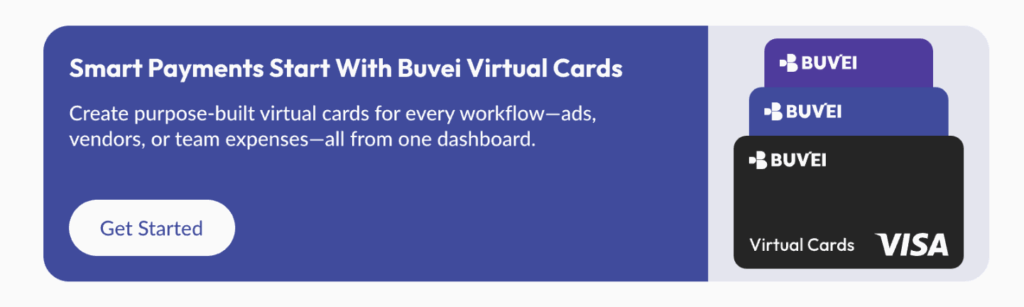
Platforms like Buvei help users manage online payments more safely by offering flexible virtual card infrastructure built specifically for secure digital transactions and fraud prevention.