For years, PayPal was known for solving one simple problem: moving money online.
That alone helped turn the company into one of the most recognizable names in digital payments. But according to CEO Alex Chriss, payments alone are no longer enough.
Today, PayPal wants to become something much bigger: a full-scale commerce platform connecting merchants and consumers in smarter, more personalized ways.
And that shift may redefine how the company competes in ecommerce over the next decade.
Why PayPal Is Moving Beyond Payments
Digital payments have become crowded.
What once made PayPal unique is now offered by:
- Banks
- Fintech startups
- Mobile wallets
- Ecommerce platforms
- Embedded payment providers
In other words, online payments have become a commodity.
That’s why PayPal is trying to evolve beyond simple transaction processing.
PayPal commerce strategy explained
Instead of only helping users complete payments, PayPal now wants to:
- Help merchants find customers
- Personalize shopping experiences
- Improve checkout conversion
- Deliver consumer insights
- Build stronger merchant-consumer relationships
Why this matters
The company already sits on an enormous network:
- Hundreds of millions of consumer accounts
- Tens of millions of merchant accounts
That creates a two-sided ecosystem few competitors can fully replicate.
What PayPal sees as its advantage
According to company leadership, the challenge isn’t payments anymore.
It’s helping:
- Consumers discover products
- Merchants reach the right buyers
- Platforms optimize digital commerce experiences
How PayPal’s Merchant Strategy Is Changing
Historically, PayPal made most of its revenue from merchant transaction fees.
But now the company is expanding deeper into merchant services.
PayPal merchant services
The company increasingly focuses on:
- Merchant analytics
- Consumer shopping data
- Personalized offers
- Checkout optimization
- Ecommerce infrastructure
Why merchants care
Online retailers constantly struggle with:
- Cart abandonment
- Poor checkout conversion
- Customer acquisition costs
- Weak personalization
PayPal wants to help solve those problems directly.
What PayPal is building
The company is gradually positioning itself as:
- A payments provider
- A data platform
- A merchant software company
- A commerce infrastructure provider
all at the same time.
The Role of Consumer Data and Personalization
One major part of PayPal’s strategy centers around personalization.
PayPal merchant personalization tools
Modern ecommerce increasingly depends on understanding customer behavior.
Retailers want to know:
- What shoppers buy
- What products they browse
- Preferred colors or sizes
- Spending patterns
- Checkout preferences
Why personalization matters
Personalized shopping experiences can:
- Improve conversion rates
- Increase repeat purchases
- Raise average order value
- Strengthen customer loyalty
How PayPal fits into this
Because PayPal processes transactions across millions of merchants, it has access to valuable shopping behavior data.
That information can potentially help retailers:
- Target promotions more effectively
- Recommend products
- Improve ad performance
- Customize offers
Why privacy concerns emerged
As PayPal expanded its personalization initiatives, the company updated parts of its privacy policy to allow broader data-sharing capabilities with merchants.
That move reflects a broader ecommerce trend:
- Payments companies increasingly want to become commerce intelligence platforms.
How Fastlane Fits Into PayPal’s Growth Strategy
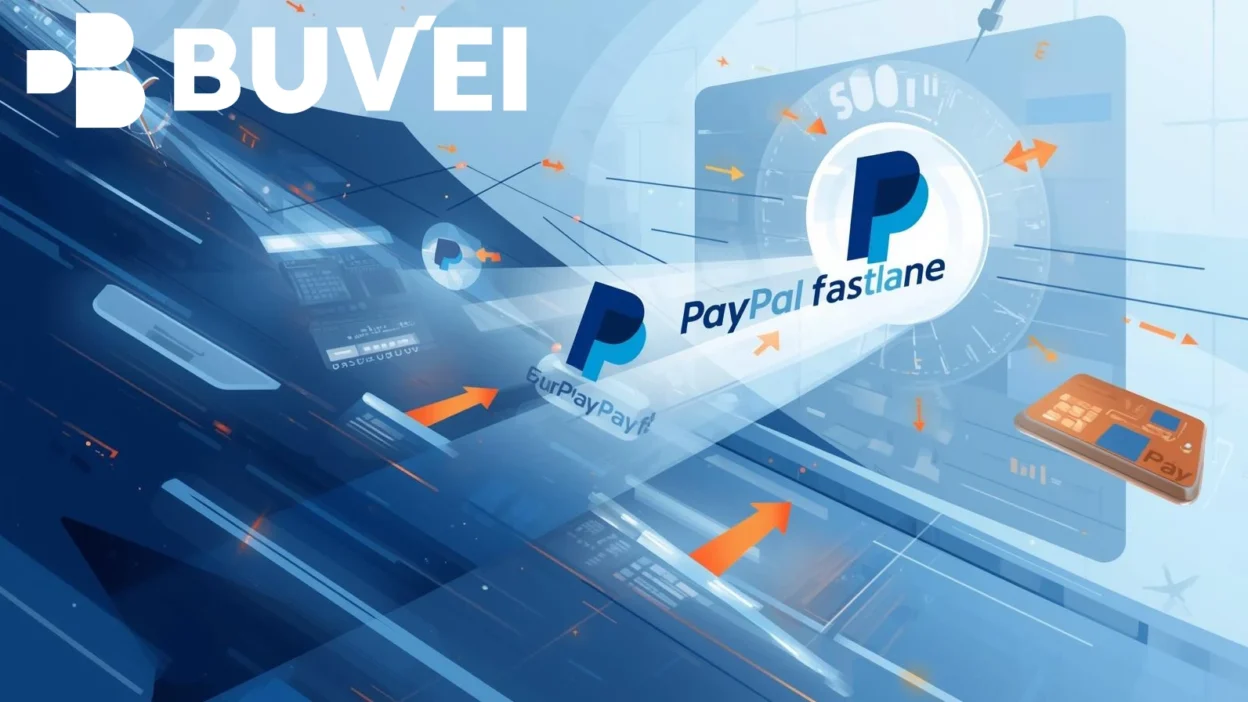
One of the clearest examples of PayPal’s shift is Fastlane.
PayPal Fastlane checkout service
Fastlane is designed to simplify guest checkout experiences.
Normally, guest checkout creates friction because:
- Users manually enter payment information
- Merchants lose customer visibility
- Checkout becomes slower
Fastlane attempts to streamline that process.
How Fastlane works
The system can:
- Recognize PayPal users
- Speed up guest checkout
- Reduce form entry
- Improve conversion rates
without requiring shoppers to log fully into PayPal.
Why merchants are interested
Faster checkout directly affects sales performance.
Even small improvements in checkout speed can:
- Reduce cart abandonment
- Increase completed purchases
- Improve customer satisfaction
Why competitors are partnering
Interestingly, several payment processors that might otherwise compete with PayPal have partnered to support Fastlane.
That suggests:
- Checkout optimization has become strategically important across ecommerce.

How PayPal Is Becoming a Commerce Infrastructure Company
The bigger picture is becoming clearer.
PayPal no longer wants to be viewed as just a wallet or payment button.
Digital commerce platform trends
Across the payments industry, companies are expanding into:
- Software services
- Merchant tools
- Embedded finance
- Consumer engagement platforms
Why payments alone aren’t enough
Transaction processing margins are becoming increasingly competitive.
Growth now depends on:
- Software revenue
- Merchant ecosystems
- Data services
- Commerce enablement tools
What PayPal is trying to achieve
The company appears focused on building:
- A broader merchant ecosystem
- A more integrated shopping experience
- Stronger consumer engagement
- Higher-value merchant relationships
The International Growth Opportunity
Despite PayPal’s global recognition, international growth remains a major opportunity.
Future of PayPal ecommerce services
The company already operates in over 200 markets worldwide.
But ecommerce expansion continues accelerating globally, especially in:
- Emerging markets
- Mobile commerce
- Cross-border retail
- Digital marketplaces
Why international commerce matters
Global merchants increasingly need:
- Multi-currency payments
- Cross-border checkout systems
- Fraud management
- Localized customer experiences
Where PayPal could expand
PayPal’s existing network gives it a foundation to grow further into:
- International merchant services
- Ecommerce infrastructure
- Personalized global shopping experiences
Why PayPal Faces Competition
The opportunity is large — but so is the competition.
The payments and ecommerce space now includes:
- Apple Pay
- Stripe
- Adyen
- Shopify
- Block
- Google Pay
- Amazon
along with hundreds of fintech startups.
AI and personalized commerce payments
Artificial intelligence is also reshaping ecommerce rapidly.
AI can increasingly help merchants:
- Personalize offers
- Optimize checkout flows
- Predict shopping behavior
- Improve customer targeting
Why PayPal needs to evolve quickly
Consumers now expect:
- Seamless checkout
- Personalized recommendations
- Faster transactions
- Frictionless commerce experiences
Simply processing payments is no longer enough to maintain competitive advantage.
What This Means for the Future of Ecommerce
PayPal’s transformation reflects a much larger shift happening across digital commerce.
Payments are gradually becoming:
- Invisible
- Embedded
- Personalized
- Data-driven
Why commerce platforms are expanding
The companies that control:
- Customer relationships
- Merchant ecosystems
- Checkout experiences
- Consumer data
may ultimately control more of the future ecommerce economy.
What PayPal is betting on
The company appears to believe its greatest advantage is its existing two-sided network connecting:
- Consumers
- Merchants
at global scale.
Conclusion
PayPal is no longer positioning itself as just a digital payments company. Under Alex Chriss, the company is expanding into a broader commerce platform focused on personalization, merchant services, checkout optimization, and consumer engagement.
As ecommerce becomes increasingly competitive and AI-driven, PayPal’s ability to connect merchants and shoppers through data, software, and streamlined checkout experiences may determine whether it can maintain its relevance in the next era of digital commerce.