In April 2026, the distinction between Virtual Card APIs and Traditional Payment APIs represents the shift from "Moving Money" to "Managing Money." While traditional APIs focus on the Acquiring side (receiving payments), Virtual Card APIs focus on the Issuing side (creating the payment instrument).
Integrating the right API depends on whether your platform needs to collect funds from users or empower users to spend funds.
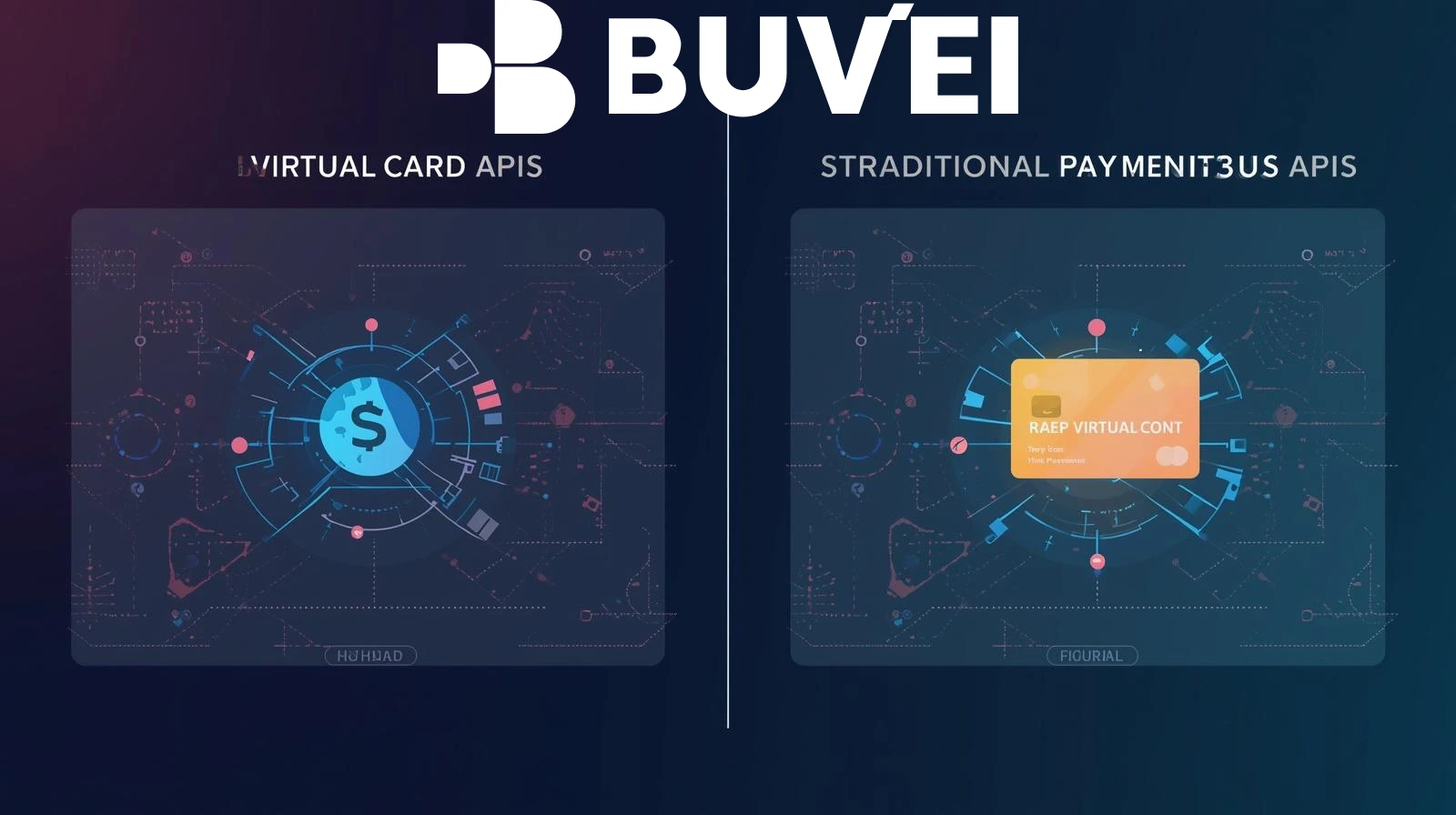 What Are Virtual Card vs. Traditional Payment APIs?
Virtual Card APIs (The "Issuing" Stack)
These APIs allow a platform to generate unique, 16-digit Visa/Mastercard credentials programmatically.
-
Key Players: Marqeta, Stripe Issuing, Adyen Issuing, Airwallex.
-
Function: You act as the "Issuer." You create a card, set a $50 limit, and give it to an employee or a customer to spend.
Traditional Payment APIs (The "Acquiring" Stack)
These are traditional gateways and processors used to accept payments from customers.
-
Key Players: Stripe (Payments), Braintree, Checkout.com, Fiserv.
-
Function: You act as the "Merchant." You provide a checkout form, the customer enters their card, and the API moves the money from their bank to yours.
Key Differences: Issuing vs. Processing
| Feature | Virtual Card API (Issuing) | Traditional Payment API (Acquiring) |
| Direction of Funds | Outbound: You enable spending. | Inbound: You collect revenue. |
| Control Logic | Proactive: Set limits before the spend happens. | Reactive: Screen for fraud during the checkout. |
| Data Ownership | You see every line-item merchant detail. | You see the customer's card info and amount. |
| Revenue Model | You earn a share of Interchange Fees. | You pay Processing Fees (e.g., 2.9% + 30¢). |
| Settlement | JIT (Just-In-Time) funding of the card. | T+2 or T+3 settlement to your bank account. |
Use Cases in 2026
SaaS Platforms (Expense Management)
Modern SaaS tools (like Ramp or Brex) use Virtual Card APIs to allow their customers to create "Project Cards."
-
Example: A user creates a card for a $1,000 marketing budget. The API ensures the card cannot spend $1,001.
Digital Ad Agencies
Agencies use Virtual Card APIs to isolate client spend.
-
Example: Generating 50 unique cards for 50 different Facebook Ad accounts to prevent a "Chain-Reaction" ban if one account has a billing issue.
Marketplaces & Gig Economy
Platforms like DoorDash use Virtual Card APIs to pay drivers.
-
Example: Instead of a bank transfer, the driver gets a virtual card loaded with the exact amount of the order to pay the restaurant.
Any standard online store uses Traditional Payment APIs.
-
Example: A customer buys a pair of shoes; the API processes their credit card and deposits the profit into the store's account.
 Pros and Cons of Each Approach
Virtual Card APIs
-
Pros: * New Revenue: You earn money every time a card is used (interchange).
-
Total Security: Single-use cards make data breaches at merchants irrelevant.
-
Automation: Auto-reconcile expenses without manual receipts.
-
-
Cons: * KYC Complexity: You must verify the identity of the person you are issuing the card to.
-
Regulatory Burden: More "Banking-like" compliance requirements (AML/CTF).
-
Traditional Payment APIs
-
Pros: * Simple Onboarding: Get started in minutes (especially with Stripe or PayPal).
-
Universal Acceptance: Every customer has a card or wallet (Apple/Google Pay) to pay you.
-
-
Cons: * High Costs: Transaction fees eat into profit margins.
-
Chargeback Risk: You are liable for fraudulent "inbound" payments.
-
Final Verdict for 2026
If your goal is to build a financial ecosystem where users manage their own budgets (SaaS, FinTech), use a Virtual Card API. If your goal is simply to sell a product or service, stick with a Traditional Payment API. Many modern "Super-Apps" now integrate both to control the entire lifecycle of a dollar.