Recurring payments have become a normal part of daily life.
Today, many services rely on subscription billing instead of one-time purchases. From streaming platforms to software tools, users now manage dozens of recurring charges every month.
While subscriptions provide convenience, they also introduce challenges.
Unexpected charges.
Forgotten subscriptions.
Payment failures.
Security risks.
These problems make managing recurring payments more complicated than most people expect.
That’s why virtual cards are becoming one of the most popular tools for subscription management.
They provide flexibility, control, and improved payment reliability—especially for users managing multiple subscriptions across global platforms.
This complete guide explains how recurring payments work, why virtual cards are useful, how to manage multiple subscriptions efficiently, and how solutions like buvei help simplify recurring billing.
What Are Recurring Payments
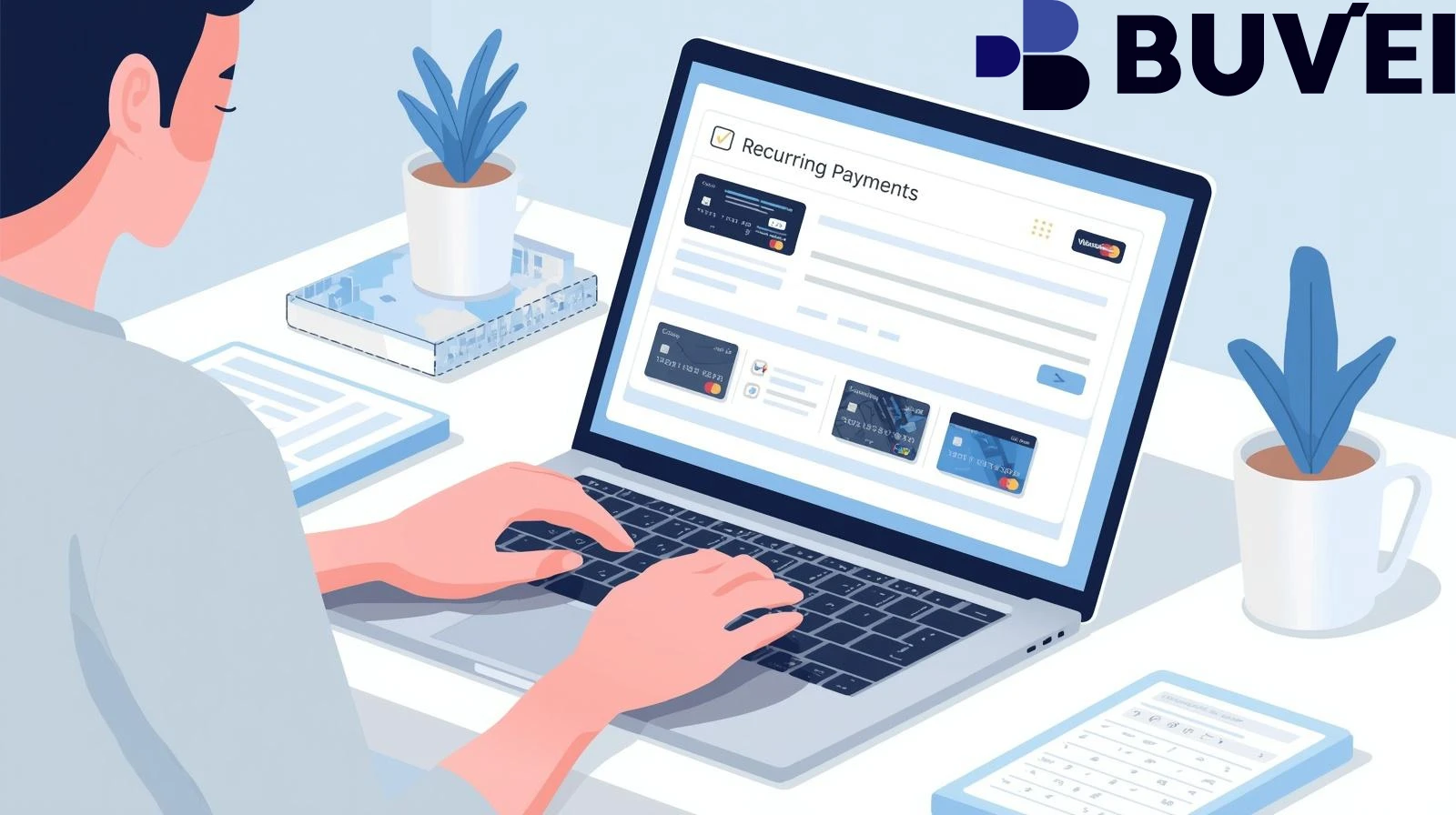
Recurring payments are automated transactions that occur on a scheduled basis.
Instead of manually paying each time, the system automatically charges your payment method at regular intervals.
These payments are widely used across digital services.
Common Types of Recurring Payments
Recurring payments appear in many industries.
Typical examples include:
Streaming subscriptions
Cloud software subscriptions
Online memberships
Mobile applications
Gaming services
Platforms such as Netflix, Spotify, and Adobe rely heavily on subscription billing models.
Users authorize payment once.
After that:
Charges repeat automatically.
This simplifies service access but can create hidden costs over time.
How Recurring Billing Works
Recurring billing systems store your payment information securely.
On the billing date:
The system automatically processes the charge.
If the payment succeeds:
Service continues uninterrupted.
If the payment fails:
Access may be restricted.
Or cancelled entirely.
Because of this dependency, choosing the right payment method becomes extremely important.
Why Virtual Cards Are Useful for Subscriptions
Traditional payment methods were not designed for heavy subscription usage.
Virtual cards solve many limitations of physical cards.
They provide features specifically suited for digital billing environments.
Better Control Over Subscription Spending
One of the biggest advantages of virtual cards is spending control.
Users can:
Set transaction limits
Restrict recurring amounts
Disable cards instantly
This prevents:
Unexpected billing increases.
For example:
If a subscription unexpectedly raises its price, the virtual card limit can block excessive charges automatically.
Easy Subscription Isolation
Many users struggle to identify which subscription is charging their account.
Virtual cards solve this problem by allowing:
One card per subscription.
This creates a clear structure:
Each service uses a separate payment method.
That makes tracking expenses easier.
And cancellation faster.
Instant Card Replacement
Physical cards require:
Shipping time.
Virtual cards do not.
If a card is compromised or fails:
A new card can be created instantly.
This reduces service downtime.
Especially for important software subscriptions.
Managing Multiple Recurring Payments with Virtual Cards
Modern users often subscribe to many services simultaneously.
Without proper management, subscriptions quickly become disorganized.
Virtual cards provide structured payment workflows.
Assigning Dedicated Cards to Each Service
Instead of using one card for everything, advanced users create:
Separate virtual cards.
For example:
One card for streaming
One card for software
One card for gaming
One card for AI tools
This method improves:
Budget tracking.
And reduces confusion.
When a subscription needs to be cancelled, simply disable the related card.
No platform navigation required.
Monitoring Subscription Activity
Virtual card dashboards usually provide:
Transaction logs
Payment alerts
Usage history
This allows users to:
Monitor spending patterns.
And identify unused subscriptions.
Regular monitoring helps avoid:
Hidden recurring charges.
Managing Business Subscriptions
Businesses often manage dozens—or hundreds—of recurring services.
These include:
Cloud storage
Marketing tools
Analytics platforms
Communication software
Virtual cards allow:
Department-based payment allocation.
Each team receives:
Dedicated spending controls.
This improves financial transparency.
Security Benefits of Virtual Cards for Recurring Billing
Security risks increase as subscription usage grows.
Each saved payment method represents a potential vulnerability.
Virtual cards reduce these risks significantly.
Limited Exposure to Fraud
Traditional cards store permanent payment details.
Virtual cards can be configured to:
Expire automatically
Limit transaction amounts
Restrict merchant usage
This reduces:
Fraud exposure.
Even if payment details are leaked.
Quick Fraud Response
If suspicious activity occurs:
Virtual cards can be frozen immediately.
This prevents:
Further unauthorized transactions.
Traditional cards often require:
Customer service interaction.
Virtual cards offer faster control.
Reduced Data Storage Risks
Many services store card data for recurring billing.
Using dedicated virtual cards minimizes risk.
If one platform is compromised:
Other subscriptions remain unaffected.
Because:
Each card is isolated.
Common Use Cases for Recurring Payment Virtual Cards
Virtual cards support many subscription-based workflows.
Understanding typical use cases helps maximize their value.
Streaming Services
Entertainment subscriptions are among the most common recurring payments.
These include:
Video streaming
Music streaming
Live TV services
Users often subscribe to multiple platforms simultaneously.
Virtual cards simplify:
Payment tracking.
And budget management.
Software and SaaS Tools
Professionals rely on subscription-based software.
Examples include:
Design tools
Cloud storage
Marketing automation
AI services
Virtual cards help manage:
Software renewal schedules.
And cost allocation.
Gaming Subscriptions
Gaming platforms frequently use recurring billing.
Examples include:
Game passes
Online memberships
Premium features
Virtual cards provide secure payment methods for these recurring expenses.
Using buvei Virtual Cards for Subscription Management
Choosing the right virtual card provider improves performance and reliability.
Buvei includes features specifically designed for recurring billing environments.
Fast Virtual Card Creation
Buvei allows:
Instant card issuance.
Users can generate multiple cards quickly.
This supports:
Multi-subscription workflows.
Especially for users managing several services.
Multi-Card Management Dashboard
Buvei provides:
Centralized control.
Users can:
Create
Pause
Delete
Cards individually.
This simplifies:
Subscription management.
And improves workflow visibility.
Flexible Spending Limits
Users can define:
Maximum spending per card.
This prevents:
Unexpected overcharges.
Especially useful when subscription prices change.
Global Payment Compatibility
Many subscription services operate internationally.
Buvei supports:
Cross-border payment processing.
This improves:
Payment success rates.
Across global platforms.
Secure Payment Structure
Security tools include:
Transaction monitoring
Card management controls
These features reduce:
Fraud risks.
And protect recurring payments.

Tips for Managing Recurring Payments Efficiently
Good subscription management habits improve financial stability.
These practices help users stay organized.
Review Subscriptions Monthly
Check:
Active subscriptions regularly.
Cancel:
Unused services.
This prevents:
Wasted spending.
Use Separate Cards for High-Risk Services
Some services store payment details long-term.
Using separate virtual cards limits risk.
If one service is compromised:
Others remain safe.
Set Spending Alerts
Notifications help detect:
Unexpected billing changes.
Early alerts prevent:
Large financial losses.
Conclusion
Recurring payments are now part of everyday digital life.
While subscriptions provide convenience, they also introduce financial and security challenges.
Virtual cards offer a smarter way to manage recurring billing by providing:
Spending control
Better organization
Improved security
Flexible payment management
Whether managing personal subscriptions or large business tools, virtual cards simplify recurring payment workflows.
Platforms like buvei enhance this process by offering fast card creation, secure payment infrastructure, and flexible control tools—making subscription management more efficient, predictable, and secure in today’s digital payment environment.