In today’s subscription-driven economy, platforms like Netflix, Spotify, and Hulu rely heavily on automated recurring billing systems. Unlike one-time purchases, these services charge users on a monthly (or yearly) basis, which places strict requirements on payment stability.
A “stable” payment method means more than just having enough balance. It involves several critical factors:
1. Continuous Validity
Your payment method must remain active over time. If a card expires or is disabled, the system will automatically attempt retries, but repeated failures may lead to service interruption.
2. Sufficient Funds at Billing Time
Streaming platforms typically attempt to charge at a fixed billing date. If funds are insufficient—even temporarily—the payment may fail, triggering account restrictions.
3. Global Payment Compatibility
Many users subscribe to services outside their home region. For example, accessing US-based libraries on Netflix or subscribing to premium plans may require cards that are accepted internationally.
4. Recurring Billing Support
Not all payment methods support recurring charges. Some prepaid cards or local payment systems lack this functionality, leading to failed renewals.
5. Fraud and Risk Scoring
Platforms use automated systems to detect suspicious transactions. If your payment method appears inconsistent (e.g., frequent changes, mismatched regions), it may be flagged.
Because of these requirements, users increasingly turn to virtual cards as a reliable solution that can be controlled, monitored, and adapted to different billing environments.
 Common Payment Issues with Netflix, Spotify, and Hulu
Despite their global popularity, many users encounter recurring payment issues when subscribing to streaming services. Understanding these problems is key to solving them effectively.2.1 Card Declines
One of the most common issues is payment decline. This can happen for several reasons:
- Unsupported card BIN (Bank Identification Number)
- Issuer restrictions on international transactions
- Platform-specific payment filters
For example, some regions may have limited support for international cards, causing repeated failures.
2.2 Billing Region Mismatch
Streaming services often align billing with account regions. If your account is registered in one country but your card is issued in another, the system may reject the transaction.
This is particularly common for users trying to:
- Access region-specific content libraries
- Subscribe while traveling or living abroad
- Use international payment methods
2.3 Insufficient Funds or Balance Timing Issues
Even if your account generally has funds, timing matters. If the balance is unavailable at the exact billing moment, the charge may fail.
This is especially problematic for:
- Prepaid cards
- Wallet-based systems
- Cards without auto top-up
2.4 Recurring Payment Failures
Some cards work for the first payment but fail on renewal. This can happen due to:
- Lack of recurring billing authorization
- Card expiration
- Merchant restrictions
2.5 Fraud Detection and Security Blocks
Platforms like Netflix and Spotify use automated fraud detection systems. Suspicious activity—such as frequent card changes or mismatched locations—can result in blocked payments.
2.6 Subscription Interruptions
When payments fail repeatedly, users may experience:
- Temporary account suspension
- Downgrade to free plans (Spotify)
- Loss of access to content
These issues highlight the need for a more controlled and adaptable payment method.
Benefits of Using Virtual Cards for Subscriptions
Virtual cards have emerged as one of the most effective solutions for managing streaming subscriptions. They combine flexibility, security, and global compatibility.
3.1 Higher Acceptance Rates
Virtual cards issued on networks like Visa and Mastercard are widely accepted across streaming platforms. This significantly reduces the chances of payment rejection.
3.2 Enhanced Payment Control
Unlike traditional cards, virtual cards allow users to:
- Set spending limits
- Control billing amounts
- Allocate funds per subscription
This ensures that each service only charges what you intend.
3.3 Improved Security
Virtual cards reduce exposure of your primary financial account. Even if card details are compromised, the impact is limited to a single subscription.
3.4 Flexibility for Global Users
Users can subscribe to services across different regions without relying on local banking systems. This is especially useful for:
- Expats
- Digital nomads
- Cross-border users
3.5 Easy Replacement and Management
If a card fails or expires, you can instantly generate a new one without affecting other subscriptions. This eliminates downtime and simplifies account management.
3.6 Compatibility with Recurring Billing
Unlike many prepaid methods, virtual cards support automated recurring charges, making them ideal for subscription-based services.
Managing Multiple Streaming Payments with Virtual Cards
As users subscribe to multiple services simultaneously, managing payments becomes more complex. Virtual cards offer a structured way to handle this.
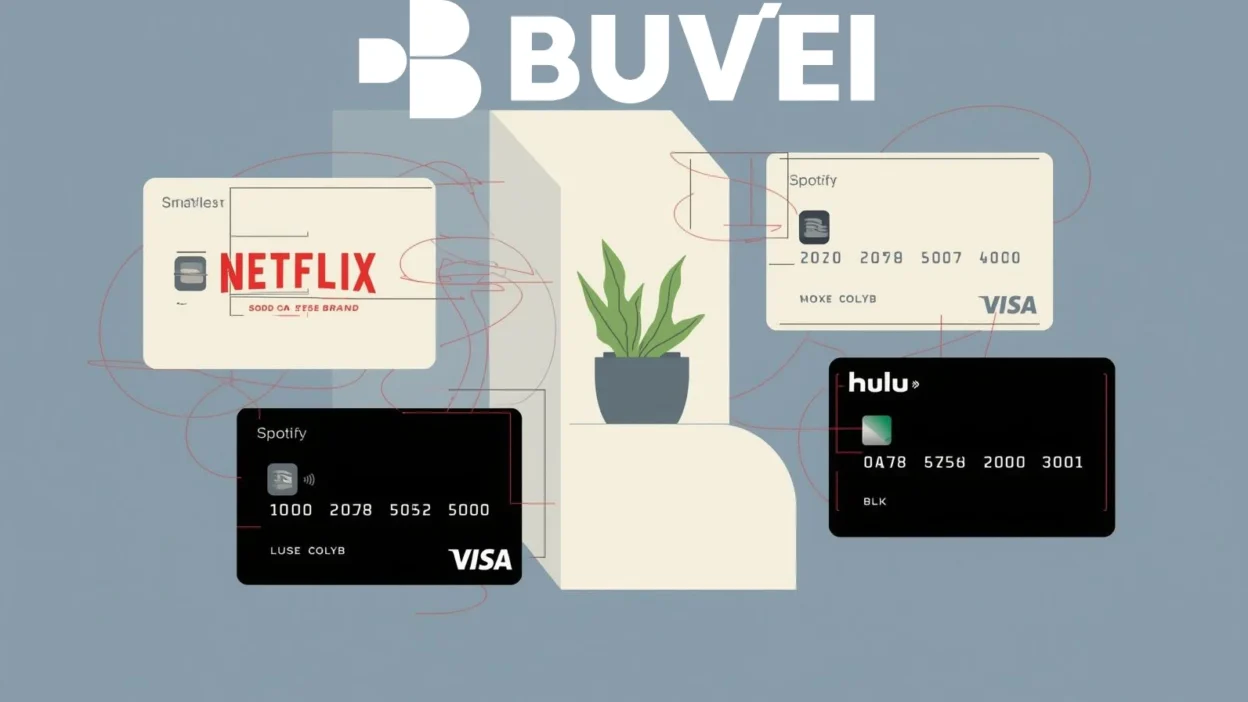
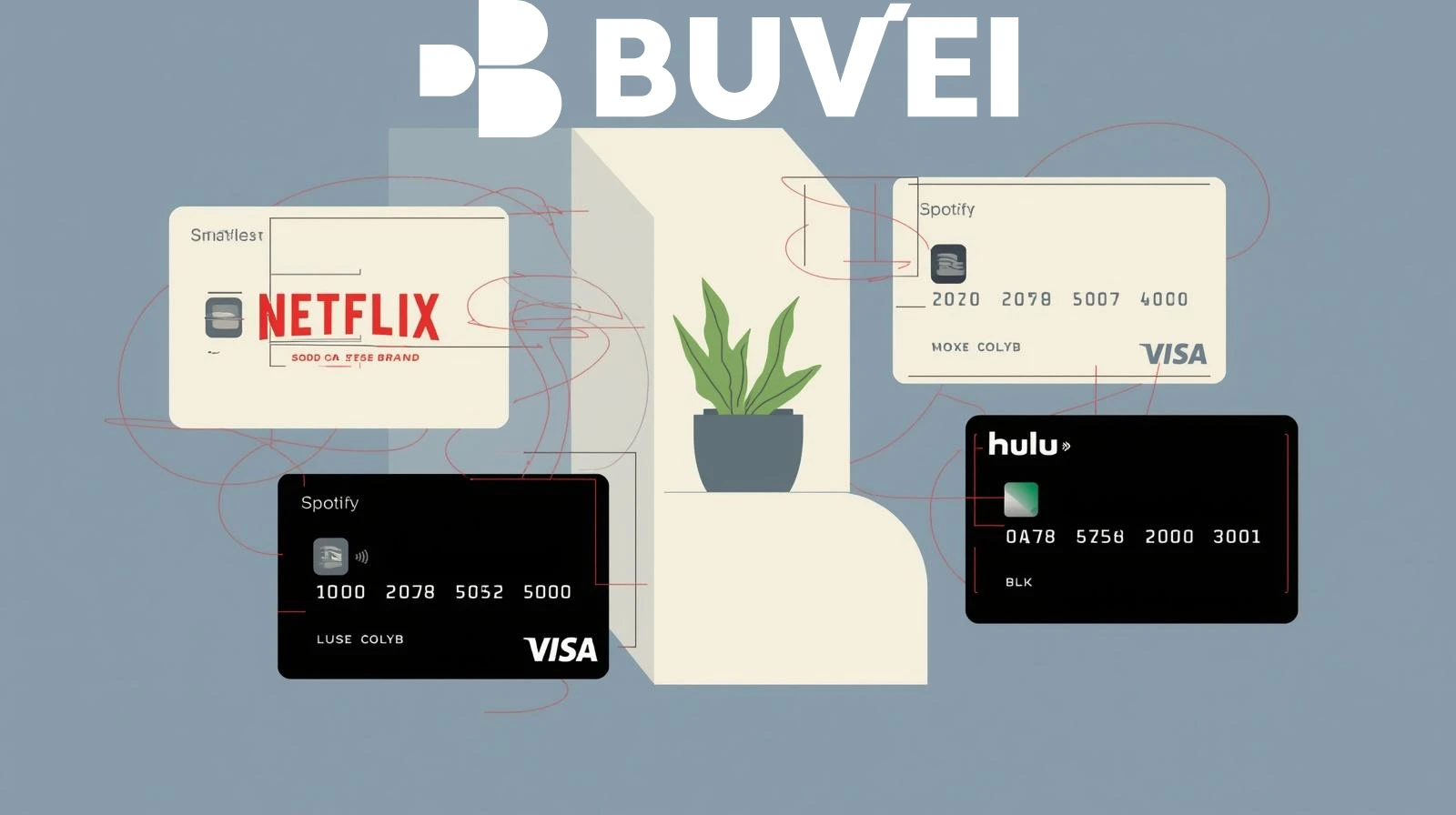
4.1 One Card per Subscription
Assigning a separate card to each service provides:
- Clear tracking of expenses
- Reduced risk of payment conflicts
- Easier troubleshooting
For example:
- Card A → Netflix
- Card B → Spotify
- Card C → Hulu
4.2 Budget Allocation
Set specific limits for each card based on subscription costs. This prevents unexpected charges and keeps spending under control.
4.3 Subscription Cancellation Control
Instead of navigating platform settings, users can simply:
- Freeze the card
- Delete the card
This instantly stops billing.
4.4 Handling Price Changes
Streaming platforms occasionally update pricing. With virtual cards, you can adjust limits without changing payment methods.
4.5 Avoiding Payment Conflicts
Using a single card for multiple subscriptions can lead to:
- Insufficient balance issues
- Payment prioritization conflicts
Multiple virtual cards eliminate this problem.
4.6 Tracking and Reporting
Virtual card dashboards provide detailed transaction histories, making it easy to:
- Monitor monthly expenses
- Identify unused subscriptions
- Optimize spending
Using Buvei Virtual Cards for Streaming Subscriptions
Buvei offers a comprehensive solution tailored for users managing multiple online payments, including streaming services.
5.1 High Approval Rates
With multi-BIN support, Buvei improves payment success rates across platforms like Netflix, Spotify, and Hulu.
5.2 Instant Card Issuance
Users can generate virtual cards within seconds, making it easy to:
- Start new subscriptions
- Replace failed cards
- Manage multiple accounts
5.3 Flexible Spending Controls
Buvei allows users to:
- Set precise limits per card
- Control recurring charges
- Prevent overspending
5.4 Multi-Card Management
Manage all subscriptions from a single dashboard with:
- Dedicated cards per service
- Clear transaction tracking
- Easy card lifecycle management
5.5 Global Compatibility
Buvei cards are optimized for international payments, ensuring smooth transactions across different regions and platforms.
5.6 Security and Risk Control
Advanced controls allow users to:
- Freeze cards instantly
- Limit usage to specific scenarios
- Reduce exposure to fraud
 Final Thoughts
Streaming subscriptions are a central part of modern digital life, but managing their payments can be challenging—especially across different platforms and regions.
Virtual cards provide a powerful solution by offering:
- Stability for recurring billing
- Flexibility for global payments
- Security for online transactions
- Control over subscription spending
For users managing multiple services like Netflix, Spotify, and Hulu, virtual cards—especially through platforms like Buvei—offer a reliable, scalable, and efficient way to handle payments in 2026.