
Managing domain services on Alibaba Cloud is straightforward—until it comes to payments. For many international users and crypto-native businesses, traditional credit cards, regional restrictions, and payment declines make domain renewals and purchases unnecessarily complicated.
While Alibaba Cloud does not support direct crypto payments, there is a practical workaround. By using crypto-funded virtual cards, users can pay for Alibaba Cloud domains smoothly while retaining full control over costs.
This guide explains whether Alibaba Cloud accepts crypto, how virtual cards bridge the gap, and how to pay for Alibaba Cloud domains step by step using Buvei.

Does Alibaba Cloud Accept Crypto Payments?
Alibaba Cloud does not accept cryptocurrencies such as Bitcoin or USDT directly for domain registration or renewal.
Officially supported payment methods typically include:
-
Credit and debit cards
-
Bank transfers (region-dependent)
-
Alipay and selected local payment methods
For users operating outside supported regions or managing funds primarily in crypto, this creates friction—especially for recurring domain renewals.
That’s where virtual cards funded with crypto become essential.
How to Pay for Domains Using Crypto and Virtual Cards
Although Alibaba Cloud doesn’t process crypto itself, it fully accepts standard Visa and Mastercard payments.
A crypto-funded virtual card works as an intermediary:
-
You fund a wallet using stablecoins (e.g., USDT)
-
A virtual card is issued on Visa or Mastercard rails
-
Alibaba Cloud sees a normal card transaction
-
You retain crypto liquidity and spend control
This approach converts crypto into usable payment power without relying on traditional banks.
Step-by-Step Guide to Paying Alibaba Cloud with Crypto
The most reliable workflow involves using a virtual card platform designed for online services and subscriptions.
Creating a Crypto-Funded Virtual Card with Buvei
Buvei is designed for users who need flexibility, speed, and reliable payment acceptance across global platforms like Alibaba Cloud.
Here’s how to get started.
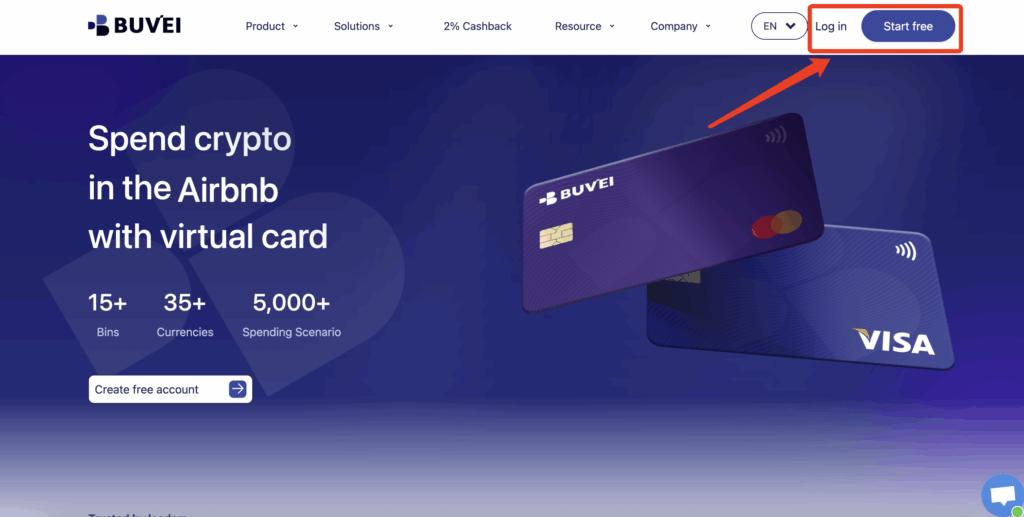
Step 1: Register a Buvei Account
Visit https://buvei.com and create a free account.
After registration:
-
Complete email verification
-
Log in to your dashboard
-
Access wallet, card, and transaction management tools
The onboarding process is fast and does not require traditional banking documents.
Step 2: Fund Your Wallet with Crypto
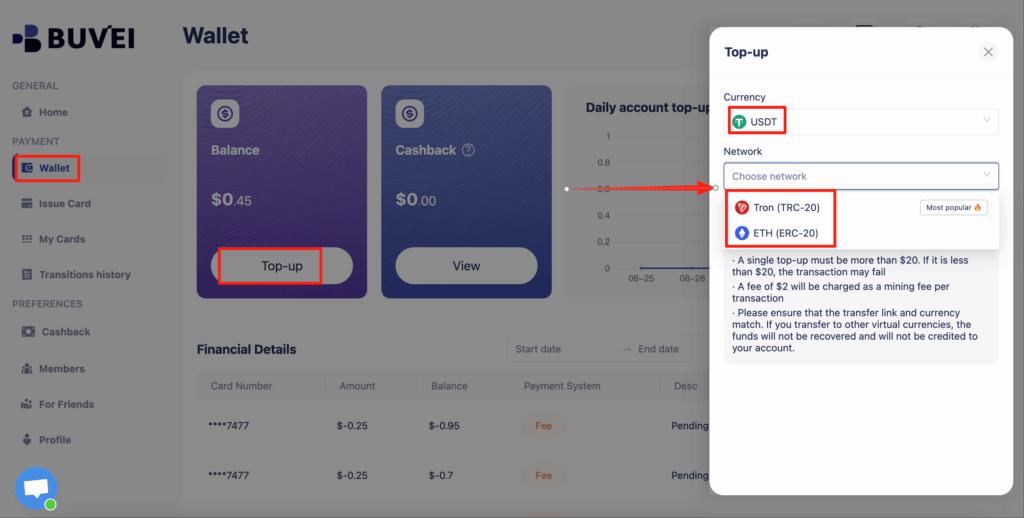
Go to the Wallet tab and top up using supported stablecoins:
-
USDT (TRC20)
-
USDT (ERC20)
Buvei provides a dedicated deposit address. Once the transaction is confirmed on-chain, your balance becomes available instantly.
This allows you to prepare funds specifically for domain purchases or renewals.
Step 3: Create a Virtual Card
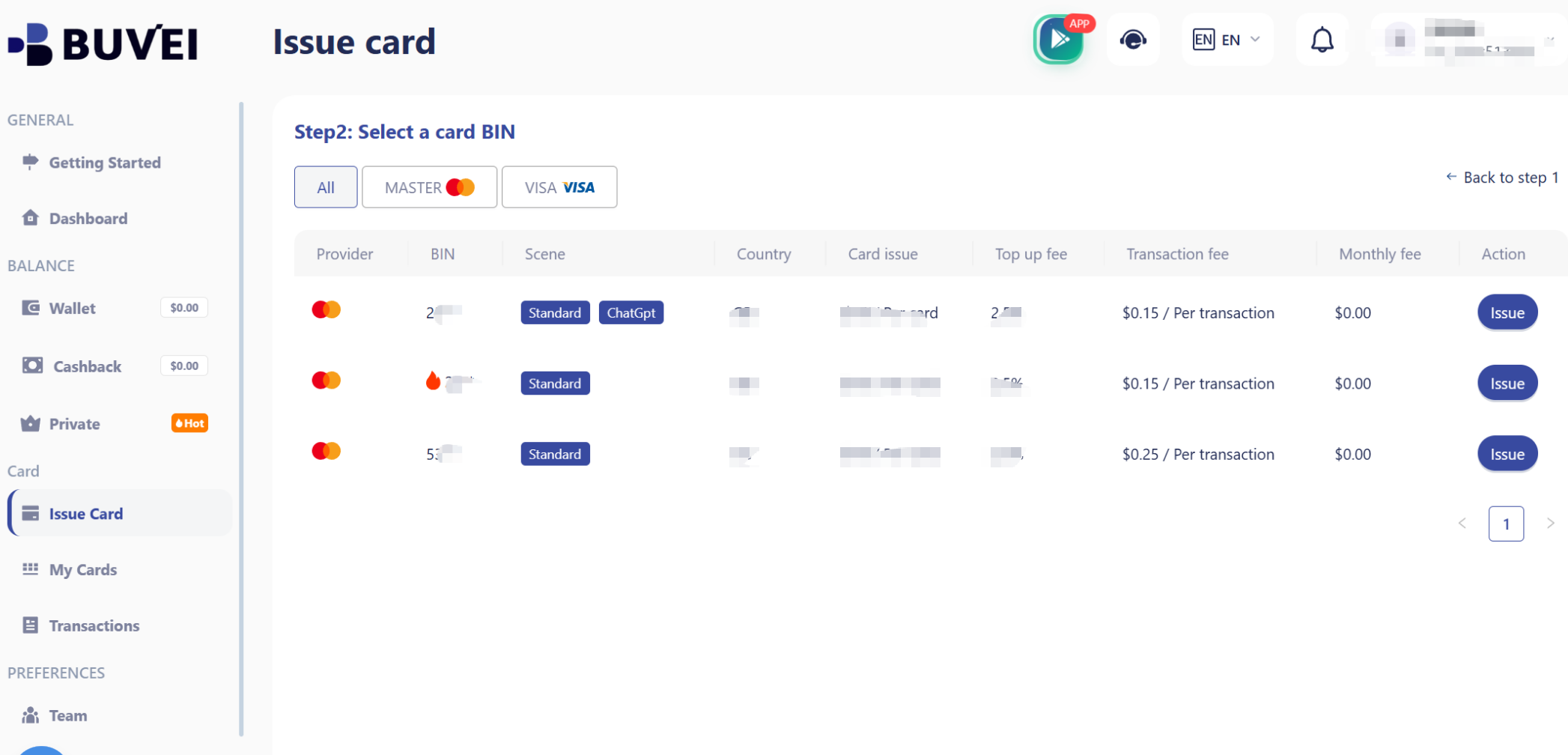
Navigate to the Cards tab:
-
Select your preferred BIN region
-
US BIN is generally recommended for cloud and SaaS platforms
-
-
Choose the card type
-
Click Issue Card
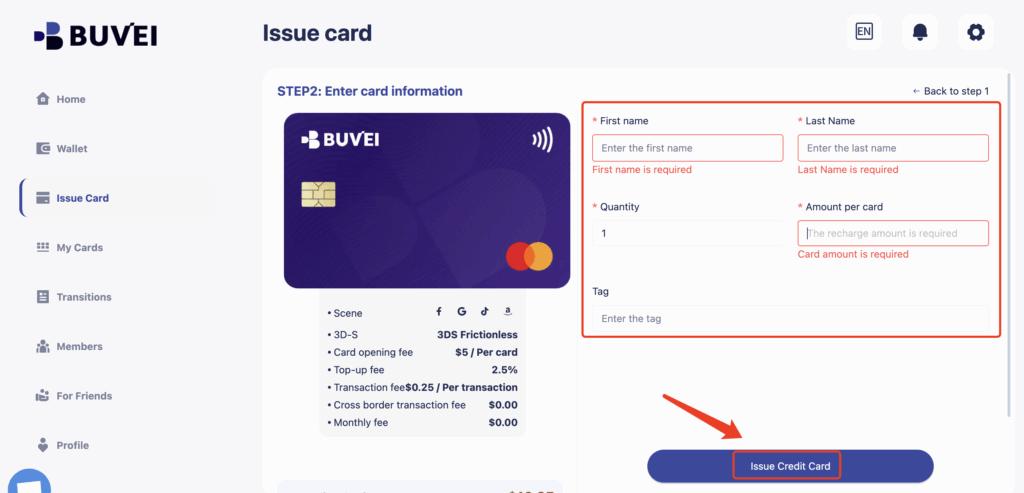
Then:
-
Enter the card name
-
Set the initial amount
-
Select the number of cards
-
Click Create Card
The card is issued immediately.
What You Receive After Card Creation
Each Buvei virtual card includes:
-
Card number
-
Expiration date
-
CVV
-
Transaction history
-
Real-time balance and usage tracking
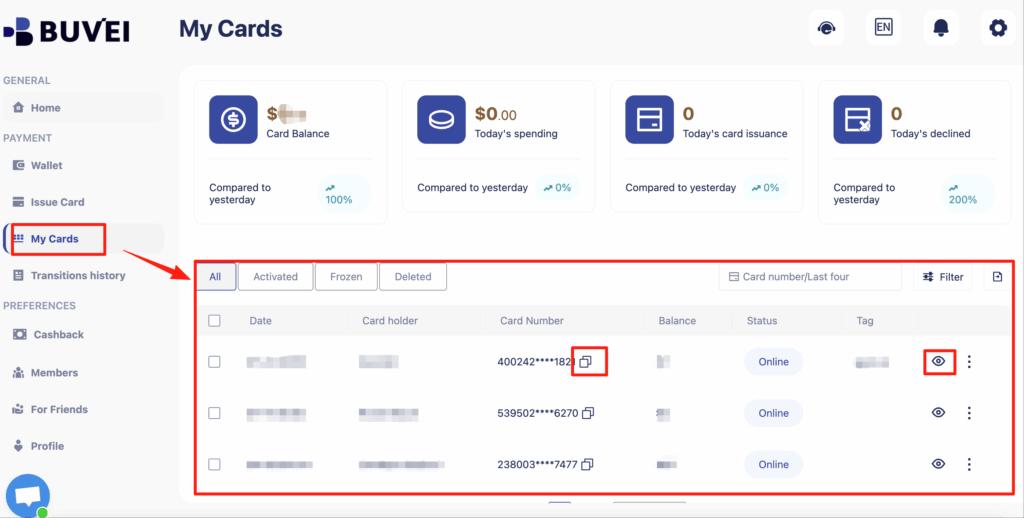
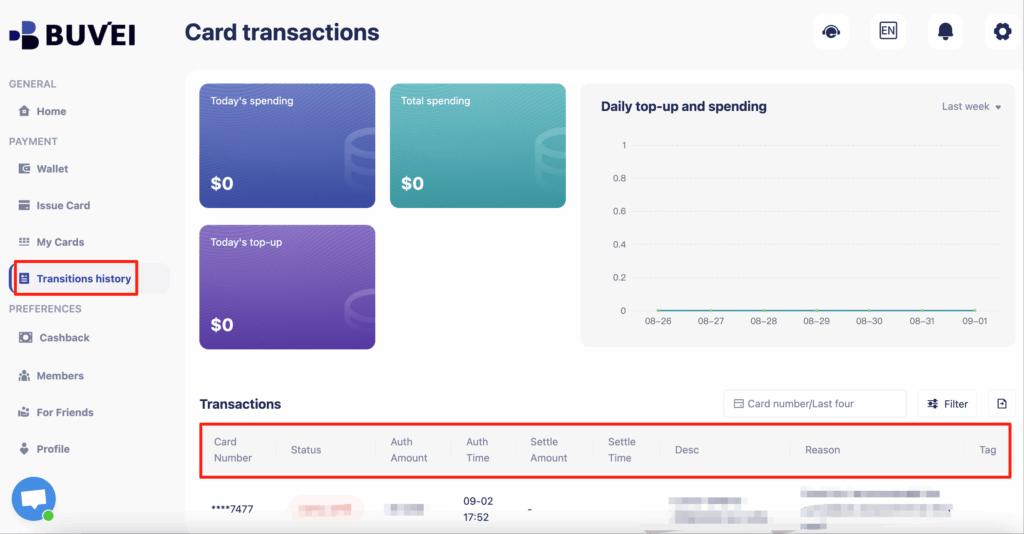
Each card operates independently, making it ideal to dedicate one card specifically to Alibaba Cloud domains.
How Virtual Cards Simplify Alibaba Cloud Payments
Using virtual cards introduces a layer of control that traditional cards lack.
With virtual cards, you can:
-
Isolate Alibaba Cloud spending from other expenses
-
Limit exposure by funding only renewal-level balances
-
Avoid cross-border card declines
-
Instantly stop charges by emptying or freezing the card
From Alibaba Cloud’s perspective, it’s a standard card payment. From your side, it’s a controlled, crypto-backed payment flow.
Benefits of Using Crypto for Alibaba Cloud Services
For international users and crypto-based teams, this setup offers clear advantages:
-
No reliance on local banking infrastructure
-
Faster funding compared to wire transfers
-
Stablecoin-based budgeting (less FX volatility)
-
Easier management of recurring domain renewals
-
Better security through card-level isolation
This is especially useful for users managing multiple domains, projects, or client assets.

Troubleshooting Common Crypto Payment Issues
Even with virtual cards, issues can occur. Here’s how to resolve the most common ones.
Payment declined on Alibaba Cloud
-
Ensure the card has sufficient balance
-
Use a US BIN card when possible
-
Disable VPNs during checkout
-
Confirm the card is enabled for online payments
Domain renewal failed
-
Check whether the card balance covers taxes and fees
-
Verify that the card has not expired
-
Retry payment after clearing browser cache
Multiple services on one card
-
Assign one virtual card per platform
-
Avoid mixing domain payments with unrelated subscriptions
Following these practices significantly reduces payment interruptions.
Final Thoughts
While Alibaba Cloud does not support direct crypto payments, paying for domains with crypto is entirely possible using virtual cards.
By combining stablecoin funding with a controlled virtual card setup, users gain:
-
Reliable payment acceptance
-
Full control over spending
-
Cleaner financial separation
-
Reduced dependency on traditional banks
With a structured approach using Buvei, crypto holders can manage Alibaba Cloud domains smoothly—without sacrificing flexibility or operational control.