
For modern crypto businesses, offering real-world payment functionality has become essential. Whether you're building an exchange, wallet, SaaS tool, or Web3 platform, virtual card issuing bridges the gap between on-chain assets and everyday spending.
Today, scalable virtual card issuing for crypto businesses is no longer a luxury feature—it’s core infrastructure.
This guide explains why crypto companies use virtual cards, what features matter most, how compliance fits in, and how platforms like Buvei support practical deployment.

Why Crypto Businesses Use Virtual Card Issuing
Crypto-native users hold digital assets—but they still need to pay for real-world services.
Virtual cards enable crypto platforms to:
-
Allow users to spend stablecoins for everyday purchases
-
Pay for SaaS tools like ChatGPT, Notion, Canva, and cloud services
-
Fund ad platforms like Google Ads, Meta Ads, TikTok Ads
-
Offer card-based off-ramps for Web3 products
-
Improve user retention and platform stickiness
-
Create monetizable features around payments
Without card functionality, many crypto platforms struggle with real-world utility. That’s why virtual card issuing has become a strategic layer for crypto infrastructure.
Key Features Crypto Companies Need from Virtual Cards
Not every card solution works well for crypto platforms. Strong crypto virtual card solutions must provide:
1. Crypto-Friendly Funding
The most important requirement:
-
USDT / stablecoin top-ups
-
Fast balance availability
-
Global accessibility without banking friction
Buvei supports USDT (TRC20/ERC20) funding, making it highly practical for global crypto users.
2. Strong Platform Acceptance
Crypto businesses often need cards that work reliably on:
-
Ad platforms (Google, Meta, TikTok, X)
-
SaaS tools (ChatGPT, Canva, Notion)
-
Developer services (GitHub, OpenAI APIs)
-
Cloud platforms (AWS, Azure, Cloudflare)
Card acceptance directly impacts user experience.
3. Scalability
Crypto platforms grow quickly. They need:
-
The ability to issue many cards
-
Support for multi-card per user
-
Infrastructure that doesn’t collapse at volume
4. Operational Control
Professional crypto products require:
-
Clear transaction records
-
Balance isolation per card
-
Spend segmentation
-
Transparent fees
Buvei’s dashboard model supports these operational needs effectively.
Compliance and Risk Control in Crypto Card Issuing
As crypto matures, compliance and risk management matter more than ever.
Responsible virtual card issuing for crypto should include:
Transaction Transparency
Clear histories and logs help:
-
Monitor usage
-
Identify abuse patterns
-
Support internal audits
Risk Segmentation
Using multiple cards instead of one large pool:
-
Limits damage if a card is compromised
-
Prevents systemic failures
-
Protects core balances
Reduced Banking Exposure
Virtual cards reduce the need to expose:
-
Traditional bank accounts
-
Custodial structures
-
Sensitive financial credentials
Buvei’s virtual card model inherently separates card balances from traditional banking infrastructure, improving baseline risk posture.
API-Based Virtual Card Issuing for Crypto Operations
Larger crypto platforms often want programmatic issuance.
A typical virtual card API for crypto use case includes:
-
Automatically creating cards for new users
-
Assigning cards to wallets or accounts
-
Allocating balances programmatically
-
Monitoring spending via webhooks
-
Managing large card fleets
Even without direct API integration, Buvei’s operational structure mirrors this logic:
-
Multi-card issuance
-
Account-level management
-
Scalable workflows
-
Clear separation of balances
This makes it suitable both for early-stage crypto products and more mature platforms building toward embedded finance.
Popular Virtual Card Issuing Platforms for Crypto
Crypto platforms typically evaluate providers based on:
-
Crypto funding support
-
Card acceptance rates
-
Scalability
-
Transparency
-
Operational simplicity
-
Global accessibility
While some traditional fintech platforms struggle with crypto-native workflows, providers like Buvei are designed with:
-
Stablecoin funding
-
Multi-card issuance
-
Global user compatibility
-
SaaS and ad platform usability
in mind.
This makes Buvei a practical option for crypto teams that need real-world usability without heavy infrastructure burden.

How Buvei Supports Virtual Card Issuing for Crypto Businesses
Buvei offers an operationally simple way for crypto businesses to deploy card functionality quickly.
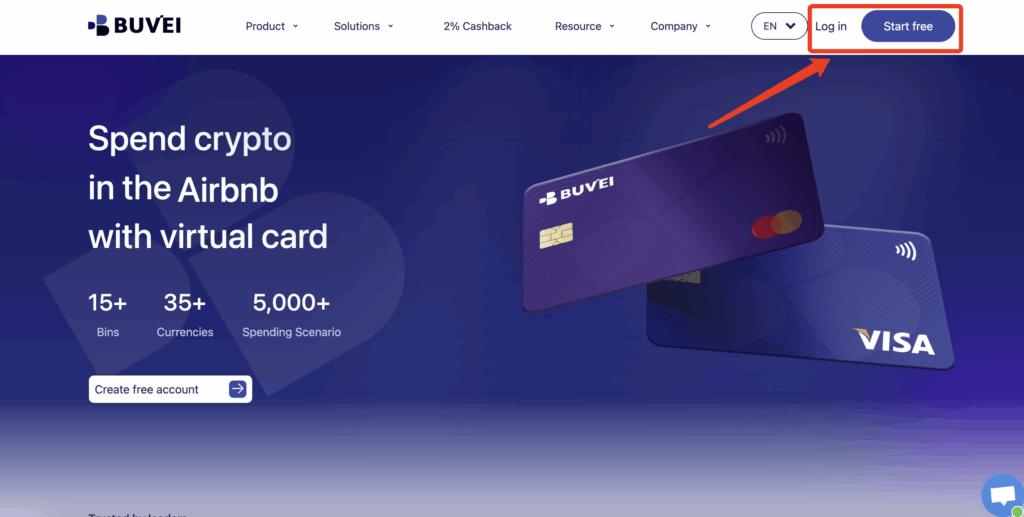
Step 1: Register a Buvei Account
Go to https://buvei.com and create a free account.
Verify your email and log in to the dashboard.
Step 2: Fund with Crypto (USDT)
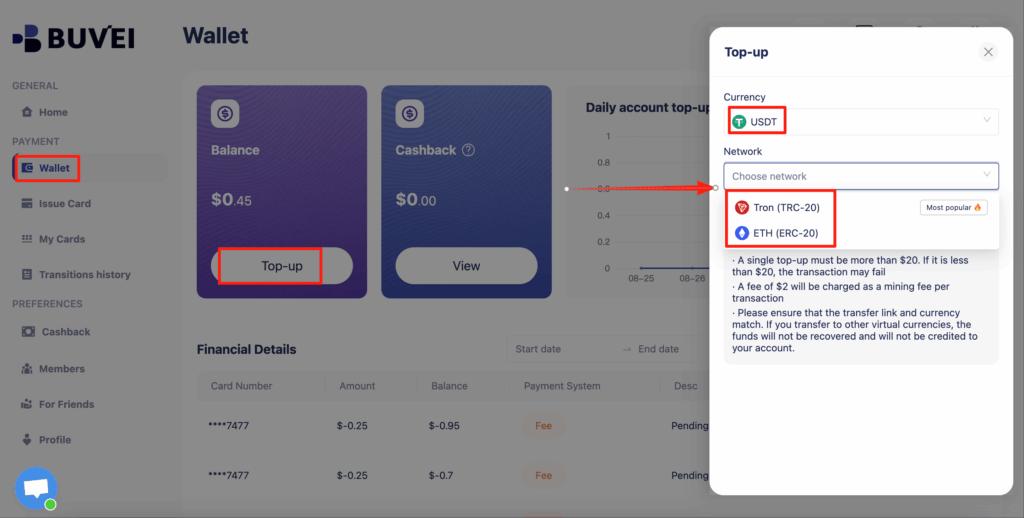
Open the Wallet tab and top up using:
-
USDT (TRC20)
-
USDT (ERC20)
You receive a dedicated deposit address. After confirmation, your balance becomes available for immediate use.
This makes Buvei directly compatible with crypto-native treasury workflows.
Step 3: Issue Virtual Cards
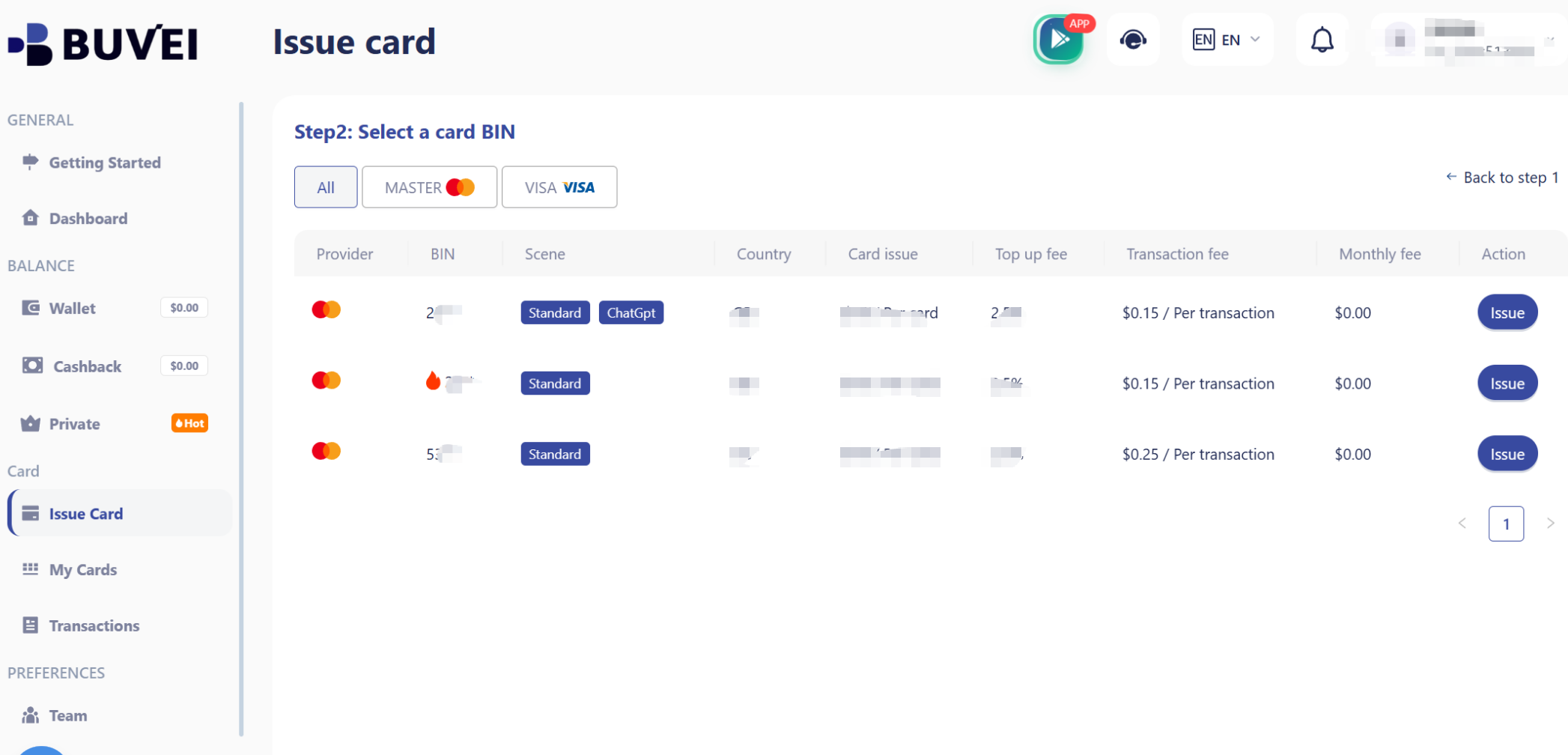
Navigate to the Cards section:
-
Select preferred BIN region (US BIN recommended for best compatibility)
-
Choose card type
-
Click Issue Card
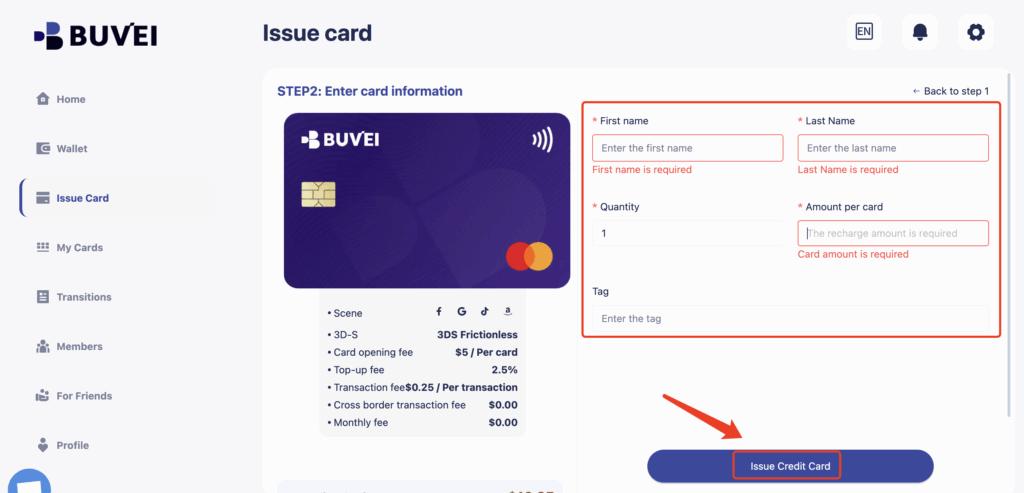
-
Enter card name, amount, and number of cards
-
Click Create Card
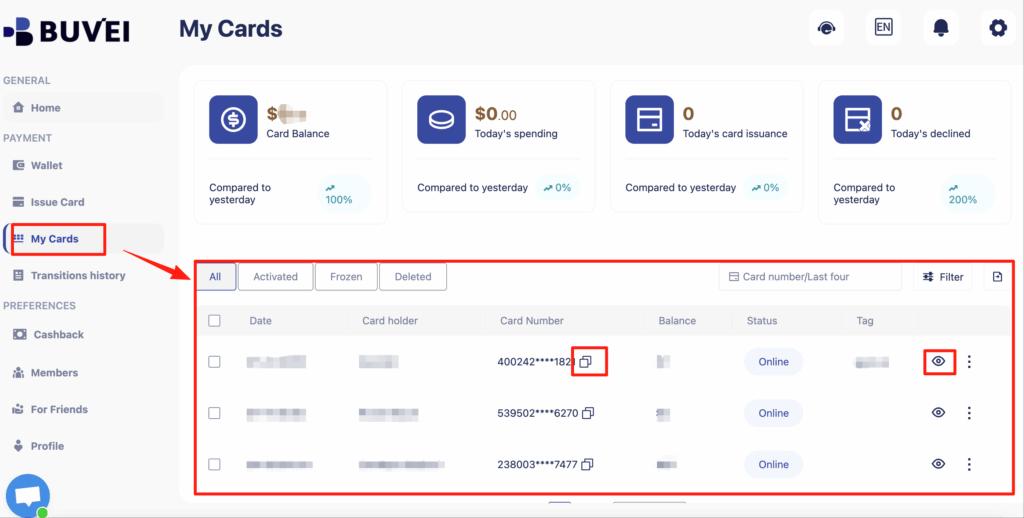
Each virtual card includes:
-
Card number
-
Expiry date
-
CVV
-
Independent balance
-
Full transaction history
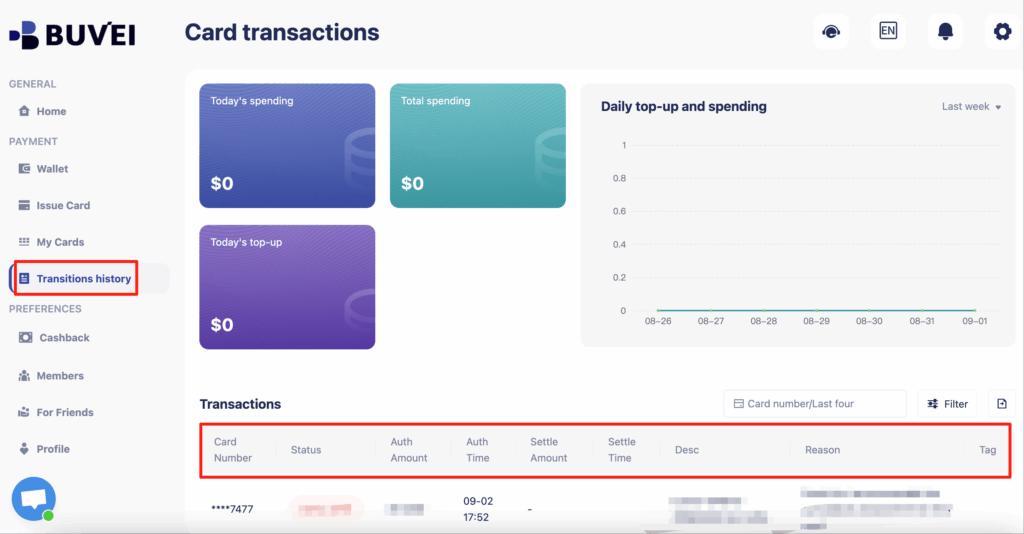
Crypto teams can use this to:
-
Assign cards to internal teams
-
Offer cards to users
-
Fund tools and platforms
-
Manage operational spend securely

Final Thoughts
As Web3 products mature, virtual card issuing for crypto businesses is becoming foundational infrastructure, not an optional feature.
Strong virtual card issuing enables crypto platforms to:
-
Bridge on-chain value to real-world payments
-
Offer practical utility to users
-
Improve retention and engagement
-
Support global operations
-
Operate with better financial segmentation
-
Reduce operational and security risk
With stablecoin funding support, scalable multi-card management, strong platform acceptance, and transparent operational control, Buvei provides a practical infrastructure model for crypto businesses building real-world payment functionality.