If you’re building a fintech product, ad platform, SaaS billing system, or any application that needs programmatic payment control, you’ve likely run into the same limitation: traditional card issuing is slow, rigid, and not designed for modern automation.
That’s where virtual card issuing APIs come in.
A virtual card issuing API allows businesses to create, manage, and control payment cards in real time—directly from code. This guide explains what a virtual card issuing API is, how it’s commonly used, what features actually matter, and how platforms like Buvei enable fast, scalable card issuance for modern businesses.

What a Virtual Card Issuing API Is
A virtual card issuing API is an interface that allows developers to programmatically generate and manage virtual Visa or Mastercard cards without manual intervention.
Instead of issuing physical cards, the API lets you:
-
Create cards instantly via API calls
-
Assign balances, limits, and metadata
-
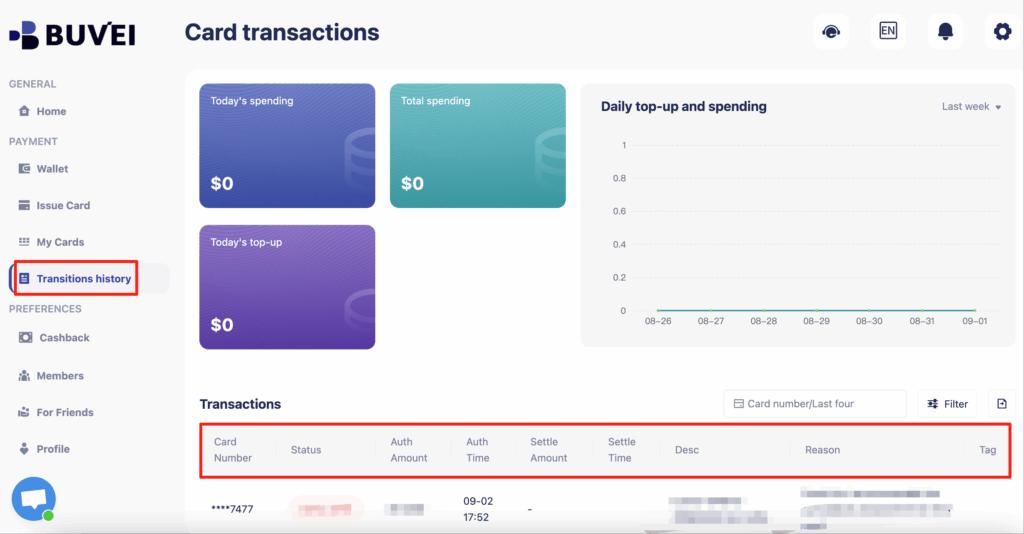
Monitor transactions in real time
-
Pause, close, or rotate cards automatically
From the payment network’s perspective, these cards function like standard cards. From a developer’s perspective, they’re fully software-controlled financial objects.
This makes virtual card APIs a foundational layer for modern payment infrastructure.
Common Use Cases for Card Issuing APIs
Virtual card issuing APIs are used anywhere payment control, isolation, or automation is required.
Typical use cases include:
-
Advertising platforms
One card per advertiser, campaign, or traffic source -
SaaS subscription management
Isolating customer payments and controlling renewals -
Expense management tools
Department-level or employee-level cards with limits -
Marketplaces & platforms
Controlled payouts, escrow-style spending, or vendor payments -
Affiliate & arbitrage operations
Rapid card rotation to reduce risk exposure
In all of these scenarios, static credit cards simply don’t scale. APIs do.
Key Features to Compare Across Providers
Not all virtual card APIs are created equal. Many look similar on paper but differ significantly in real-world usability.
When evaluating providers, focus on these core capabilities:
-
Instant card issuance
Cards should be created in seconds, not hours or days -
BIN quality and acceptance rate
US and EU BINs with strong platform compatibility -
Granular spend control
Per-card balance caps, usage limits, and lifecycle control -
API reliability and documentation
Clear endpoints, predictable responses, and stable uptime -
Multi-card scalability
Ability to issue hundreds or thousands of cards programmatically -
Real-time transaction visibility
Immediate insight into approvals, declines, and usage
A good API reduces operational friction. A bad one becomes a bottleneck.
How Buvei’s Virtual Card API Works
Buvei is designed for teams that need speed, flexibility, and financial control at scale—especially in high-volume payment environments.
Buvei’s virtual card API allows you to:
-
Issue virtual Visa or Mastercard cards instantly
-
Assign cards to users, campaigns, or services
-
Control balances and exposure per card
-
Track transactions in real time
-
Rotate or terminate cards programmatically
The API is built to support advertising platforms, SaaS billing, cloud services, and global online payments without relying on traditional banking rails.
Getting Started with Buvei’s Virtual Card API
Here’s how the process typically works.
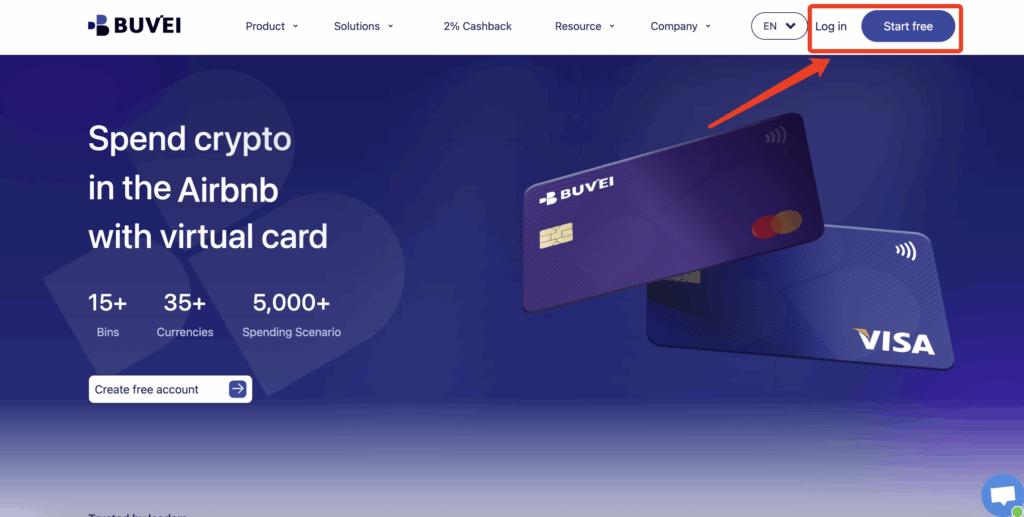
Step 1: Register a Buvei Account
Visit https://buvei.com and create an account.
Complete email verification and access your dashboard.
Step 2: Fund Your Wallet
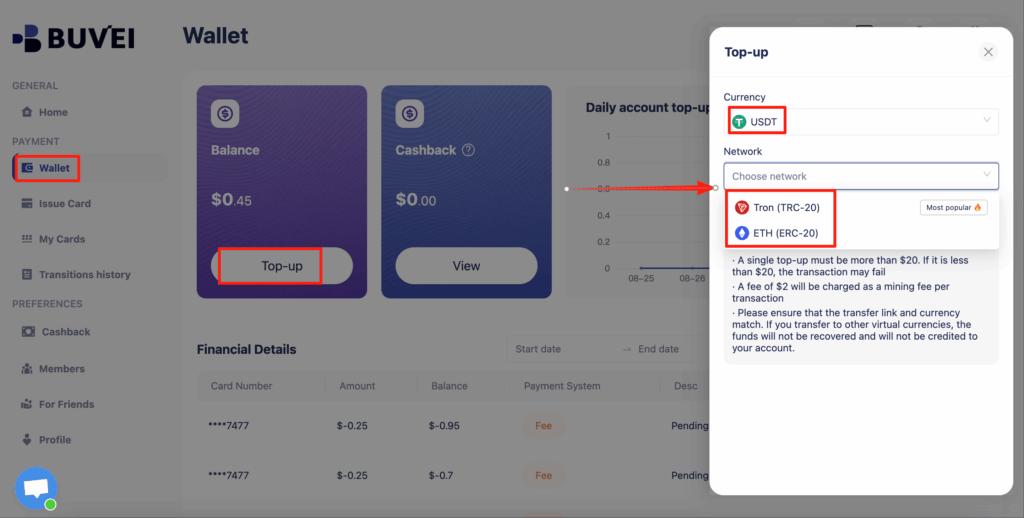
Navigate to the Wallet section and top up using supported stablecoins:
-
USDT (TRC20)
-
USDT (ERC20)
Buvei provides a dedicated deposit address. Once funds are confirmed on-chain, your balance is available immediately for API use.
Step 3: Issue Virtual Cards via API
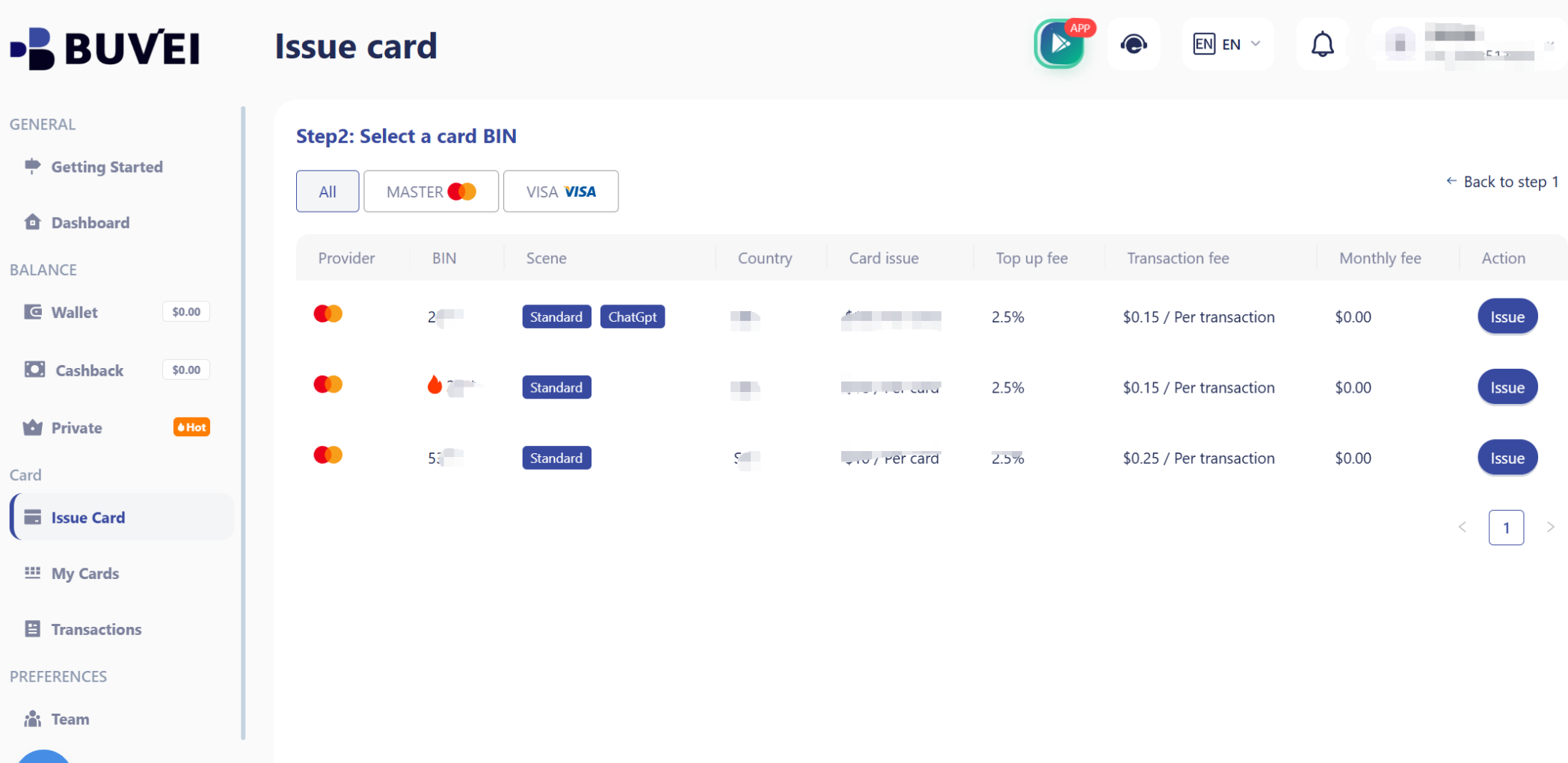
Using Buvei’s API endpoints, you can:
-
Select BIN region (US BIN recommended for global acceptance)
-
Define card metadata (name, project, user ID)
-
Assign initial balance or spending rules
-
Instantly issue the card
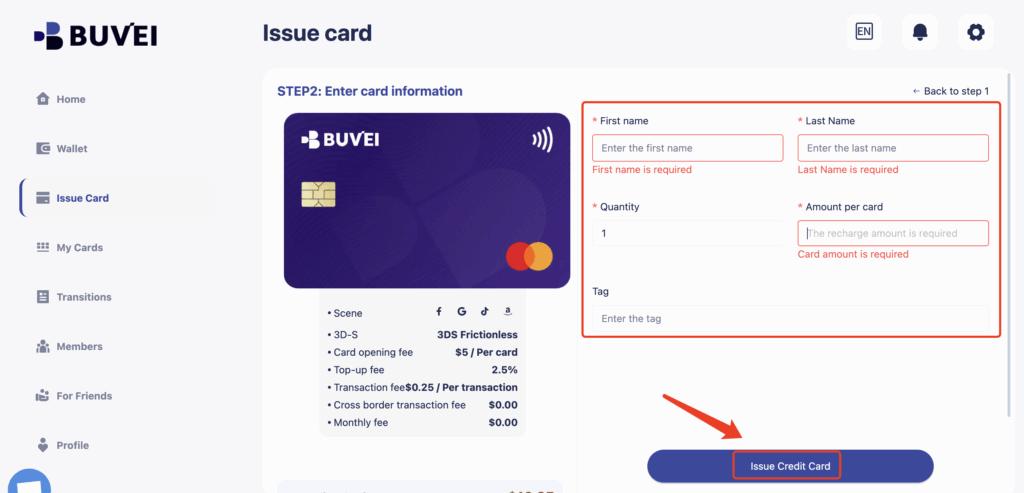
Each issued card returns:
-
Card number
-
Expiration date
-
CVV
-
Real-time balance and transaction data
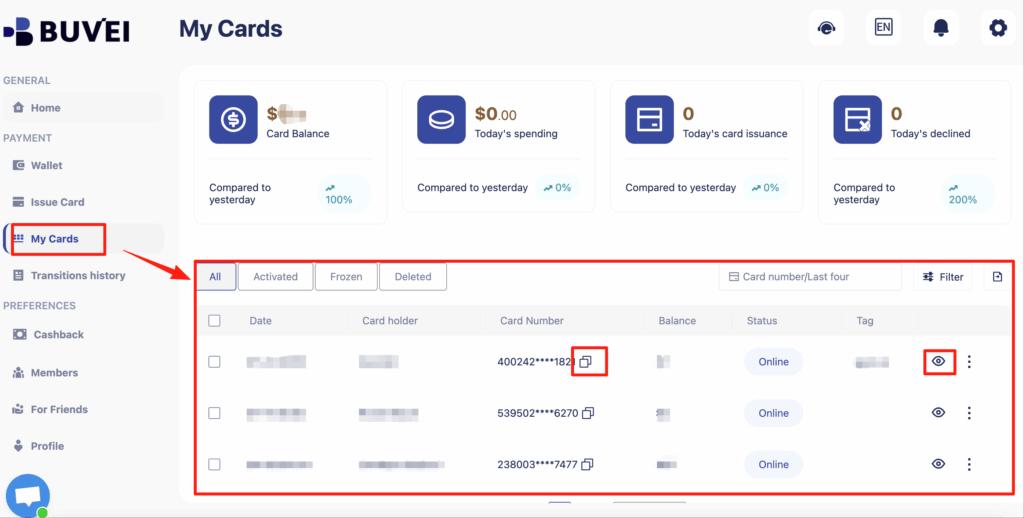
This structure makes Buvei particularly effective for high-volume, automated card issuance.
Integration Steps and Developer Considerations
Before integrating any card issuing API, teams should plan for operational realities—not just API calls.
Key considerations include:
-
How cards map to users, campaigns, or services
-
How and when cards should be rotated
-
Error handling for declines or network issues
-
Webhooks or polling for transaction updates
-
Internal monitoring and reconciliation workflows
Buvei’s API is designed to fit cleanly into existing backends, billing engines, or ad-tech systems without excessive overhead.
Security, Compliance, and Scalability
Card issuing is not just a technical problem—it’s a trust and risk problem.
A production-ready virtual card API must support:
-
Secure handling of sensitive card data
-
PCI-aligned infrastructure
-
Abuse prevention and transaction monitoring
-
Scalable issuance without performance degradation
Buvei focuses on controlled issuance, transparent transaction tracking, and account-level safeguards that help businesses grow without increasing financial risk.

Final Thoughts
A virtual card issuing API is no longer a niche fintech tool—it’s a core building block for modern digital businesses.
The right provider enables:
-
Faster product development
-
Better payment isolation
-
Stronger spend control
-
Lower operational risk
With a flexible, crypto-funded setup like Buvei, teams gain the ability to issue, manage, and scale virtual cards programmatically—without the limitations of traditional banking systems.
For businesses that rely on automation, control, and global payments, a strong virtual card issuing API isn’t optional. It’s infrastructure.