Finding the best virtual cards for Brazil has become increasingly important as more Brazilian users work with global platforms, run international ad campaigns, and subscribe to SaaS tools priced in USD. A reliable virtual card Brazil solution can make cross-border payments smoother, reduce declines, and offer better control over online spending.
This guide explains Brazil-specific payment challenges, why virtual cards often work better, and how to set up a practical solution step by step.

Payment Challenges for Users in Brazil
Brazil has one of the most dynamic digital economies in the world, but international payments can still be frustrating.
Common challenges include:
-
High rejection rates on foreign platforms
-
Strict fraud detection for cross-border cards
-
Limited acceptance of local debit cards
-
Currency conversion issues (BRL → USD)
-
Restrictions on prepaid and low-quality cards
-
Limited compatibility with global ad platforms
These issues are especially common when paying for:
-
Google Ads, Meta Ads, TikTok Ads
-
ChatGPT, Canva, Notion, SaaS tools
-
Hosting platforms and developer tools
-
International subscriptions
That’s why more users are actively searching for the best virtual cards for Brazil that work globally.
Local vs International Card Acceptance Issues
Brazilian-issued cards work well for domestic platforms, but often struggle with international billing systems.
Local cards may fail due to:
-
Domestic-only BIN regions
-
Inconsistent 3D Secure behavior
-
Restrictions on foreign merchants
-
Currency conversion rejections
-
Conservative issuing bank policies
On the other hand, a well-structured international virtual card for online payments in Brazil can behave like a globally trusted Visa or Mastercard—making approval much easier on foreign platforms.
Why Virtual Cards Work Better for Global Payments
A high-quality virtual card Brazil setup provides flexibility that traditional cards cannot.
Key advantages include:
-
Strong international BIN regions (US/EU often perform best)
-
Better compatibility with SaaS and ad platforms
-
Ability to control balance per card
-
Reduced risk when using unfamiliar platforms
-
Improved approval rates for cross-border transactions
-
More privacy compared to linking a personal bank account
This makes virtual cards ideal for:
-
Freelancers in Brazil working with global clients
-
Agencies running international ad campaigns
-
Developers paying for cloud infrastructure
-
Entrepreneurs managing multiple subscriptions
How to Create a Brazil-Friendly Virtual Card
Buvei is designed for users who need flexible, globally compatible virtual cards—including users based in Brazil.
Here’s how to get started.
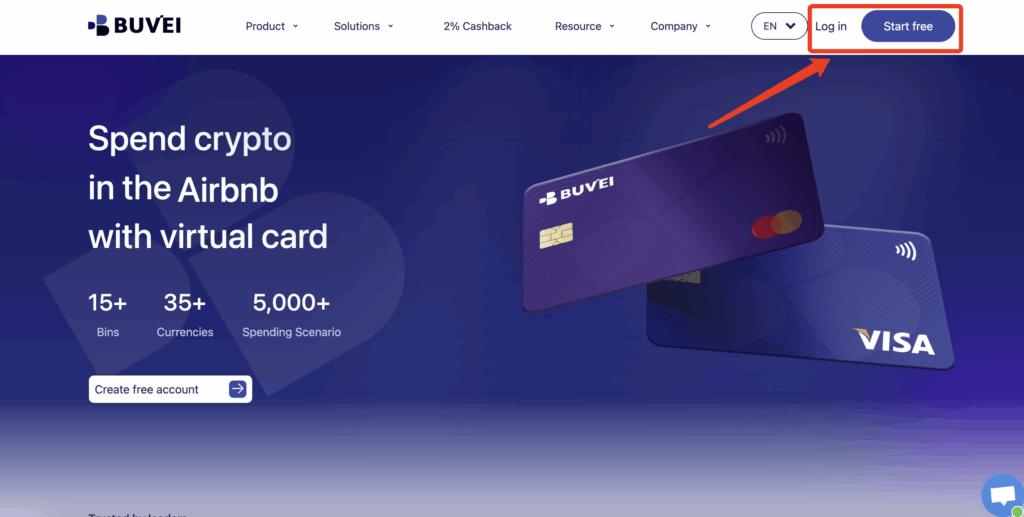
Step 1: Register a Buvei Account
Visit https://buvei.com and create a free account.
Complete email verification and log in to your Buvei dashboard.
Step 2: Fund Your Wallet with USDT
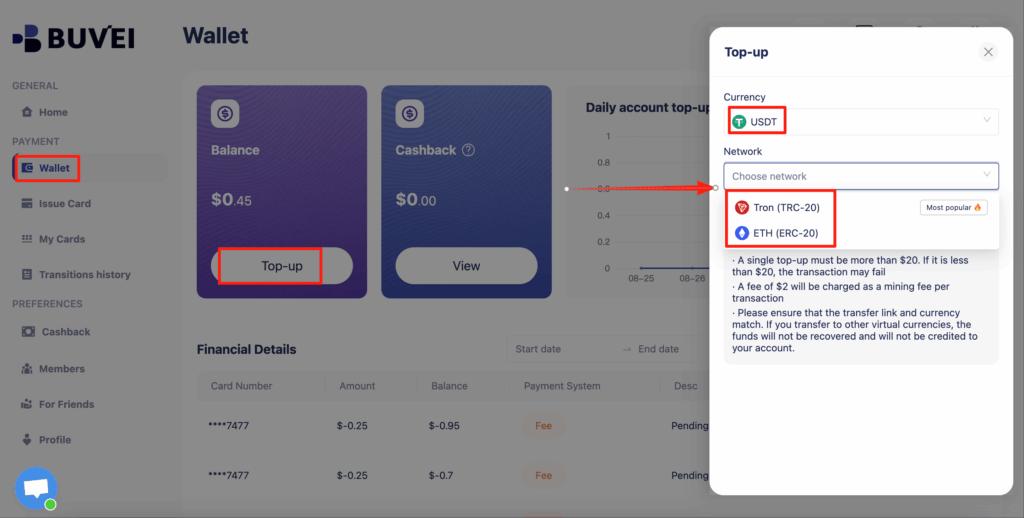
Go to the Wallet tab and top up using supported stablecoins:
-
USDT (TRC20)
-
USDT (ERC20)
You will receive a dedicated deposit address. Once confirmed on-chain, your balance becomes available immediately.
Step 3: Create Your Virtual Card
Navigate to the Cards tab:
-
Select your preferred BIN region (US BIN recommended for international platforms)
-
Choose your card type
-
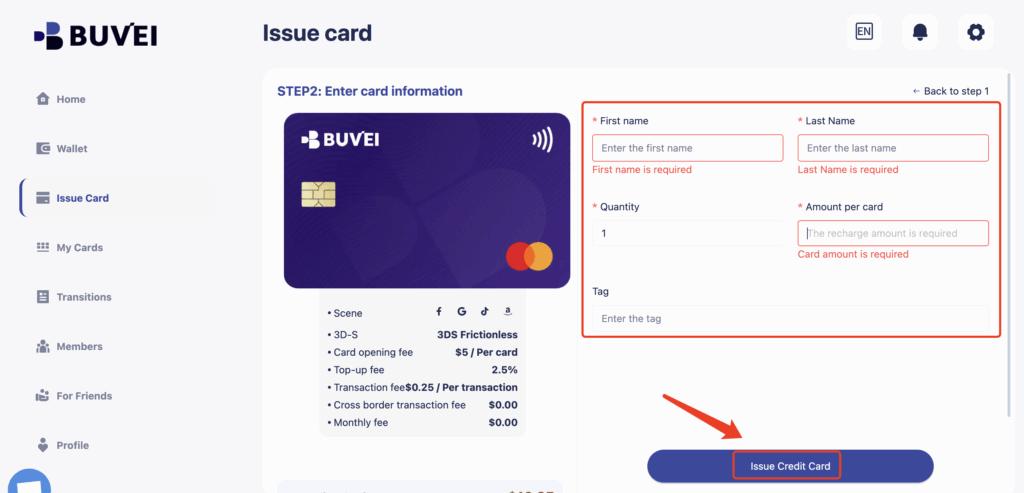
Click Issue Card
-
Enter card name, amount, and card quantity
-
Click Create Card
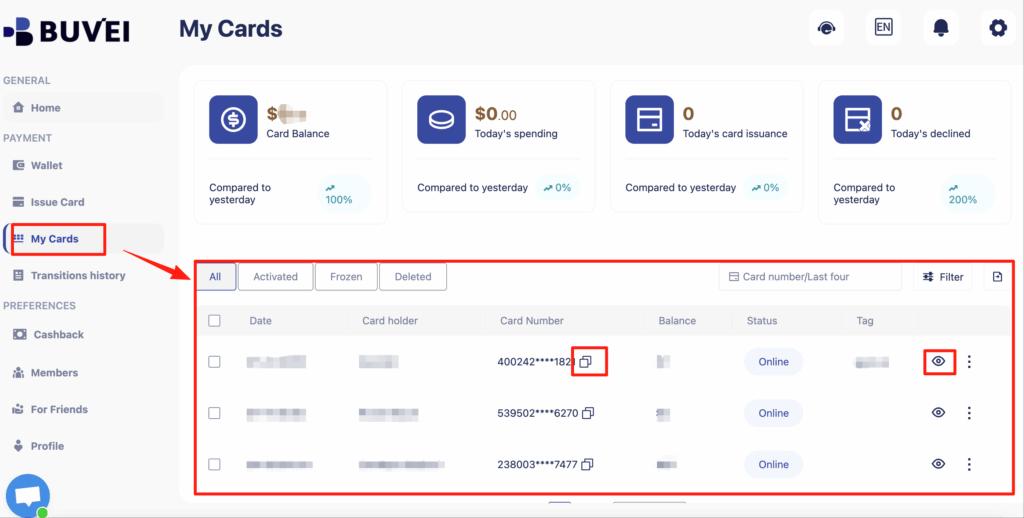
After issuance, you can view:
-
Card number
-
Expiry date
-
CVV
-
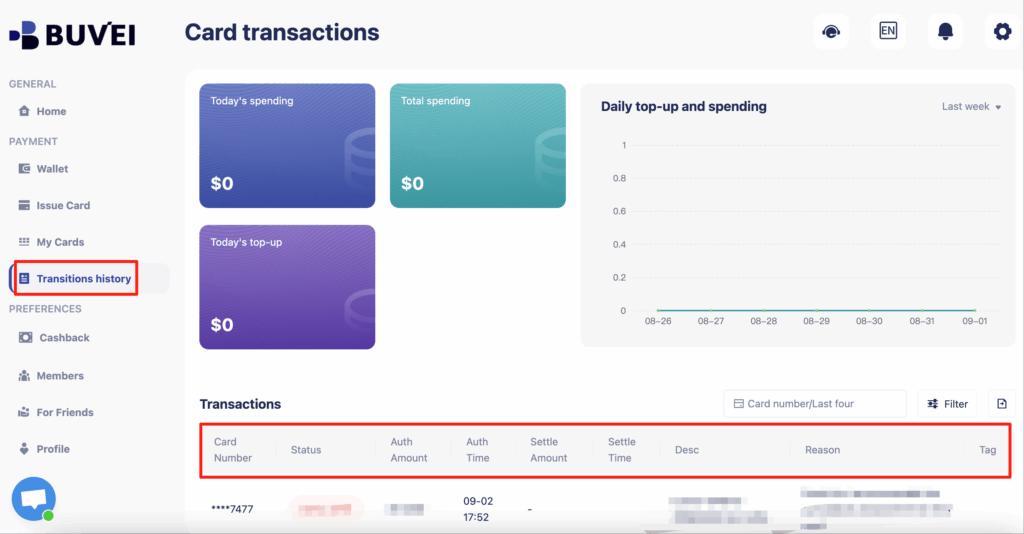
Transaction history
-
Spending overview
This makes Buvei a practical international virtual card for Brazil users who need reliability across platforms.
Supported Use Cases: Ads, Subscriptions, SaaS
Once created, your virtual card can be used across a wide range of global services.
Common use cases include:
Advertising Platforms
-
Google Ads
-
Meta Ads (Facebook & Instagram)
-
TikTok Ads
-
X Ads
Subscriptions & SaaS
-
ChatGPT / OpenAI
-
Canva
-
Notion
-
Adobe
-
Spotify, Netflix
-
Cloud tools (AWS, Azure, etc.)
Online Purchases & Services
-
Domain registrars
-
Hosting platforms
-
Marketing tools
-
Developer services
This flexibility is exactly why many consider Buvei a strong candidate among the best virtual cards for Brazil.
FX Fees, Limits, and Compliance Tips
To use virtual cards effectively for international payments from Brazil, follow these best practices:
Manage FX Costs
-
Prefer stablecoin top-ups (USDT) to reduce BRL → USD conversion losses
-
Track platform-level currency conversions
-
Use one card per service for clearer expense tracking
Use Smart Limits
-
Avoid loading excessively high balances
-
Allocate specific budgets per card (e.g., ads vs subscriptions)
-
Monitor transactions regularly in the dashboard
Stay Compliant
-
Use virtual cards for legitimate business and personal purposes
-
Avoid suspicious transaction patterns
-
Maintain consistent usage behavior across platforms
Buvei supports this with:
-
Transparent fee structure
-
Real-time transaction tracking
-
Multi-card management
-
Flexible top-ups
-
Responsive online customer support

Final Thoughts
Choosing the best virtual cards for Brazil is no longer just about convenience—it’s about gaining reliable access to the global digital economy.
A well-structured virtual card Brazil setup allows users to:
-
Reduce cross-border payment declines
-
Pay for global platforms more smoothly
-
Manage budgets with precision
-
Improve approval rates on ads and SaaS tools
-
Operate internationally without friction
With flexible funding, strong BIN support, and practical management features, Buvei offers Brazilian users a scalable solution for global payments.