Introduction
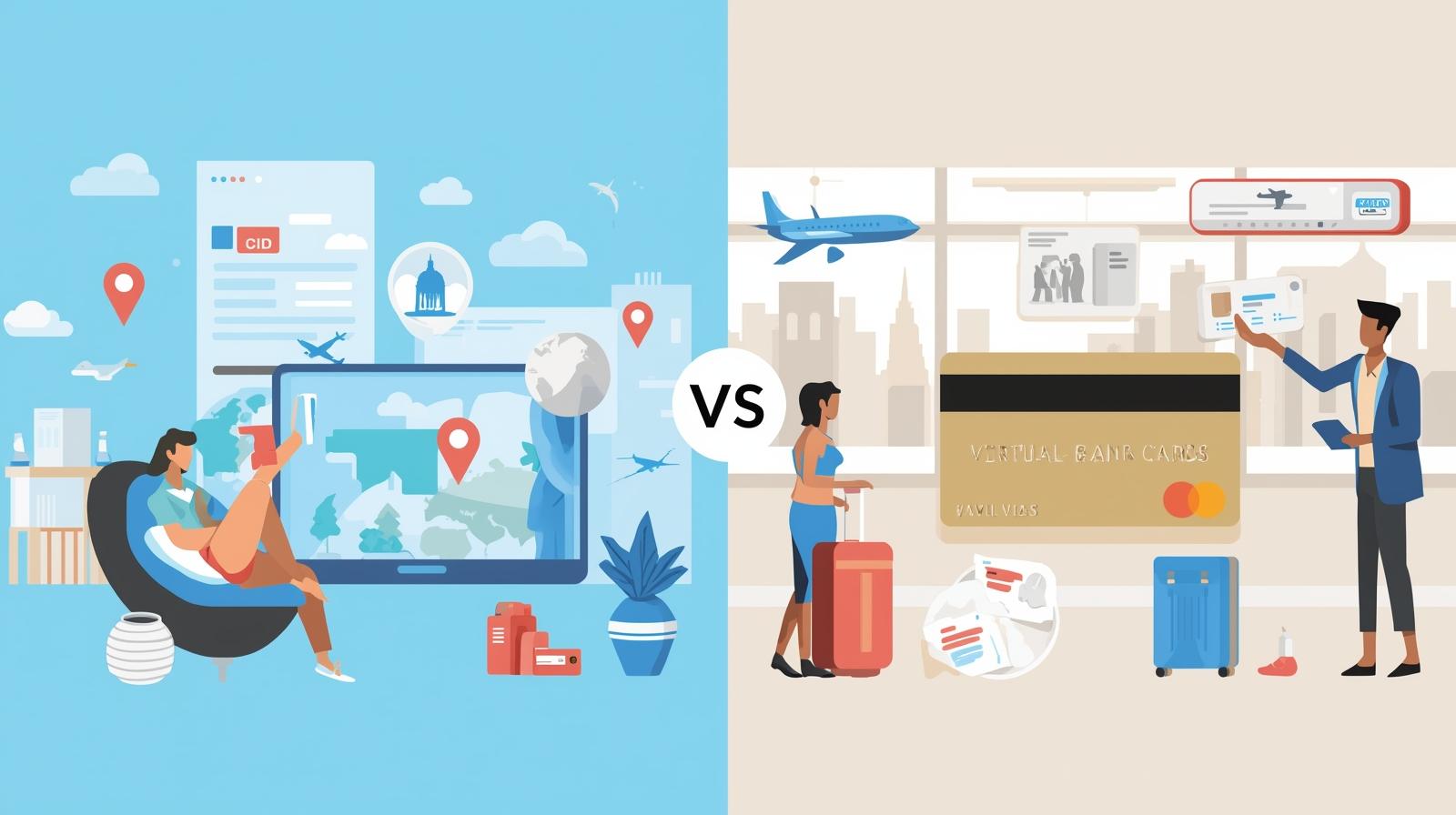
Traveling in 2025 requires smarter, safer, and more flexible payment methods. Traditional bank cards are widely used, but virtual cards have become a top choice for travelers who want better security, easy top-ups, and more control over international spending.
This guide compares virtual cards vs bank cards for travel to help you choose the best payment method for your next trip.
Security and Privacy
Bank cards are convenient but expose your real card number everywhere you go—hotels, restaurants, apps, and booking platforms. If the card details are leaked, you risk unauthorized transactions or card freezes overseas.
Virtual cards provide an extra layer of security and privacy by allowing you to pay without revealing your actual bank information. You can set spending limits, freeze cards instantly, or create multiple cards for different travel needs.
Why travelers prefer virtual cards:
-
No exposure of real banking details
-
Instant freeze/unfreeze
-
Limited-use or single-merchant cards
-
Lower fraud risk
Soft mention: Buvei follows PCI DSS security standards and allows users to control card limits in real time, reducing payment risks during international trips.
Convenience and Flexibility
Bank cards often face issues when used abroad—declines caused by anti-fraud systems, high FX fees, or slow bank approvals.
Virtual cards, however, are built for fast and flexible travel use.
Benefits of virtual cards:
-
Instant issuance — no need to visit a bank
-
Easily top up online with USDT (TRC20/ERC20)
-
Works on major booking services, ride-hailing apps, subscription tools, and digital travel platforms
-
Avoids regional restrictions or bank-triggered security blocks
Soft mention: Buvei supports global Visa/Mastercard BINs, improving payment success rates on international sites and travel apps.
Cost Control and Spending Management
Travel budgeting is easier with virtual cards because you can control your spending with precision.
With virtual cards, you can:
-
Set custom limits
-
Create separate cards for hotels, dining, shopping, or transport
-
Track payments instantly
-
Avoid unexpected cross-border banking fees
Bank cards may charge:
-
FX markup
-
ATM withdrawal fees
-
International transaction fees
-
Risky holds/deposits on hotel bookings
Soft mention: Buvei offers transparent fees, no hidden charges, and clear top-up/payment rates shown directly in the dashboard.
Payment Availability While Traveling
Bank cards may not work in all countries due to risk controls or unsupported regions. Some banks even decline transactions on foreign online platforms.
Virtual cards offer broader acceptance across global digital ecosystems.
Virtual cards work reliably for:
-
Online hotel and flight bookings
-
Digital tickets and apps
-
Food delivery services
-
Shopping platforms
-
SaaS subscriptions like ChatGPT, Notion, Canva
Soft mention: Buvei provides multiple BIN regions, improving compatibility across travel sites, and supports batch card creation for multi-destination or team trips.
Summary
Both bank cards and virtual cards have their uses.
But if you want better security, easier top-ups, lower risk, and flexible control, virtual cards clearly offer more advantages for modern travel in 2025.
Virtual cards are the smarter choice for international travelers who value safety, convenience, and spending control.