Online banking and card payments have significantly streamlined daily transactions, but they’ve also created new vulnerabilities for cyber fraud. Industry forecasts estimate that by 2027, fraudulent transactions may reach $38.5 billion globally. To address this growing concern, integrating 3D Secure (3DS) authentication has become a critical step in safeguarding online transactions. By adding an extra layer of authentication, this technology has transformed the way we secure digital payments.
The Origins of 3D Secure Technology
As online payments began to proliferate, the demand for robust security solutions intensified. Visa played a pivotal role in launching the 3D Secure concept—although not the original developer, it was the first major payment card network to implement such a protection mechanism. The initial version was developed by Celo Communications in 1999, and refined prototypes emerged between 2000 and 2001.
At the time, 3D Secure required users to enter a static password at checkout, which the issuing bank would verify. This represented a major step forward in online payment security. However, the development of this technology continued to evolve rapidly in the years that followed.
From 3D Secure to 3D Secure 2.0
Launched publicly in 2001 under Visa’s "Verified by Visa" program, 3D Secure gradually gained adoption among other card networks:
-
Mastercard – SecureCode
-
Discover – ProtectBuy
-
JCB – J/Secure
-
American Express – SafeKey
-
UnionPay – UPOP
By 2011, mobile support was introduced. However, limitations in the original system led to the release of 3D Secure 2.0 in 2014, which addressed user experience and security challenges. Key features included:
-
Pre-authentication risk assessment
-
Integration with biometrics and OTP (One-Time Passwords)
-
Cross-platform compatibility
-
Support for QR code and contactless payments
By 2020, 3DS had become a global industry standard for online payments.
How 3D Secure Authentication Works
At its core, 3D Secure is designed to connect financial authorization with online identity verification. The "3D" refers to the three domains involved in the process:
-
Merchant domain
-
Issuer domain (the cardholder’s bank)
-
Interoperability domain (managed by the card network)
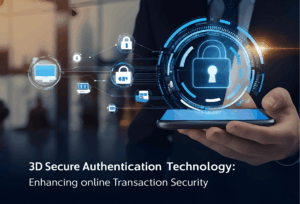
When a customer initiates an online payment, they are redirected to their bank’s authentication interface. Depending on the issuer’s settings, the user may need to enter a static password, input a one-time password (OTP), or verify their identity using biometric data. If the authentication is successful, the transaction proceeds via a secure SSL channel using XML-based messaging to protect the communication.
The Role of Buvei in Secure Digital Payments
As the digital payment ecosystem evolves, innovative platforms like Buvei are incorporating 3D Secure technology to offer a robust and seamless payment experience. By integrating 3DS, Buvei ensures that every transaction not only meets global security standards but also provides users with confidence and peace of mind when sending or receiving money.
A Step-by-Step Breakdown of 3D Secure Authentication
-
Transaction Initiation The user visits an e-commerce site (or a platform like Buvei), selects products or services, and enters payment card details. The merchant’s server checks whether 3D Secure is supported and sends a request to the issuing bank.
-
Authentication Redirect The customer is redirected (via a pop-up, in-app screen, or new tab) to the 3D Secure interface. Depending on the bank’s policy, this may involve entering a password, OTP, or using biometric methods like fingerprint or facial recognition.
-
Verification by Issuer The card issuer authenticates the credentials. If successful, a confirmation is sent back to the merchant’s acquiring bank and the merchant’s server. If unsuccessful, the user is prompted to retry.
-
Transaction Completion Once validated, the user is redirected back to the merchant’s website or app to complete the purchase.
Despite the multiple steps, the process is nearly instantaneous, providing users with a smooth and secure payment experience.
The Technical Foundation of 3D Secure
Several technical components ensure the system operates efficiently:
-
Enrollment & Participation: The merchant checks if the issuing bank supports 3D Secure and communicates securely with all parties involved.
-
Risk-Based Authentication: Introduced in 2016, this feature evaluates transactions based on user behavior, device information, and transaction history to determine appropriate authentication measures.
-
Multi-Modal Verification: Depending on bank policies and customer preferences, various methods can be used—static passwords, OTPs via SMS or messaging apps, fingerprint or facial recognition.
-
Data Encryption: All data exchanges between issuers, acquirers, and networks use encrypted XML messages and secure communication protocols.
-
Reporting & Recordkeeping: Both merchants and issuers log transaction details for dispute resolution and audit purposes.
The Role of 3D Secure in Online Transactions
Card-not-present (CNP) transactions are particularly vulnerable to fraud. 3D Secure remains the most effective defense against such threats. In fact, many regions—especially across Europe—mandate 3DS for online payments as part of Strong Customer Authentication (SCA) regulations under PSD2.

Benefits for Merchants and Consumers
Even in markets where 3DS is optional, both merchants and customers frequently choose to use it due to its clear advantages:
-
Reduced Fraud Risk By adding an authentication layer, unauthorized access and fraudulent payments are significantly minimized.
-
Enhanced Customer Confidence Seeing familiar labels like “Verified by Visa” or “Mastercard SecureCode” reassures customers that the site is secure.
-
Seamless Mobile Experience 3DS 2.0 is optimized for all devices and platforms, ensuring users can complete transactions anywhere with ease.
- Higher Conversion Rates The dynamic nature of OTPs means customers don’t need to remember passwords, reducing cart abandonment and boosting sales.
As an example, platforms like Buvei utilize these features to create frictionless and secure payment workflows, offering both convenience and strong protection to users around the globe.
Comparing 3DS to Other Authentication Methods
While there are other authentication approaches for CNP transactions, few offer the multi-layered protection of 3D Secure. Here's how it compares:
-
Address Verification Service (AVS) Confirms billing address matches, but does not authenticate the cardholder’s identity. Often used alongside CVV/CVC, but less reliable than 3DS.
-
PIN Codes Useful for card-present transactions, but static and susceptible to theft. Once compromised, the PIN allows unrestricted access—unlike 3DS, which uses OTPs for dynamic verification.
-
CVV/CVC Codes Commonly printed on the back of cards. While a basic verification tool, they can be easily misused if the card is lost or stolen. They lack the dynamic, real-time assessment that 3DS provides.
In short, 3D Secure offers context-aware, adaptive authentication that balances user convenience with security—an approach embraced by platforms like Buvei.
Common Issues and Troubleshooting 3DS
Despite its advantages, 3DS authentication can occasionally fail due to:
-
Incorrect card details
-
Expired or mismatched OTPs
-
Browser compatibility issues
Recommended solutions include:
-
Re-checking all card information
-
Retrying authentication or using an alternate method
-
Attempting the transaction in a different browser
-
Contacting the issuing bank for clarification
Both issuers and merchants may also need to resolve back-end technical issues if persistent failures occur.
A Strategic Imperative
As digital payments continue to evolve, so too must the security measures that support them. 3D Secure authentication has proven itself as a critical component in building trust, protecting sensitive data, and preventing fraud. For merchants, banks, and consumers alike, the adoption of 3DS technology is not just a protective measure—it’s a strategic imperative for the future of secure digital commerce.