Managing accounts payable is a critical but often time-consuming task for businesses of all sizes. Traditional payment methods like checks, wire transfers, or standard corporate cards can lead to delayed payments, manual errors, and limited control over vendor spend.
Enter virtual cards — a modern solution that automates payments, improves transparency, and enhances security. Companies adopting virtual cards are seeing faster payments, better cost control, and increased operational efficiency. Platforms like Buvei further simplify the process with features designed for global businesses.

1. Streamlining Payments with Virtual Cards
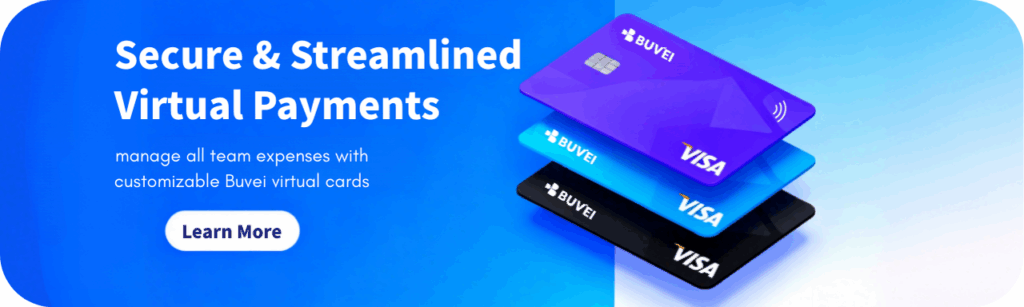
Virtual cards allow businesses to generate a unique, single-use or multi-use card number for each vendor. This ensures that payments are precise, trackable, and secure.
Key benefits include:
-
Automated Payment Scheduling: Virtual cards can be programmed for recurring payments, eliminating late fees and improving vendor relationships.
-
Detailed Transaction Tracking: Each payment is linked to a specific vendor and invoice, making reconciliation effortless.
-
Spending Control: Set limits per vendor or transaction, preventing overspending or misuse of company funds.
Using a platform like Buvei, businesses gain instant card issuance and multi-account management, enabling multiple team members to handle payments efficiently without complex setup.
2. Enhancing Security and Compliance
Accounts payable is a prime target for fraud, but virtual cards mitigate these risks:
-
Secure Payment Processing: Virtual cards avoid exposing real bank account information, reducing the likelihood of theft or fraud.
-
PCI DSS Compliance: Platforms like Buvei comply with international security standards, ensuring every transaction is protected.
-
Lock/Unlock and Merchant Restrictions: Payments can be restricted to specific vendors or categories, adding an additional layer of security.
The result is a safer, more reliable accounts payable process that protects both the business and its vendors.
3. Global Compatibility and Cost Efficiency
Businesses today often work with vendors across multiple countries, which can complicate payment processes. Virtual cards simplify this challenge:
-
Multiple BIN Support, Boosting Payment Success Rates: Buvei covers global BIN regions (Visa/Mastercard), ensuring transactions succeed on different platforms and countries.
-
USDT Top-Up: Low Cost and Fast Arrival: Reduce cross-border remittance fees and expedite payments to international vendors.
-
Platform Flexibility: Virtual cards can be used for SaaS subscriptions, marketing campaigns, travel expenses, and daily purchases, consolidating spending management in one system.
With global compatibility, businesses can pay vendors faster and more efficiently, while reducing administrative overhead.
4. Real-Time Management and Team Collaboration
One of the standout advantages of virtual cards is their support for team-based financial operations:
-
Multi-Account Management: Issue multiple virtual cards under a single account, ideal for finance teams handling multiple vendors simultaneously.
-
Transparent Fee Structure: Clear visibility into fees and charges ensures no surprises in the reconciliation process.
-
Real-Time Customer Support: Immediate assistance reduces downtime in case of payment issues, while dedicated managers can provide tailored solutions.
This level of oversight and control transforms accounts payable from a cumbersome process into a streamlined, automated workflow.
Conclusion
Virtual cards are revolutionizing accounts payable by providing automation, security, and efficiency that traditional methods cannot match. Businesses leveraging platforms like Buvei benefit from instant card issuance, global payment compatibility, multi-account management, and robust security features.
The future of vendor payments is digital, controlled, and automated — making accounts payable faster, safer, and smarter.