Introduction
In the world of technology, developers use API keys to control access to systems and services. Often, these keys can be temporary, disposable, or restricted for specific use cases to improve security and flexibility. Now imagine applying the same principle to financial transactions—that’s exactly what virtual cards achieve.
This analogy—virtual cards as “disposable API keys” for payments—helps us better understand how they give users precise control, enhanced safety, and cost efficiency when handling online payments. In this article, we’ll explore how this concept works and why solutions like Buvei Virtual Cards make it even more powerful.

Virtual Cards as the “API Keys” of Payments
Just as an API key provides controlled access to software systems, a virtual card provides controlled access to funds.
-
API key analogy: A developer generates a key for a specific purpose (e.g., testing, a limited user request).
-
Virtual card equivalent: A user generates a card with a specific limit, purpose, or vendor restriction.
Both are disposable, flexible, and safe. If an API key or virtual card is compromised, it can simply be revoked—no need to shut down the entire system or expose sensitive data.
Disposable = Better Security and Privacy
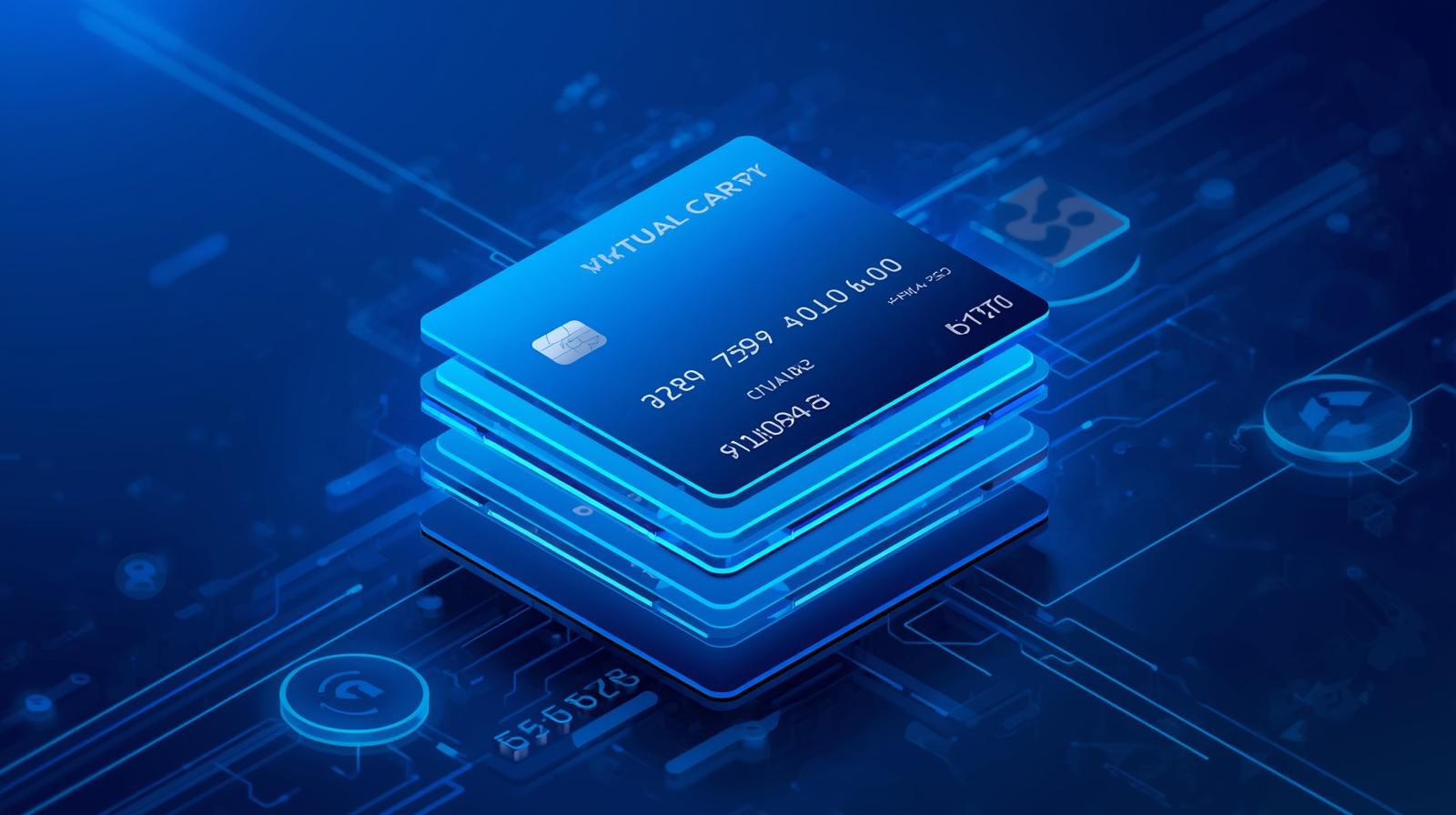
Disposable API keys prevent unauthorized access by being short-lived. Similarly, virtual cards reduce risks by being easily disposable and independent of your main bank account.
-
Security advantage: Hackers or bad actors can’t drain your real bank account, as virtual cards act like a protective layer.
-
Privacy control: Your sensitive financial information remains hidden, just like how system credentials remain private with API proxies.
Here, Buvei Virtual Cards shine with PCI DSS compliance, ensuring international payment security standards and protecting users against theft and fraud.
Precision Control = Limit Setting and Flexibility
An API key can be restricted to certain endpoints, request limits, or timeframes. Similarly, virtual cards can be:
-
Capped with spending limits → Prevent overspending on ads or SaaS subscriptions.
-
Used for specific merchants → Ideal for recurring SaaS tools (ChatGPT, Canva, Notion).
-
Issued instantly → Perfect for testing or short-term use, just like temporary API keys.
With Buvei, you can issue virtual cards instantly without complex KYC, set card limits for flexible cost control, and manage multiple accounts in bulk for team use.
Interoperability = Wide Platform Compatibility
Just like an API key allows integration across different systems, virtual cards integrate seamlessly with a wide range of platforms.
-
Works across Google Ads, Meta Ads, TikTok Ads, Microsoft Ads
-
Supports SaaS subscriptions and even travel or daily purchases
-
Funded easily with USDT top-ups (TRC20/ERC20) for fast, low-cost transactions
Here, Buvei’s multiple BIN support plays a crucial role in boosting global payment success rates by selecting the best BIN for different platforms and business types.
Summary
The analogy of virtual cards as “disposable API keys” for payments captures the essence of what makes them so powerful:
-
Security and Privacy – Disposable, revocable, and PCI DSS compliant.
-
Precision Control – Set limits, define usage, and issue instantly.
-
Flexibility in Funding – USDT top-ups for speed and cost efficiency.
-
Wide Compatibility – Works across ads, SaaS, travel, and more.
For businesses managing online payments, ad spend, or SaaS subscriptions, virtual cards provide the same agility and security that API keys offer developers. And with Buvei Virtual Cards, you gain even more control through multi-account management, transparent fees, and real-time customer service.
Want the API key-level control for your financial transactions?
👉 Discover how Buvei Virtual Cards can help your business stay secure, reduce costs, and scale with confidence.