Introduction
The rapid advancement of quantum computing is poised to redefine the landscape of digital security, including payments systems. While quantum computers remain largely experimental, their ability to process complex calculations at unprecedented speeds poses a potential threat to current encryption methods. Financial institutions that fail to adapt may face digital fraud on a scale previously unimaginable.
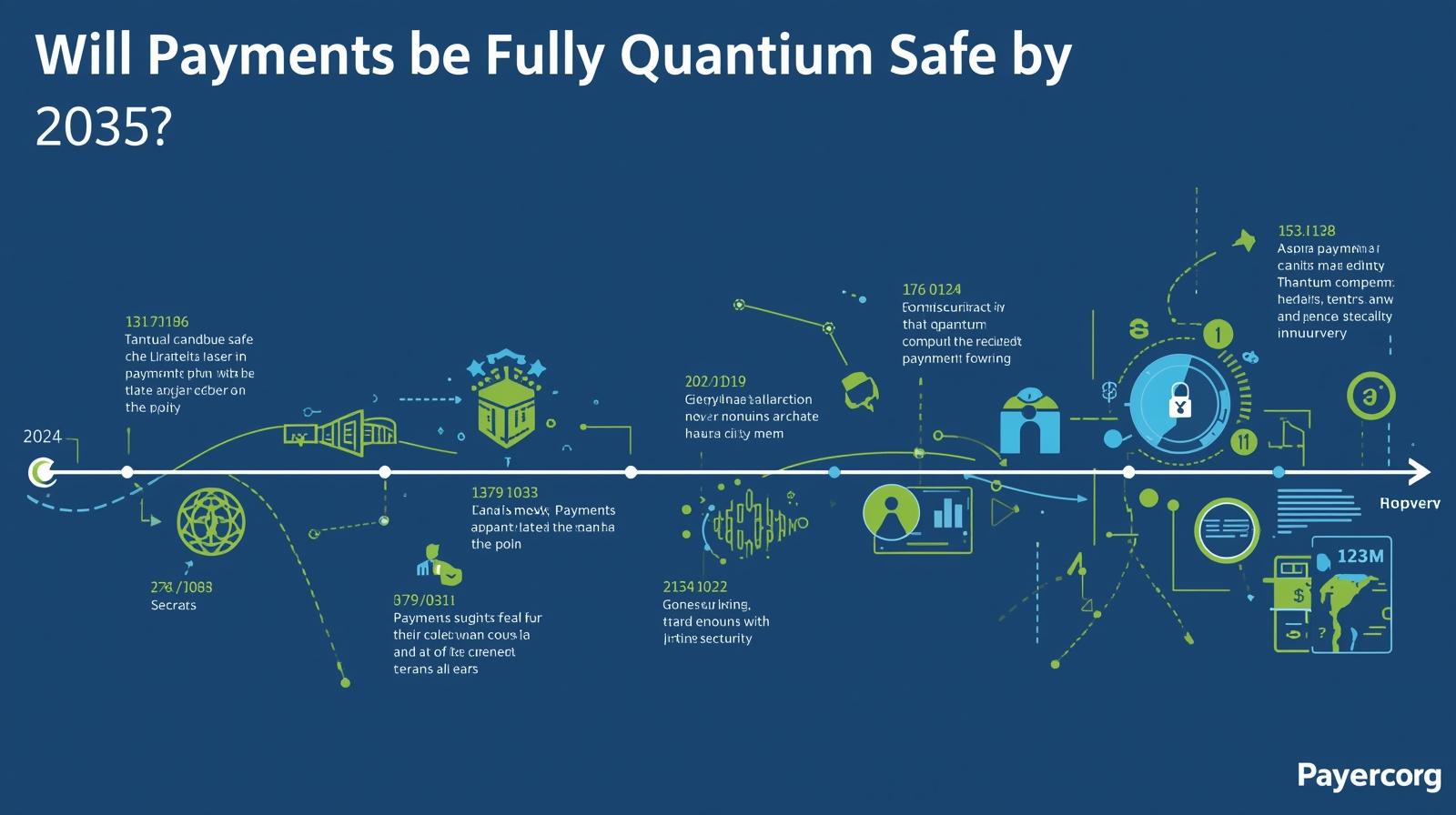
Experts suggest that by 2035, unless quantum-safe protocols are widely implemented, payments infrastructure—including instant payment systems and digital currencies—could be vulnerable to malicious actors leveraging quantum technology. This article explores the current state of quantum computing, its implications for payment security, and the steps institutions can take to mitigate risk.
Understanding the Quantum Threat
Quantum computing operates using principles of quantum mechanics, allowing computations far beyond the capabilities of classical computers. Although these systems are still in early stages and require extreme cooling—just above absolute zero—they are rapidly advancing, with institutions like IBM, Rice University, and cities such as Chicago investing heavily in research.
The threat arises because quantum computers could break current asymmetric key encryption, which secures payments today. Systems like the Federal Reserve’s FedNow and many digital currencies rely on public-key cryptography, using algorithms like RSA (Rivest–Shamir–Adleman) and ECC (Elliptic Curve Cryptography). While these are secure against classical computers, a sufficiently powerful quantum computer could solve the underlying mathematical problems almost instantaneously, rendering traditional encryption ineffective.

Policy and Strategic Preparations
Financial regulators and central banks are beginning to acknowledge the quantum threat. Institutions are advised to integrate quantum-safe strategies into their information security programs. Nanci McKenzie, a payments risk specialist at the Atlanta Federal Reserve, emphasizes that adopting quantum-safe measures should be a priority today to prevent future vulnerabilities.
Key strategic policies include:
-
Transitioning to quantum-resistant algorithms approved by global standards organizations.
-
Periodic risk assessments to evaluate exposure to quantum threats.
-
Upgrading hardware and software to support quantum-safe encryption protocols.
-
Collaboration with fintech and cybersecurity experts to pilot new payment security frameworks.
Technological Approaches to Quantum-Safe Payments
Several promising technologies are emerging to protect payments against quantum attacks:
-
Post-quantum cryptography (PQC): Algorithms designed to withstand quantum computation, providing similar functionality to RSA and ECC but resistant to quantum decryption.
-
Quantum key distribution (QKD): Uses the principles of quantum mechanics to securely share encryption keys, making interception detectable.
-
Hybrid approaches: Combining classical and quantum-resistant encryption for gradual transition while maintaining operational stability.
These approaches must be standardized globally to ensure that cross-border payments and international financial systems remain secure.

Implications for Financial Institutions and Digital Payments
The adoption of quantum-safe protocols is not optional. Without proactive measures, banks, payment processors, and digital currency platforms risk being compromised. Financial institutions must:
-
Audit existing cryptographic systems to identify vulnerabilities.
-
Invest in staff training and awareness programs to understand quantum risks.
-
Engage in public-private partnerships to develop scalable solutions.
-
Plan for long-term adoption of quantum-resistant technologies to protect customer funds and maintain trust.
Governments and regulatory bodies are expected to provide guidance and mandatory frameworks in the coming years, emphasizing risk mitigation and accountability.
Summary
By 2035, quantum computing is likely to challenge the foundations of payment security. Financial institutions that fail to adopt quantum-safe measures risk exposure to unprecedented levels of digital fraud. Adopting post-quantum cryptography, quantum key distribution, and hybrid encryption solutions, alongside robust policy frameworks, will be essential to ensure secure, resilient, and trusted payments systems.
Proactive planning today—through auditing, staff training, and collaboration with regulatory authorities—can position financial institutions to withstand the quantum revolution and maintain secure payment infrastructure.